On the occasion of World Water Day, President Asif Ali Zardari issued a strong appeal to India, urging the immediate restoration of the Indus Waters Treaty (IWT) in its entirety. Emphasizing the importance of honoring international commitments, the president underscored Pakistan’s firm stance against India’s unilateral suspension of the treaty, which has governed the equitable sharing of the Indus river system for over six decades.
In his detailed message, President Zardari described India’s decision to halt the treaty’s implementation as a deliberate and troubling move that weaponizes shared water resources. He expressed deep concern over New Delhi’s actions, which include disrupting the exchange of vital hydrological data and obstructing established mechanisms designed to manage the river waters cooperatively. the president, these steps not only violate the letter but also the spirit of a long-standing international agreement that has historically ensured peaceful and fair water distribution between the two countries.
The recent escalation in tensions surrounding the Indus Waters Treaty followed a deadly attack in Indian Illegally Occupied Jammu and Kashmir (IIOK) in April 2025, which claimed the lives of 26 individuals. In the aftermath, India placed the treaty in abeyance, accusing Pakistan of orchestrating the attack without conducting any formal investigation. Pakistan has categorically denied these allegations, maintaining its innocence and condemning the politicization of the treaty.
President Zardari highlighted the broader implications of India’s stance, warning that such conduct endangers food and economic security in the region. Millions of people rely directly on the waters governed by the treaty for their livelihoods, and any disruption threatens their well-being. He cautioned that undermining the treaty sets a dangerous precedent for the management of transboundary water resources under international law, potentially destabilizing regional cooperation and peace.
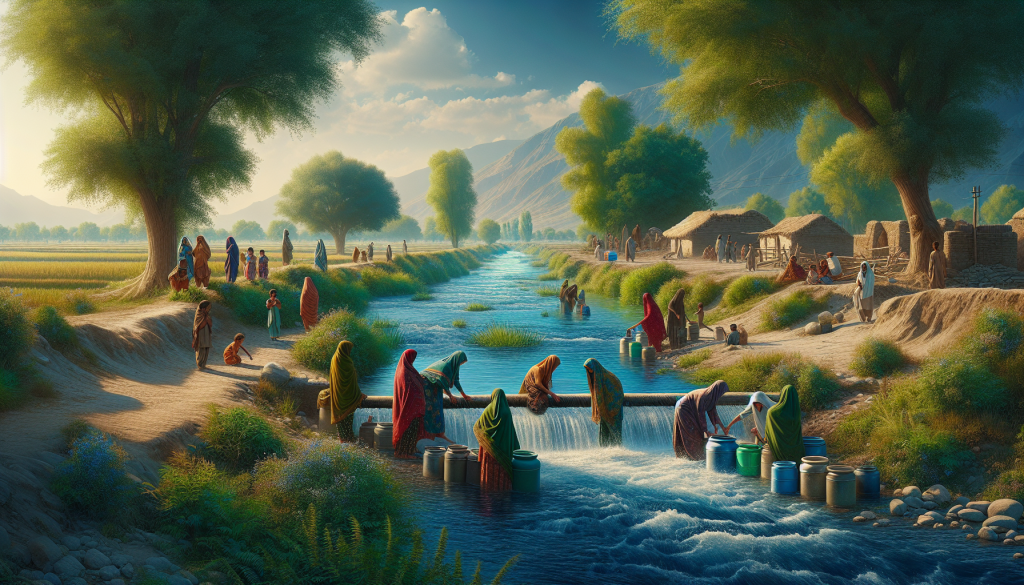
Turning to the theme of World Water Day 2026, which focuses on “Water and Gender,” the president drew attention to the disproportionate impact of water scarcity on women and girls. He pointed out that in many parts of Pakistan, access to safe and reliable water remains a daily challenge. Women and girls often bear the brunt of this scarcity, spending hours each day collecting water from distant or unreliable sources. This not only consumes valuable time that could be devoted to education, employment, or family but also exposes them to health risks and additional household burdens.
President Zardari stressed that addressing water insecurity is not merely a matter of infrastructure or service delivery but a question of social justice and equal opportunity. He reaffirmed that access to clean water is a fundamental right enshrined in Pakistan’s Constitution and must be treated as a national priority. Achieving this requires not only prudent management of water resources and investment in modern water systems but also greater involvement of women in water-related planning and decision-making processes.
In a call to action for citizens, the president encouraged households and communities to adopt practical measures such as rainwater harvesting and water conservation techniques. These small but effective steps can help replenish underground aquifers and raise the water table, contributing to improved water availability across the country. He emphasized that collective responsibility and community engagement are vital components in overcoming Pakistan’s water challenges.
Finally, President Zardari issued a cautionary note regarding the increasing pressures on water resources due to population growth and climate variability. He reminded the nation that water is essential not only for agriculture and urban life but also for sustaining the natural environment. As demands on this precious resource intensify, he urged everyone to use water more judiciously and sustainably to ensure its availability for future generations.