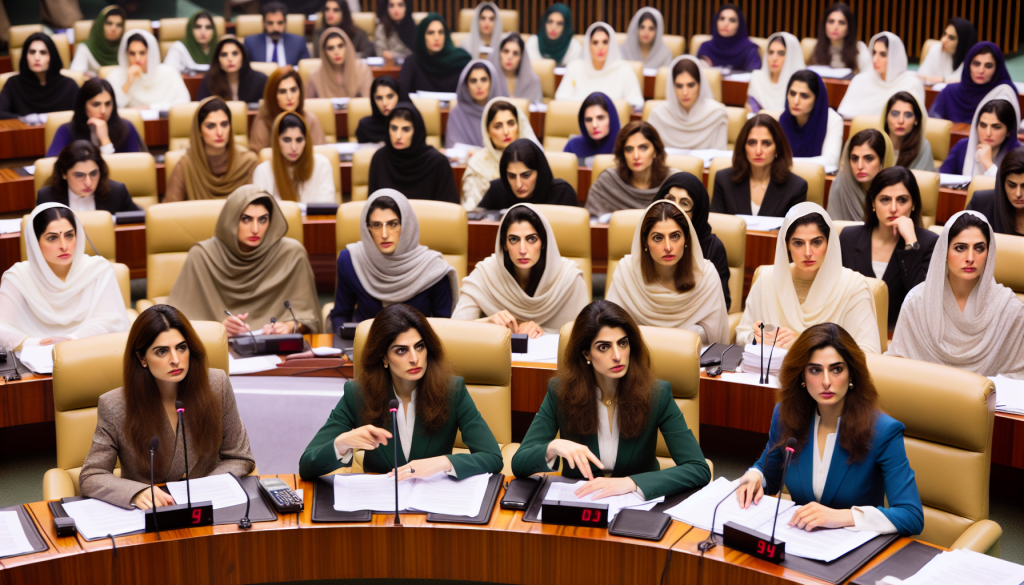
ISLAMABAD: Women parliamentarians in Pakistan are increasingly asserting their influence within the corridors of power, playing a pivotal role in shaping the country’s legislative agenda with remarkable effectiveness. During the second year of the 16th National Assembly, female members of the National Assembly (MNAs) demonstrated a strong legislative presence by submitting a total of 1,206 agenda items. This impressive figure highlights not only their active participation but also their growing independence and initiative in parliamentary affairs.
It is worth noting that the Free and Fair Election Network (Fafen) conducted a detailed analysis of these submissions, shedding light on the substantive nature of women’s parliamentary engagement. Contrary to the common perception that female legislators primarily concentrate on gender-specific or social welfare issues, the data reveals a much broader policy focus. Approximately 72% of the agenda items put forward by women MNAs addressed critical national policy domains such as economic reforms, taxation frameworks, national security concerns, and governance matters—areas traditionally dominated by male lawmakers.
Meanwhile, issues related to constituencies and local development accounted for 18% of the agenda items, reflecting women parliamentarians’ commitment to addressing grassroots concerns alongside national priorities. Interestingly, only 6% of the legislative agenda was devoted exclusively to gender-specific legislation, challenging the stereotype that female legislators limit their work to women’s rights alone.
Fafen’s research involved developing a specialized subject-matter typology to rigorously examine whether female MNAs disproportionately focus on gender-related issues. Each agenda item was meticulously coded against categories including national policy, constituency matters, gender-specific legislation, and procedural or cross-cutting topics. This coding utilized official National Assembly records spanning from March 1, 2025, to February 28, 2026, ensuring a comprehensive and accurate assessment of parliamentary activity.
Parliamentary effectiveness is often measured not just by the quantity of participation but also by the diversity of issues addressed. A legislator who concentrates solely on a narrow set of topics, no matter how important, leaves a limited legislative footprint compared to one who engages with a wide array of policy challenges. The findings from the second parliamentary year clearly indicate that female MNAs in Pakistan are far from being niche legislators. Instead, they actively contribute to discussions on economic policy, security, taxation, and parliamentary procedures, often in proportions exceeding their involvement in gender-specific matters.
In a related development, this expanded role of women in parliament signals a positive shift towards more inclusive and representative governance. Their engagement across multiple policy areas not only enriches parliamentary debates but also helps in crafting more holistic legislation that reflects the diverse needs of Pakistani society. This trend also challenges entrenched societal norms and stereotypes about women’s roles in politics, underscoring their capacity to lead on issues of national importance alongside their male counterparts.
Looking ahead, the growing legislative footprint of female MNAs could inspire further reforms aimed at enhancing women’s political participation and leadership within Pakistan’s democratic institutions. Their balanced focus on both national and constituency issues exemplifies a comprehensive approach to governance that prioritizes both macro-level policy and grassroots development.