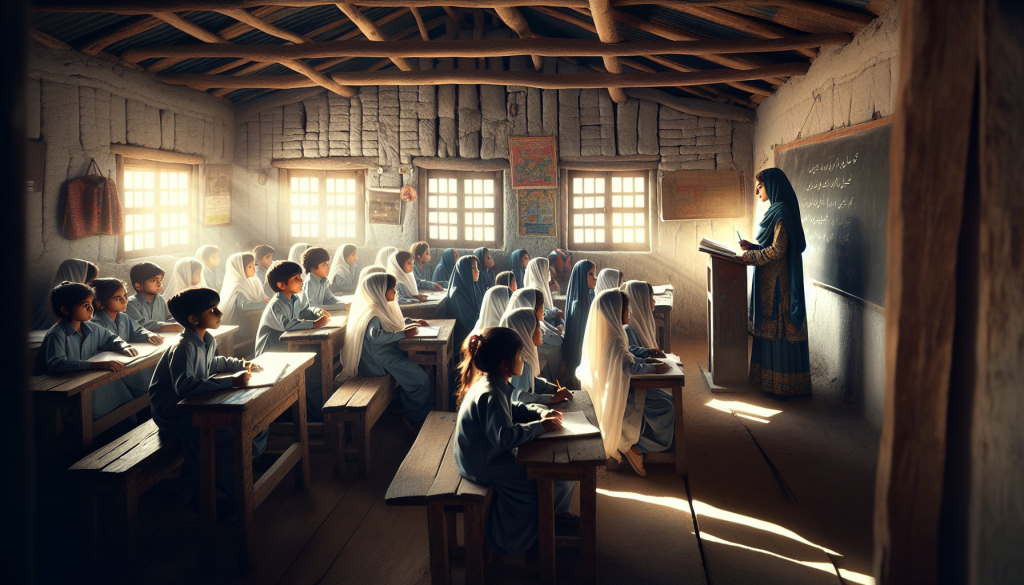
ISLAMABAD: A detailed examination of recent national survey data underscores a troubling reality for Pakistan’s education sector: nearly 28% of children between the ages of 5 and 16 remain out of school. This alarming statistic emerges from an analysis conducted by Gallup Pakistan, which utilized data from the 2024-25 Pakistan Social and Living Standards Measurement Survey (PSLM) alongside the Household Integrated Economic Survey. The findings reveal a stark gender disparity, with girls being significantly more likely to miss out on education compared to boys.
the data, approximately 34% of girls in this age group are not enrolled in school, whereas the figure for boys stands at 22%. This gap highlights persistent and deeply entrenched gender inequalities that continue to hinder equitable access to education across the country. The analysis draws on comprehensive data compiled by the Pakistan Bureau of Statistics and is presented through Gallup Pakistan’s Digital Analytics Dashboard, offering a broad yet detailed perspective on the current educational landscape and its ongoing challenges.
Geographical disparities further compound the issue. Children living in rural areas face significantly higher barriers to education, with 34% out of school compared to just 18% in urban centers. This nearly twofold difference underscores how location-based disadvantages intersect with gender to create compounded obstacles, particularly for rural girls who remain among the most marginalized groups in terms of educational access.
Despite these challenges, it is important to note that overall access to education has improved over time. Nationally, 67% of individuals aged 10 and above have attended school at some point in their lives. However, this progress masks significant disparities. Attendance rates for men are considerably higher at 78%, while women lag behind at 56%. Similarly, urban areas report an attendance rate of 81%, in contrast to 61% in rural regions, revealing a clear urban-rural divide in educational opportunities.
Literacy rates mirror these inequalities. The national literacy rate currently stands at 63%, but this figure rises to 73% for men and drops sharply to 52% for women. Urban literacy rates are recorded at 77%, whereas rural literacy trails at 56%. Provincial differences are also notable, with Punjab achieving a literacy rate of 66%, while Balochistan records a much lower rate of 43%, reflecting regional disparities in educational infrastructure and resources.
Another critical concern highlighted by the data is the issue of student retention and progression within the education system. While primary school enrollment for children aged 6 to 10 is at 68%, this number declines steeply as students advance through higher levels of education. Enrollment drops to 40% at the middle school level (ages 11 to 13) and further decreases to just 30% by the matriculation stage (ages 14 to 15). These figures indicate that a significant number of students discontinue their education prematurely, underscoring systemic challenges in sustaining attendance and engagement.
Education experts emphasize that these statistics reflect broader structural problems. Although there have been gains in access to schooling, these have not translated into equitable participation or consistent attendance, particularly for girls and children residing in rural or underserved areas. Persistent socio-economic barriers, cultural norms, and inadequate educational infrastructure continue to restrict opportunities for many young Pakistanis.
In a related development, policymakers and education advocates are calling for targeted interventions to address these disparities. Efforts to improve school infrastructure, provide financial incentives, and promote gender-sensitive educational policies are seen as essential steps toward ensuring that all children, regardless of gender or location, can access and complete quality education. Without such focused measures, the country risks perpetuating cycles of inequality that hinder social and economic progress.