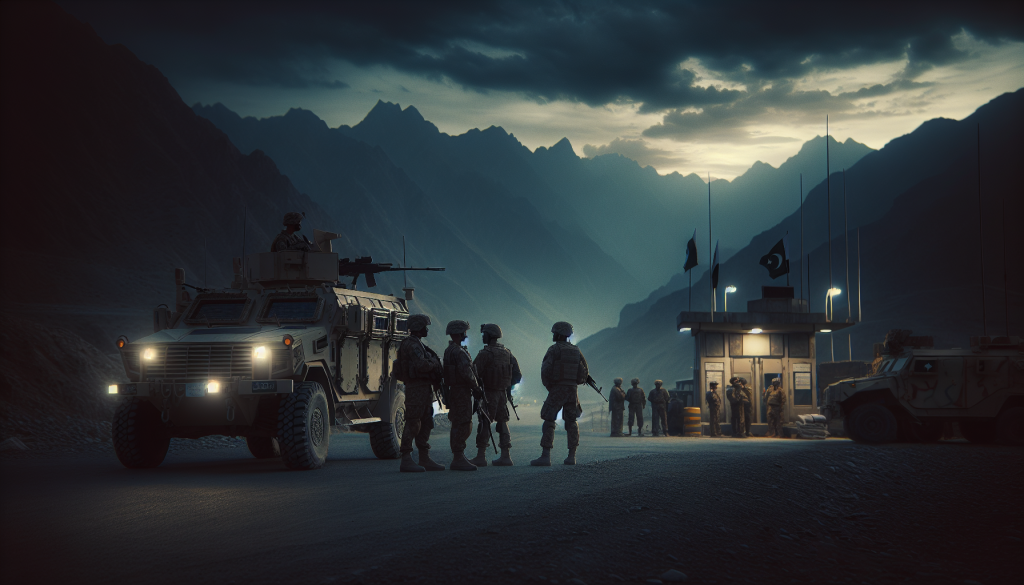
In a significant development, Pakistan declared a temporary suspension of its ongoing military campaign, Operation Ghazab lil-Haq, targeting terrorist groups and their support networks within Afghanistan. This pause, announced on Wednesday, coincides with the forthcoming Islamic festival of Eid ul Fitr, reflecting Islamabad’s gesture of goodwill and respect for religious sentiments.
Information Minister Attaullah Tarar conveyed that the decision to halt the operation was taken both on Pakistan’s own initiative and following appeals from allied Islamic nations, including Saudi Arabia, Qatar, and Turkiye. The ceasefire is set to commence from midnight between March 18 and 19, 2026, extending until midnight of March 23 and 24. This temporary truce underscores Pakistan’s commitment to Islamic principles and its desire to foster peace during this holy period.
However, the minister issued a stern warning that the military operation would be swiftly reinstated with greater force should there be any cross-border incursions, drone strikes, or terrorist activities within Pakistani territory during the pause. This caveat highlights Islamabad’s readiness to defend its sovereignty and maintain security despite the temporary cessation of offensive actions.
Operation Ghazab lil-Haq, launched last month, was a direct response to unprovoked attacks by the Taliban regime along the Pakistan-Afghanistan border. Since its inception, the operation has inflicted substantial damage on terrorist factions. Minister Tarar, a total of 707 militants have been killed and 938 wounded. Additionally, 255 Taliban posts have been demolished, with 44 others captured. The operation has also destroyed 237 tanks, armored vehicles, and artillery pieces, alongside 81 terrorist infrastructure sites targeted through aerial strikes across Afghanistan.
In a notable escalation, Pakistani forces conducted precision strikes on the night of March 16 targeting military installations in Kabul and Nangarhar. These attacks focused on drone storage facilities, technical support centers, and ammunition depots utilized by the Afghan Taliban and allied terrorist groups to orchestrate assaults against Pakistani civilians. The strikes aimed to cripple the operational capabilities of these hostile elements.
Meanwhile, Inter-Services Public Relations (ISPR) Director General Lieutenant General Ahmed Sharif Chaudhry revealed that drones supplied by India were recently employed by the Afghan regime in attacks against Pakistan. Speaking on a national current affairs program, he dismissed Kabul’s allegations of civilian casualties during Pakistani strikes, clarifying that the operations were strictly aimed at military targets such as ammunition and drone depots.
The recent surge in tensions between Pakistan and Afghanistan follows a series of suicide bombings in Islamabad, Bajaur, and Bannu, which were traced back to militants operating from Afghan soil. Islamabad has consistently urged Kabul to prevent its territory from becoming a safe haven for terrorist organizations targeting Pakistan. In response, Pakistan launched intelligence-driven strikes against seven terrorist camps and hideouts belonging to Fitna al Khawarij (a term used for the banned Tehreek-e-Taliban Pakistan), its affiliates, and Daesh-Khorasan along the border last week.
It is worth noting that these border tensions reignited months after both countries had agreed to a ceasefire in October 2025. The initial truce was brokered after the Afghan Taliban regime opened unprovoked fire at several border points, allegedly to facilitate the crossing of Khawarij militants into Pakistan. Despite Islamabad’s agreement to the ceasefire at Kabul’s request, subsequent talks mediated by Doha and Turkiye failed to yield lasting results. The Afghan side reportedly used these discussions to defame Pakistan rather than address Islamabad’s primary concern of terrorism emanating from Afghan territory.
In a related development, the ceasefire agreement reached in Qatar stipulated an immediate halt to terrorist activities originating from Afghanistan against Pakistan. Follow-up negotiations held in Turkiye, however, did not produce the desired outcomes due to Kabul’s reluctance to cooperate fully. This ongoing impasse underscores the complexities of regional security dynamics and the challenges Pakistan faces in securing its borders against militant threats.
As Eid ul Fitr approaches, Pakistan’s decision to temporarily pause Operation Ghazab lil-Haq reflects a strategic balance between upholding national security and honoring religious observance. The coming days will be crucial in determining whether this ceasefire can pave the way for renewed dialogue and stability along the volatile Pakistan-Afghanistan frontier.