In a significant ruling delivered on Saturday, the Supreme Court of Pakistan upheld the life imprisonment sentence for Khurram Ijaz, the principal accused in the high-profile murder case of Tipu Truckanwala. Justice Ishtiaq Ibrahim authored a comprehensive nine-page judgment that not only confirmed the earlier verdict passed by the Lahore High Court but also dismissed all appeals filed against it. This decision effectively maintains the reduction of Khurram Ijaz’s original death sentence to life imprisonment, a move that has sparked considerable discussion within legal and public circles.
The apex court further clarified the nature of the crime by removing all terrorism-related charges against Khurram Ijaz. It emphasized that the killing was motivated by personal enmity rather than any act of terrorism. The court underscored that simply committing a murder in a public space does not automatically classify the act as terrorism under Pakistani law. This distinction is crucial, as it delineates the boundaries between criminal homicide and terrorism, ensuring that legal definitions are applied with precision.
Additionally, the Supreme Court upheld the acquittal of Syed Ahsan Shah, a co-accused in the case. The court pointed out that Shah’s name was not mentioned in the First Information Report (FIR), which played a pivotal role in his exoneration. The principle of benefit of doubt was applied in his favor, reinforcing the judiciary’s commitment to fair trial standards and evidentiary requirements. This aspect of the verdict highlights the importance of procedural accuracy in criminal prosecutions.
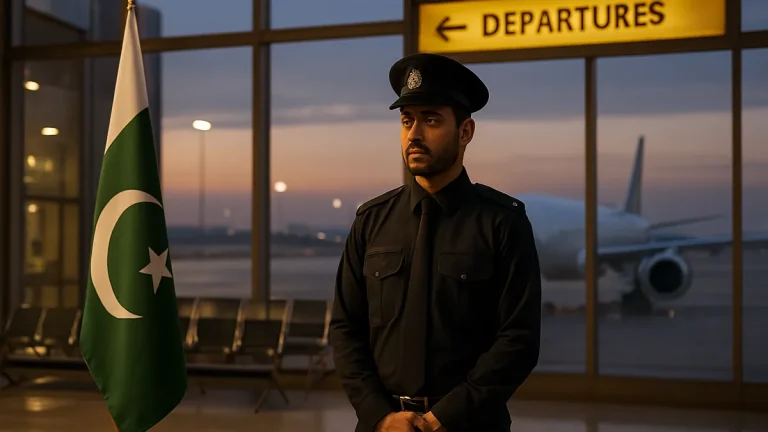
To provide context, the murder occurred on January 20, 2010, when Arif Ameer, popularly known as Tipu Truckanwala, was fatally shot in the parking area of Allama Iqbal International Airport in Lahore. Tipu had just arrived from Dubai aboard Pakistan International Airlines Flight PK-204. He was accompanied by friends Amir Mughal, Sabz Ali, and Ahsan Ullah Jalali, who had come to receive him. At approximately 7:35 p.m., as Tipu was about to enter a vehicle after leaving the airport lounge, Khurram Ijaz allegedly opened fire, inflicting gunshot wounds.
In the ensuing chaos, Tipu’s companions sought cover, while Ahsan Ullah Jalali managed to wrestle the pistol away from Khurram Ijaz. Another unidentified accomplice reportedly escaped the scene. The injured Tipu was rushed to Mayo Hospital for emergency treatment. Throughout the investigation and trial, Khurram Ijaz maintained that his actions were driven by the belief that Tipu was supporting individuals responsible for the murder of his own brother, adding a layer of personal vendetta to the case.
Initially, in May 2011, an anti-terrorism court sentenced Khurram Ijaz to death on two counts. However, the Lahore High Court revisited the case in October 2019, opting to commute the death penalty to life imprisonment while acquitting Ahsan Shah. The Supreme Court’s recent verdict has now cemented this position, reiterating that the prosecution failed to establish a clear and concrete motive that would justify the death sentence under the law. This ruling serves as a reminder of the judiciary’s cautious approach in capital punishment cases, especially where evidentiary gaps exist.
Overall, the Supreme Court’s decision brings closure to a decade-old case that has attracted widespread attention due to its complex legal and emotional dimensions. It also sets an important precedent regarding the interpretation of terrorism charges in criminal cases, ensuring that such serious allegations are not applied indiscriminately. As the legal community and public digest this ruling, it reinforces the principle that justice must be grounded in facts, evidence, and the rule of law.