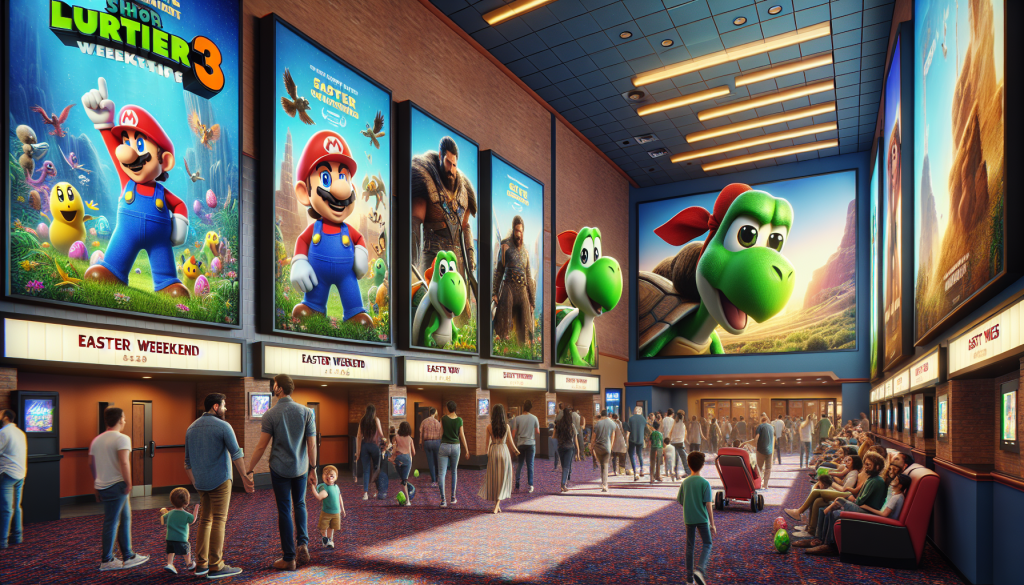

This Easter weekend, the animated sequel from Nintendo and Illumination made a remarkable impact at the box office, reshaping the early 2026 cinematic landscape and underscoring Hollywood’s increasing focus on video game adaptations. This release not only set a new year-to-date record but also sparked fresh discussions about studio strategies, brand expansion, and which Nintendo franchises might be next for theatrical adaptation.
The Super Mario Galaxy Movie grossed nearly $190.1 million over the five-day Easter period and approximately $130.9 million during the traditional three-day weekend, surpassing the March opening of Ryan Gosling’s sci-fi film, which earned an estimated $80.5 million over three days. This performance marks the largest domestic opening of 2026 so far.
While the 2023 Super Mario movie brought in about $204.6 million over five days and $146.4 million over three, the sequel’s debut remains one of the highest-grossing openings for a video game-based film. In the domestic rankings of game-to-film adaptations, it trails only the original Super Mario movie and the 2025 Minecraft movie, which earned over $162.8 million during its three-day premiere.
Despite receiving lower ratings from critics compared to its predecessor, the sequel maintained strong commercial momentum, attracting families and gamers alike throughout the holiday weekend. The voice cast features notable Nintendo universe stars, including Benny Safdie as Bowser Jr., Donald Glover reprising his role as Yoshi, and Brie Larson as Princess Rosalina. Notably, Glen Powell’s surprise casting as Fox McCloud was revealed just days before the premiere, generating excitement about possible cross-franchise connections.
In a significant development, the film’s end-credits scene teased the arrival of a major Nintendo character absent from the previous two movies, fueling speculation about a cameo by a well-known actor who remains uncredited for voice work. This hints at studios’ ambitions to build a broader Nintendo cinematic universe.
The success of the Galaxy sequel reinforces the growing trend of video game properties serving as reliable box office tentpoles. Recent successes like Five Nights at Freddy’s and HBO’s Emmy-winning The Last of Us have provided a blueprint for studios after years of uneven adaptations, including the notorious 1993 live-action Super Mario film.
Looking ahead, more Nintendo projects are in development. A high-profile live-action adaptation of The Legend of Zelda is scheduled for May 2027, starring Bo Bragason as Princess Zelda and Benjamin Evan Ainsworth as Link. Meanwhile, other studios are working on a live-action Street Fighter movie and new entries in the Resident Evil franchise.
At the weekend box office, the Galaxy sequel claimed the top spot, followed by Project Hail Mary in second place. The Drama, a dramedy featuring Zendaya and Robert Pattinson, debuted third with roughly $14.4 million domestically, marking a steady start consistent with Zendaya’s recent releases.
Final studio-verified totals and weekday tracking will be available later this week, but early data confirms one key takeaway: despite mixed reviews, Nintendo’s iconic characters continue to draw large audiences to theaters.