



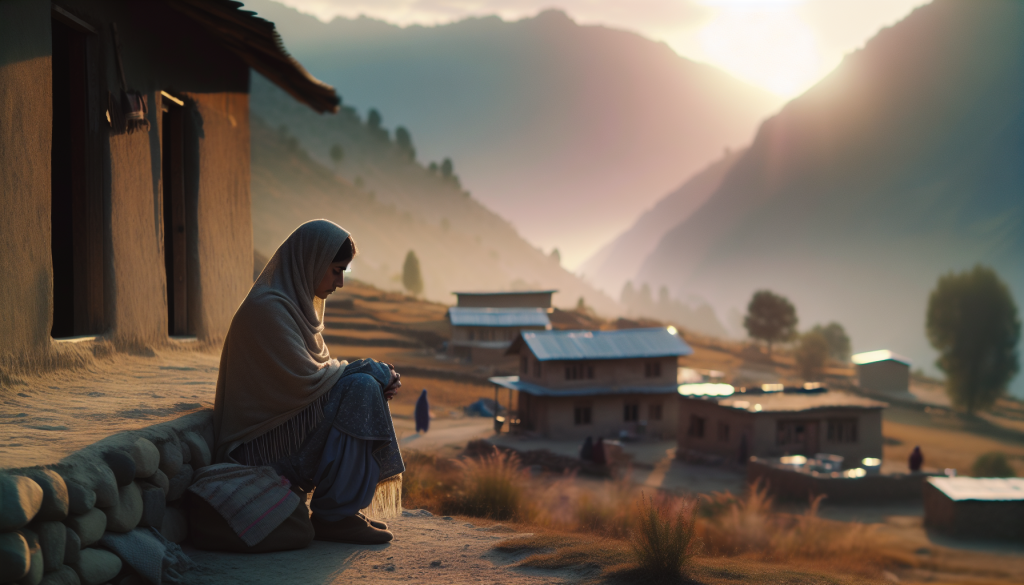
Discussions about postpartum depression in Pakistan often focus on urban settings, where awareness is spread through social media, clinics, and educated circles with internet access and professional support. However, the reality shifts dramatically when one moves beyond city boundaries into the mountainous regions of Gilgit-Baltistan, the remote valleys of Khyber Pakhtunkhwa, and the vast plains of interior Sindh and southern Punjab.
In these rural communities, postpartum depression is largely unknown and unnamed. Mothers struggling with this condition are frequently perceived as weak, ungrateful, or spiritually deficient. The repercussions of this silence extend beyond emotional distress, impacting physical health and future generations.
Many women in rural Pakistan enter pregnancy already malnourished; nearly 42 percent of women of reproductive age suffer from anemia before pregnancy’s physical demands begin. This nutritional deficiency affects their children as well. UNICEF’s 2024 report reveals that 40 percent of Pakistani children under five experience stunted growth due to poor early nutrition, with rates rising to 46 percent in Balochistan and 45 percent in Sindh. Pakistan ranks third globally for the highest number of stunted children, with only minimal annual improvement.
In these isolated communities, there is no language or cultural understanding to describe postpartum depression. Mothers who cannot emotionally connect with their newborns may be accused of ingratitude. Those who cry without clear reasons might be blamed for bringing negative energy into the household. Women unable to get out of bed are often told to pray harder or try more, rather than receive medical or psychological help. These reactions stem from a lack of awareness rather than malice, highlighting the need for education and outreach.
Research shows a strong connection between maternal malnutrition and postpartum depression. Deficiencies in iron, folate, and omega-3 fatty acids increase vulnerability to neurological and hormonal imbalances that cause postpartum depression. In rural Pakistan, where malnutrition and mental health issues are widespread, these conditions reinforce each other, creating a difficult cycle to break.
A malnourished mother suffering from postpartum depression is less capable of caring for and nourishing her infant, placing the child at a lifelong disadvantage. Behind these challenges is a mother who desperately needs support but rarely receives it.
Even when postpartum depression is recognized, the healthcare infrastructure to provide treatment is severely lacking. Pakistan has only 0.19 psychiatrists per 100,000 people, one of the lowest ratios worldwide. In rural areas, this equates to roughly one psychiatrist per million people. Mental health receives just 0.4 percent of the national health budget, resulting in a treatment gap of nearly 90 percent. For rural mothers facing additional barriers such as distance, mobility restrictions, and stigma, access to care is even more limited.
Dr. Amina Iftikhar, a psychologist based in Lahore, notes that women from rural backgrounds tend to present with more severe and prolonged postpartum depression than their urban counterparts. She recalls a patient named Saira, 24, from Rahim Yar Khan, who traveled 12 hours by bus to seek help. Initially brought in under the pretense of a general checkup, it took several sessions before Saira could articulate her experience of emotional emptiness following childbirth. For eight months, she remained silent, as her community only attributed her feelings to ingratitude. It was later discovered that she had been anemic during both pregnancies, with malnutrition and depression intertwined and unrecognized until she reached clinical care.
Saira’s case is not unique; what is exceptional is that she accessed treatment at all. Many women in similar situations remain in their villages, labeled as weak or spiritually failing, silently deteriorating while caring for others. Urban women often seek help within weeks, but rural women, if they seek help at all, do so after their condition has worsened significantly. At that point, treatment must address not only postpartum depression but also the effects of prolonged neglect and physical exhaustion predating pregnancy.
Dr. Iftikhar emphasizes the significant gap between awareness and access in Pakistan. While urban awareness has improved, access to mental health care has not expanded sufficiently, especially in the areas most in need.
The scale of this issue can feel overwhelming. The vast geography, entrenched stigma, and infrastructural deficiencies present formidable challenges. Yet, the mothers of rural Pakistan—whether in Tharparkar, Kohistan, or interior Punjab—deserve recognition and support. An estimated 24 million people in Pakistan require psychiatric care today, but most will never receive it due to lack of access rather than absence of need.
This raises a crucial question: In a country where millions of mothers cannot reach mental health services, can those services be brought to them? Collaboration among government, civil society, and the corporate sector—leveraging communication networks, corporate social responsibility initiatives, and public influence—could help break the silence surrounding postpartum depression and ensure more mothers feel seen, heard, and supported.
Addressing this question is essential, as the solution, if found, could transform the lives of countless mothers and children across rural Pakistan.

Leave an opinion