



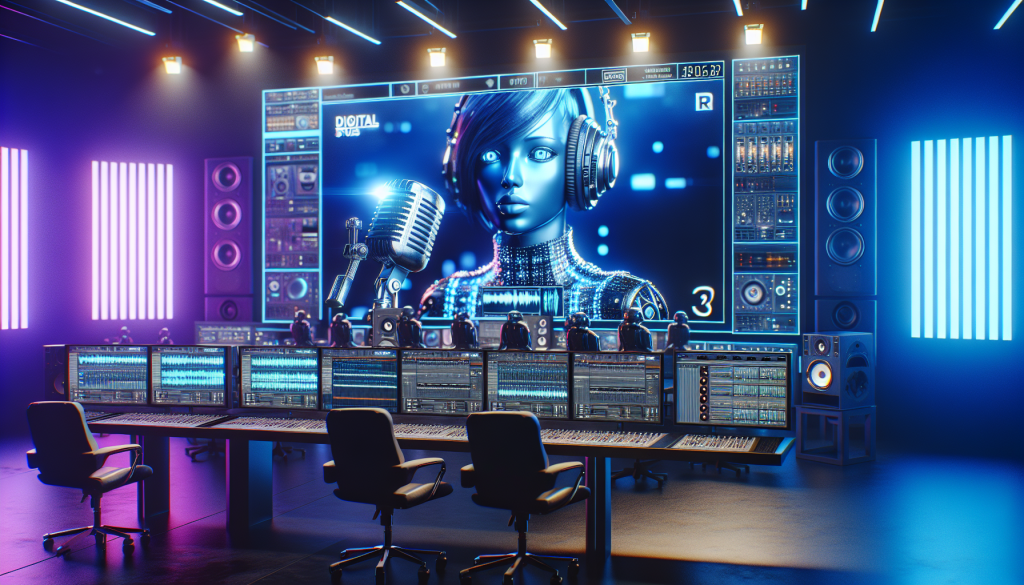
With over 1.4 million views on YouTube, 230,000 followers on Facebook, and three songs simultaneously ranking in the iTunes top 10, Eddie Dalton has emerged as a notable soulful blues artist. His album climbed to third place on the iTunes Top Albums chart, while he secured number-one singles in both the US and UK markets. However, the gray-haired vocalist is entirely artificial; every element of his voice, appearance, persona, and music was generated through artificial intelligence.
In a significant development, the creator behind Eddie Dalton is Dallas Ray Little, a video producer based in Greenville, South Carolina, who works for Crunchy Records. Little employs a roster of fictional artist names to produce AI-driven music and videos, with Eddie Dalton marking his first major success. What makes this phenomenon particularly compelling is the subtlety of the AI’s influence, as listeners often do not detect the artificial nature of the music.
Comments on YouTube describe Dalton’s songs as “smooth” and “captivating,” with one viewer noting, “I never heard of Eddie Dalton until I came across this song yesterday. I am now an official fan.” Across various platforms, fans have praised the music without realizing the artist is not human. The warm, textured vocal style draws comparisons to legendary figures like Otis Redding and B.B. King, evoking the impression of a rediscovered blues icon rather than a digital creation.
The standout track, “Another Day Old,” has amassed more than 1.4 million views on YouTube. Observers have pointed out the irony in the title, as the digital singer will, in fact, never age. His album, The Years Between, includes six tracks available on iTunes, such as “Running to You,” “Cheap Red Wine,” and “Stay a Little Longer.” Following his viral rise, eleven of his songs entered the iTunes blues top 100.
Meanwhile, data from Luminate reveals that the three songs reaching the iTunes top 10 generated roughly 6,900 track sales and 525,000 streams within a single week. Although these figures are authentic, they are modest in scale. Since iTunes rankings rely heavily on paid digital sales rather than total streaming numbers, focused efforts to boost downloads in a niche genre can propel songs to high chart positions that may not reflect widespread popularity.
Eddie Dalton represents the most prominent example so far of an AI-generated act leveraging this aspect of the iTunes system. A music industry insider commented, “The day we hear one of these songs on the radio, we’ll take this seriously.” However, traditional radio play may not be the primary objective. Achieving high chart rankings increases visibility and algorithmic recommendations, creating a feedback loop that enhances credibility and drives further downloads.
Notably, Dalton’s Apple Music profile does not currently indicate that the artist is AI-generated. While TikTok videos featuring Eddie Dalton are labeled as AI-created, his YouTube channel—where most fan engagement occurs—does not disclose the use of artificial intelligence. This inconsistency in transparency has sparked debate.
Dallas Little defends his approach, rejecting claims that his company operates as a “content farm.” He asserts, “Referring to it as a ‘content farm’ and suggesting people are being misled is inaccurate; it presents opinion as fact. Every social media video is clearly labeled as AI-generated, and many listeners are fully aware of that and enjoy the music for what it is. All of the songs are written by me.”
The controversy centers on disclosure practices. Little argues that since he writes the lyrics and directs the artistic vision, the output remains a human creation. As the music industry grapples with the boundary between human creativity and AI-generated content, current US copyright law excludes works produced entirely by AI without significant human input.

Leave an opinion