



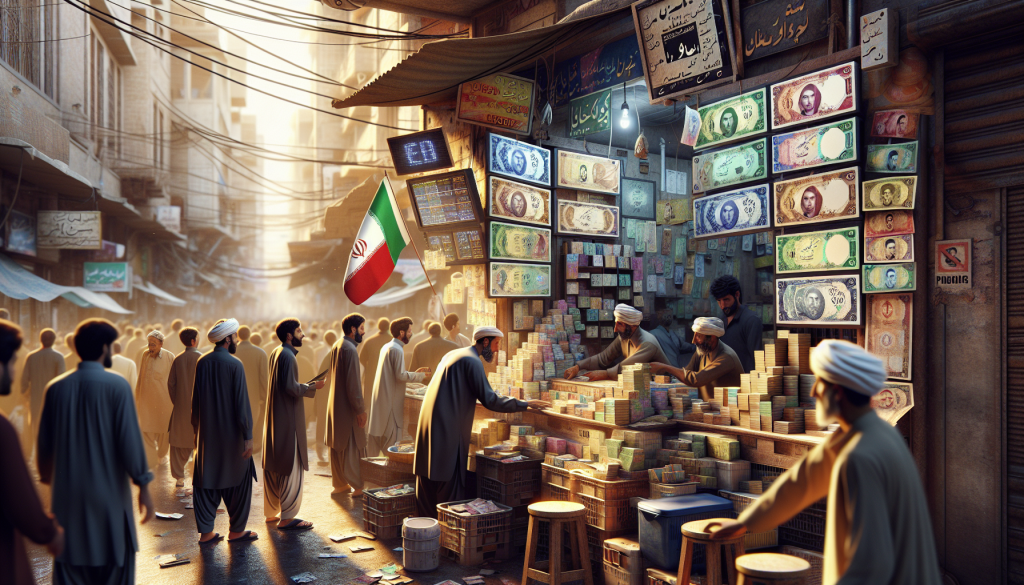
As of April 15, 2026, the mid-market exchange rate for the Iranian Rial stands at approximately 0.000212 Pakistani Rupees (PKR) per 1 Iranian Rial (IRR). This rate reflects data gathered around 09:30 UTC (approximately 02:30 PKT) from various local and international sources.
Despite ongoing international challenges such as sanctions and economic pressures, the Iranian Rial has demonstrated significant localized appreciation within Pakistan’s open currency markets over recent weeks. Currently, 1 PKR is equivalent to roughly 4,717 Iranian Rials, while 10 PKR exchanges for about 47,170 Iranian Rials.
In a significant development, the Iranian Rial has surged dramatically in Pakistan’s exchange markets, especially in major cities like Karachi and Lahore, as well as border regions. Reports indicate the Rial’s value has nearly quadrupled in recent periods. For instance, 10 million Iranian Rials, which previously traded near PKR 2,500 before the recent escalation, are now commanding prices up to PKR 10,000 currency dealers.
Several factors are driving this localized strength. Speculative buying fueled by optimism surrounding potential US-Iran diplomatic negotiations, sanctions relief, or resolutions to regional conflicts has led traders and investors to accumulate Rials, anticipating substantial future gains. Meanwhile, a boom in cross-border trade, particularly informal and semi-formal commerce along the Iran-Pakistan border in Balochistan, involving petroleum products, fuel, and other commodities, has increased demand for physical Iranian Rials used in settlements.
Additionally, hoarding and shifting market dynamics contribute to this trend. Exchange companies report heightened purchasing activity supported by relaxed export regulations, evolving trade patterns amid regional uncertainties, and the Rial’s low base value, which makes it attractive for speculative positions.
This situation highlights how regional trade flows, informal economic activities, and local market sentiment can influence currency movements independently from broader international foreign exchange trends.
For context, the Iranian Rial (IRR) is Iran’s official currency, introduced in 1798 and regulated by the Central Bank of Iran. It has faced significant devaluation pressures over the years due to prolonged sanctions, inflation, and geopolitical tensions, leading to occasional discussions about redenomination.
On the other hand, the Pakistani Rupee (PKR) has been Pakistan’s official currency since 1948, issued and managed by the State Bank of Pakistan. Its value is shaped by domestic economic policies, remittances, trade balances, inflation, and regional geopolitical developments within South Asia.

Leave an opinion