

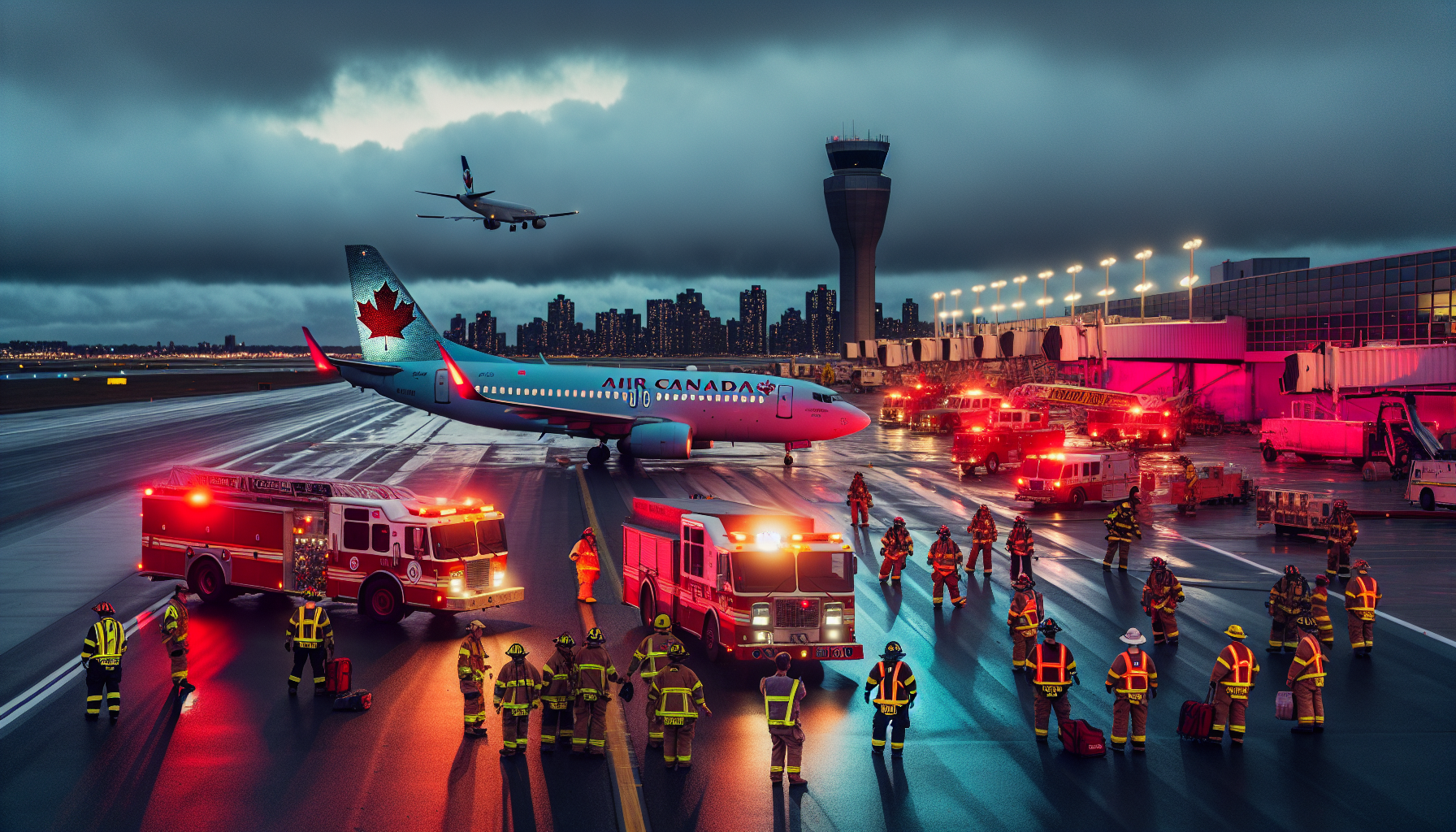
The tragic incident involving an Air Canada aircraft at New York’s LaGuardia Airport has drawn significant attention as experts meticulously examine the critical seconds leading up to the crash. The collision, which involved the plane and a fire truck, resulted in a deadly outcome that has raised numerous questions about airport safety protocols and emergency response coordination.
In the moments before the crash, the aircraft was taxiing on the runway when it unexpectedly collided with the emergency vehicle. This unprecedented event unfolded rapidly, leaving little time for evasive action. Investigators are now piecing together the sequence of events to understand how such a catastrophic encounter could occur within the highly regulated environment of one of the busiest airports in the United States.
It is worth noting that LaGuardia Airport, known for its complex layout and heavy traffic, has stringent safety measures in place to prevent accidents. However, this incident highlights potential gaps in communication and coordination between ground vehicles and aircraft. Emergency responders, including fire trucks, are routinely dispatched to the runways during various operations, but the timing and positioning in this case proved disastrous.
Meanwhile, aviation safety experts emphasize the importance of reviewing and enhancing protocols to ensure that ground vehicles and aircraft movements are synchronized more effectively. The Federal Aviation Administration (FAA) and airport authorities are expected to conduct thorough investigations to identify the root causes and recommend measures to prevent similar tragedies in the future.
In a related development, the families of the victims and the aviation community are seeking answers and accountability. The incident has sparked a broader conversation about airport safety standards, emergency response training, and the integration of advanced technologies to monitor and manage ground operations more efficiently.
