

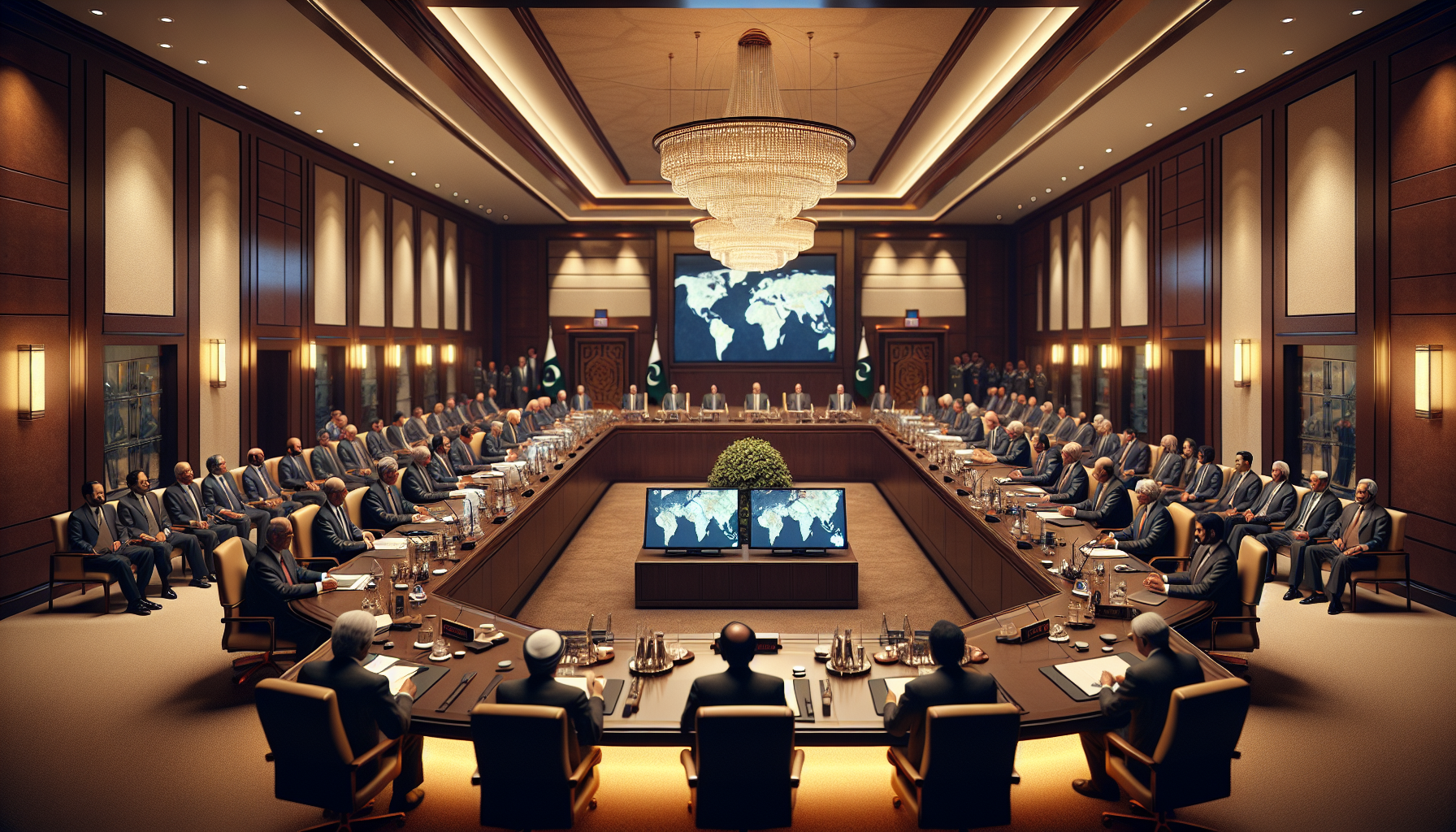
In the midst of escalating hostilities between the United States, Israel, and Iran, Pakistan has stepped forward, expressing its willingness to act as a mediator to help ease the growing tensions in the Middle East. Information Minister Attaullah Tarar underscored Pakistan’s commitment to regional stability, emphasizing the country’s readiness to play a constructive role in de-escalating the conflict that has intensified dramatically over recent days.
The conflict reached a new and dangerous phase when Iran launched missile attacks targeting Tel Aviv, using missiles equipped with cluster warheads. This retaliation came in response to Israel’s assassination of two high-profile Iranian figures: Ali Larijani, the former secretary of Iran’s Supreme National Security Council, and Basij Commander Gholamreza Soleimani. The attack also claimed the lives of Larijani’s son and his deputy, Alireza Bayat, in an Israeli strike that took place on Monday night.
These developments have led to a significant rise in casualties, with at least 14 people reported dead in Israel as a result of the ongoing conflict. The missile strikes hit a neighborhood near Tel Aviv, a densely populated area that also houses critical military installations. Iran’s Islamic Revolutionary Guard Corps confirmed the use of advanced weaponry, including Khorramshahr 4 and Qadr missiles, both capable of carrying multiple warheads, highlighting the severity of the confrontation.
It is worth noting that the United States and Israel have repeatedly stated that one of their primary objectives in this conflict is to prevent Iran from advancing its nuclear weapons program. The targeted killings and military operations have resulted in the deaths of several top Iranian officials, including the country’s supreme leader, further fueling the cycle of retaliation and violence.
Speaking in an interview, Tarar highlighted Pakistan’s strategic position as a regional partner with deep-rooted diplomatic ties across the Middle East. He conveyed Pakistan’s sincere desire to contribute to peace efforts and prevent further destabilization in the region. “Pakistan has consistently engaged with various regional stakeholders and remains committed to maintaining a balanced approach in its foreign relations,” he said. “Given our longstanding relationships, we believe Pakistan is well-positioned to facilitate dialogue and mediation among the countries involved.”
Meanwhile, the broader Middle East continues to experience relentless conflict, with Iran expanding its military strikes beyond Israel. Gulf Arab states, particularly the United Arab Emirates, have been targeted by over 2,000 missile and drone attacks. These assaults have hit US diplomatic missions, military bases, vital oil infrastructure, ports, airports, as well as residential and commercial areas, exacerbating regional instability.
In a related development, Saudi Arabia announced it will host a high-level consultative meeting in Riyadh, bringing together foreign ministers from several Arab and Islamic nations. The meeting aims to explore collaborative strategies to enhance regional security and stability amid the ongoing crisis.
Meanwhile, Iran’s newly appointed supreme leader, Mojtaba Khamenei, has firmly rejected any proposals for reducing tensions or initiating a ceasefire with the United States. During his first foreign policy meeting since taking office, Khamenei declared that peace talks are premature. He insisted that the US and Israel must first be forced to accept defeat and provide reparations before any negotiations can proceed, signaling a hardline stance that may complicate diplomatic efforts.
As the conflict shows no signs of abating, Pakistan’s offer to mediate represents a crucial diplomatic opening. The coming days will be critical in determining whether regional and international actors can find a path toward dialogue and de-escalation, or if the situation will continue to spiral into further violence and instability.
