

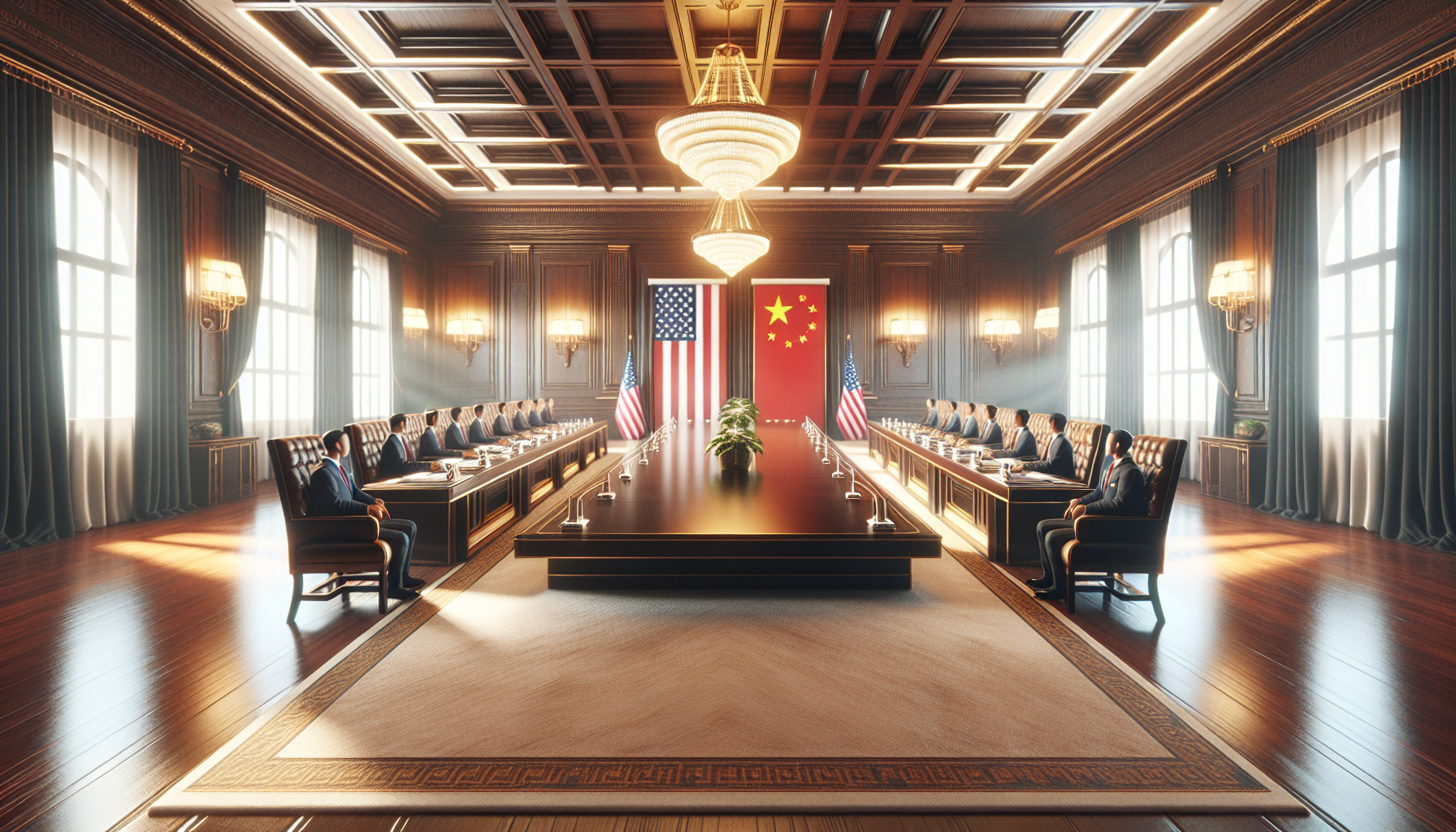
The scheduled meeting between US President Donald Trump and Chinese President Xi Jinping in Beijing has brought renewed attention to the concept of a ‘Group of Two’ or ‘G2’ alliance. This idea envisions the United States and China collaborating closely as the two dominant global powers to address international challenges and shape economic and geopolitical policies. The notion of a G2 first emerged during the early 2010s as China’s rise began to rival US influence on the world stage.
In a significant development, the summit could mark a pivotal moment in bilateral relations, potentially setting the tone for cooperation or competition between the two nations. Analysts suggest that a successful dialogue might lead to coordinated efforts on trade, security, and climate change, while failure could exacerbate tensions. The meeting also underscores the strategic importance of Beijing as a venue for high-stakes diplomacy between these superpowers.
Meanwhile, the global community watches closely, as the outcome of this summit could reshape international order and affect global markets. The possibility of a formalized G2 arrangement carries implications for multilateral institutions and alliances, potentially shifting power dynamics. Ultimately, the Trump-Xi encounter is poised to influence not only US-China relations but also the broader geopolitical landscape in the years ahead.
