



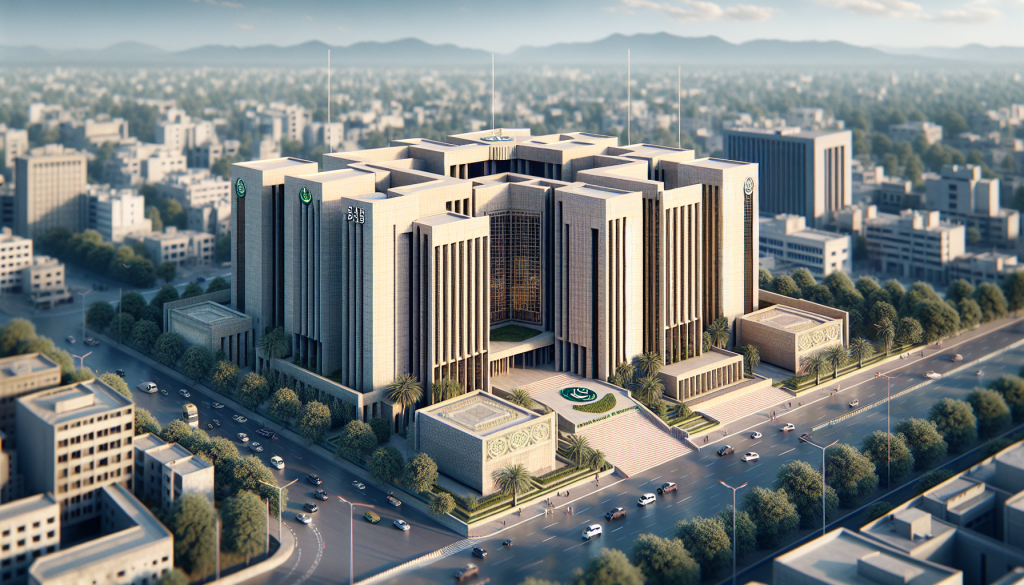
The State Bank of Pakistan reported that the country’s macroeconomic stability advanced further during the first half of fiscal year 2026, despite facing global trade uncertainties and severe domestic flooding. However, the ongoing conflict in the Middle East presents potential threats to inflation, trade, and remittance inflows.
In its “State of Pakistan’s Economy, Half Year Report FY26” published on Tuesday, the central bank highlighted that prudent monetary and fiscal policies, structural reforms, favorable commodity prices, and the International Monetary Fund programme collectively bolstered key economic indicators during H1-FY26.
The report emphasized a continued decline in average national consumer price inflation, supported by the SBP’s active foreign exchange purchases and net financial inflows, which strengthened external buffers. The central bank maintained a cautious monetary stance, ensuring a positive real interest rate, while the fiscal balance recorded a surplus for the first half of FY26.
Pakistan’s real GDP growth doubled compared to the same period last year, driven primarily by enhanced industrial activity, followed by gains in the services and agriculture sectors. This uptick in economic activity led to increased import volumes, although a sharp fall in rice exports lowered overall export earnings. Meanwhile, rising workers’ remittances financed a significant portion of deficits in trade, services, and primary income balances, helping to contain the current account deficit at moderate levels.
Inflation averaged 5.2 percent during H1-FY26, nearly two percentage points lower than the previous year’s period, aided by exchange rate stability, easing international commodity prices, and reductions in electricity tariffs. Additionally, fiscal consolidation efforts and lower interest payments transformed the fiscal balance into a surplus during this period, marking the first surplus since FY02, while the primary surplus remained consistent with last year.
Despite these positive developments, the central bank underscored the need for profound structural reforms to sustain high growth rates and long-term macroeconomic stability. The report identified persistent challenges such as low savings and investment, weak competitiveness, declining exports, subdued foreign direct investment, and a persistently low tax-to-GDP ratio.
In a significant development, the SBP dedicated a special chapter to climate change, warning that Pakistan is among the world’s most vulnerable countries to climate-related disasters, despite its minimal contribution to global greenhouse gas emissions. Pakistan ranks as the 15th most affected nation by climatic events and faces serious risks due to inadequate preparedness and limited climate financing. The report also noted that Pakistan’s GDP emissions intensity remains relatively high because of structural inefficiencies and a carbon-intensive growth model.
Looking ahead to FY26, the SBP indicated that high-frequency indicators—such as the Purchasing Managers’ Index, Large-Scale Manufacturing, and construction activity—showed sustained economic momentum through February 2026, before the Middle East conflict began impacting output in the subsequent months. The central bank now expects real GDP growth to remain near the lower bound of its earlier forecast range of 3.75 to 4.75 percent for FY26.
Furthermore, the current account deficit is projected to stay close to the lower end of the previous estimate of zero to one percent of GDP, despite the stronger economic activity and rising commodity prices. However, the SBP cautioned that rising international oil and commodity prices could keep inflation above the medium-term target range of 5 to 7 percent for most of FY27. An extended conflict in the Middle East could also pose additional risks to Pakistan’s medium-term economic outlook.

Leave an opinion