

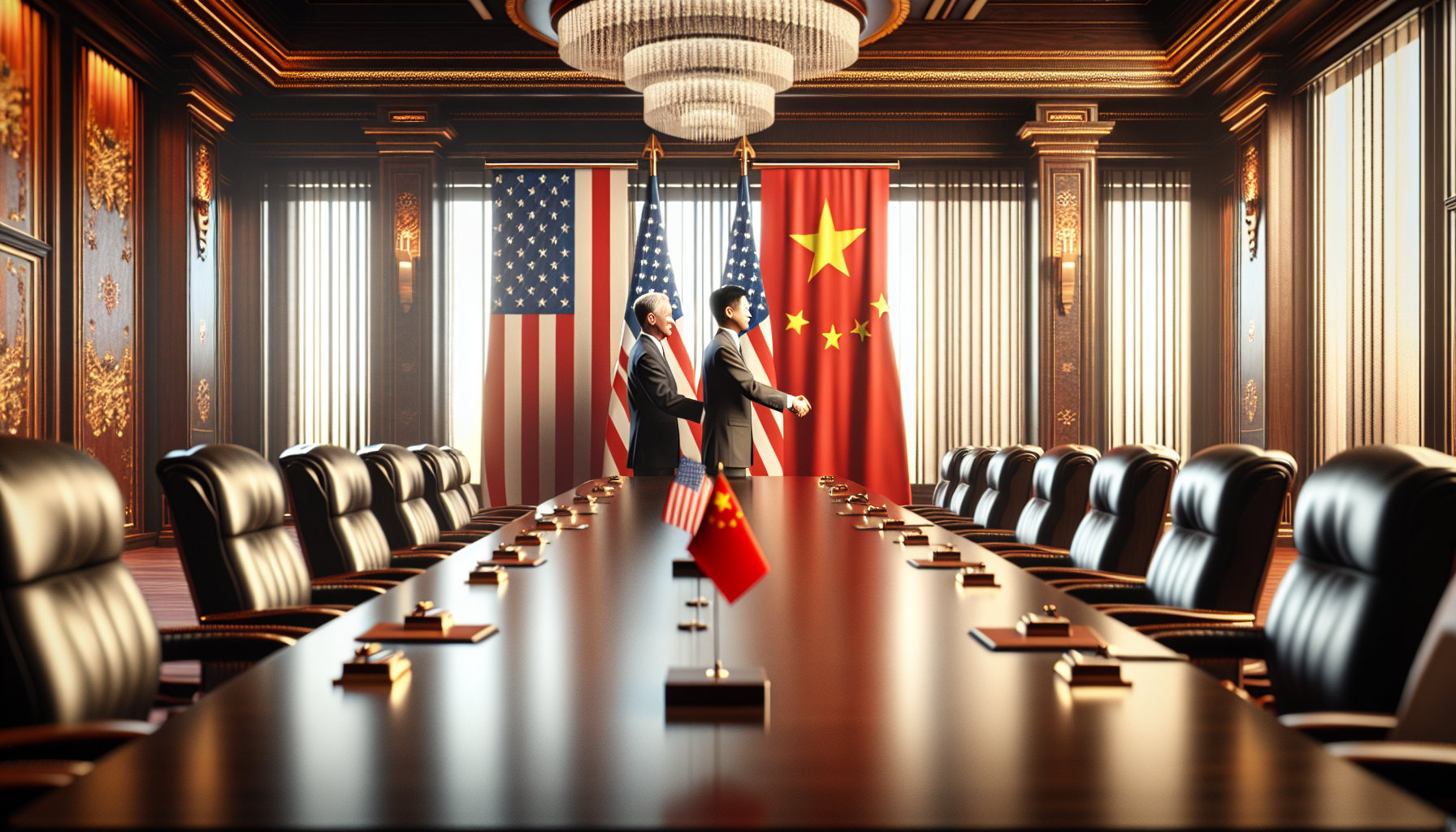
A high-level US delegation’s visit to Beijing has intensified diplomatic efforts between Washington and Beijing. On Thursday, US Senator Steve Daines held talks with Chinese Foreign Minister Wang Yi, focusing on stabilizing the strained bilateral relationship.
This meeting occurred just days before US President Donald Trump is set to visit China on May 14–15 for discussions with Chinese President Xi Jinping. This visit is highly anticipated as it is expected to influence the next chapter of US-China relations amid ongoing global economic and security challenges.
During their discussion, Wang Yi described Senator Daines’ visit as “highly symbolically significant,” marking the first delegation of US senators to visit China since Trump assumed office. Wang emphasized the importance of direct, face-to-face communication, calling it the foundation for rebuilding trust between the two nations.
Wang reiterated China’s consistent stance on US relations, advocating for mutual respect, peaceful coexistence, and cooperative win-win outcomes. He also noted that high-level interactions between Presidents Xi Jinping and Trump have been crucial in maintaining relative stability despite recent geopolitical tensions.
Senator Daines highlighted shared goals, stating that both countries ultimately desire stability and peaceful cooperation. He also pointed out that US senators represent a wide political spectrum and act independently from the executive branch, indicating Congress’s parallel diplomatic efforts.
The discussions also covered broader regional matters, including the ongoing crisis in Iran. Daines commended Wang for his recent diplomatic engagement with Iran’s foreign minister, acknowledging China’s positive role in easing Middle Eastern tensions and expressing personal gratitude for these de-escalation initiatives.
These talks underscore ongoing attempts by both Washington and Beijing to maintain open communication channels despite significant disagreements over trade, technology, and security. Officials from both sides expressed cautious optimism that continuous dialogue could help stabilize one of the world’s most critical and complex bilateral relationships.
