

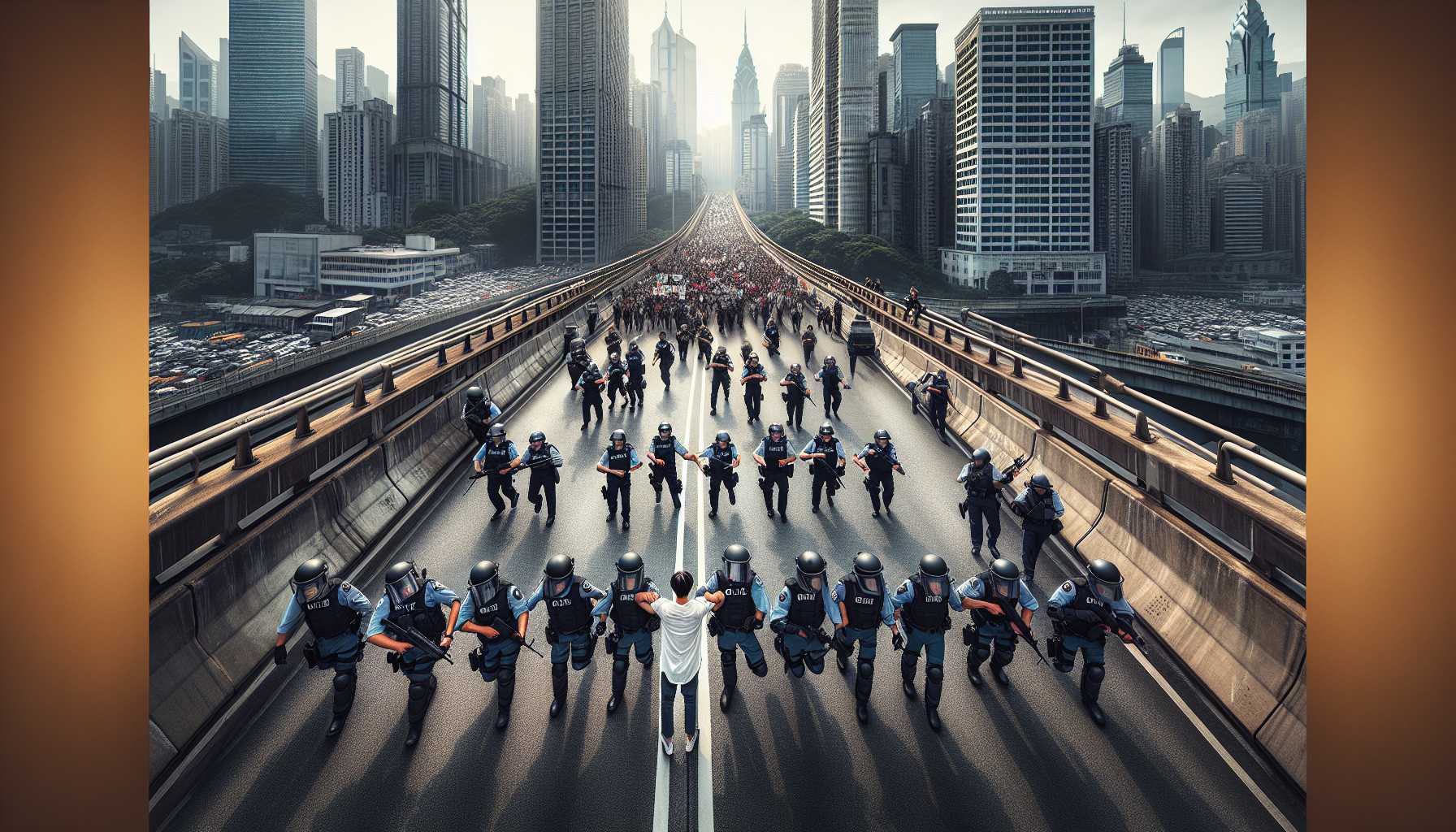
Authorities apprehended an anti-war demonstrator who concluded a five-day occupation on the Frederick Douglass Bridge in Washington. The protester had maintained a continuous presence atop the bridge, drawing significant public and media attention to their cause. This form of civil disobedience disrupted normal traffic flow and highlighted ongoing tensions surrounding war policies.
Such prolonged protests on critical infrastructure are rare and often spark debates about the balance between public safety and the right to peaceful demonstration. The Frederick Douglass Bridge, a vital transportation link in the capital, became a focal point for anti-war activism during this period. The protester’s actions underscored persistent public dissent against military engagements and government policies.
In a significant development, the arrest marks the end of this high-profile demonstration, potentially influencing future protest tactics and law enforcement responses in the city. The event also reignited discussions on how authorities manage prolonged sit-ins in sensitive urban locations. Meanwhile, the protest has contributed to ongoing national conversations about war and civil rights activism.
