

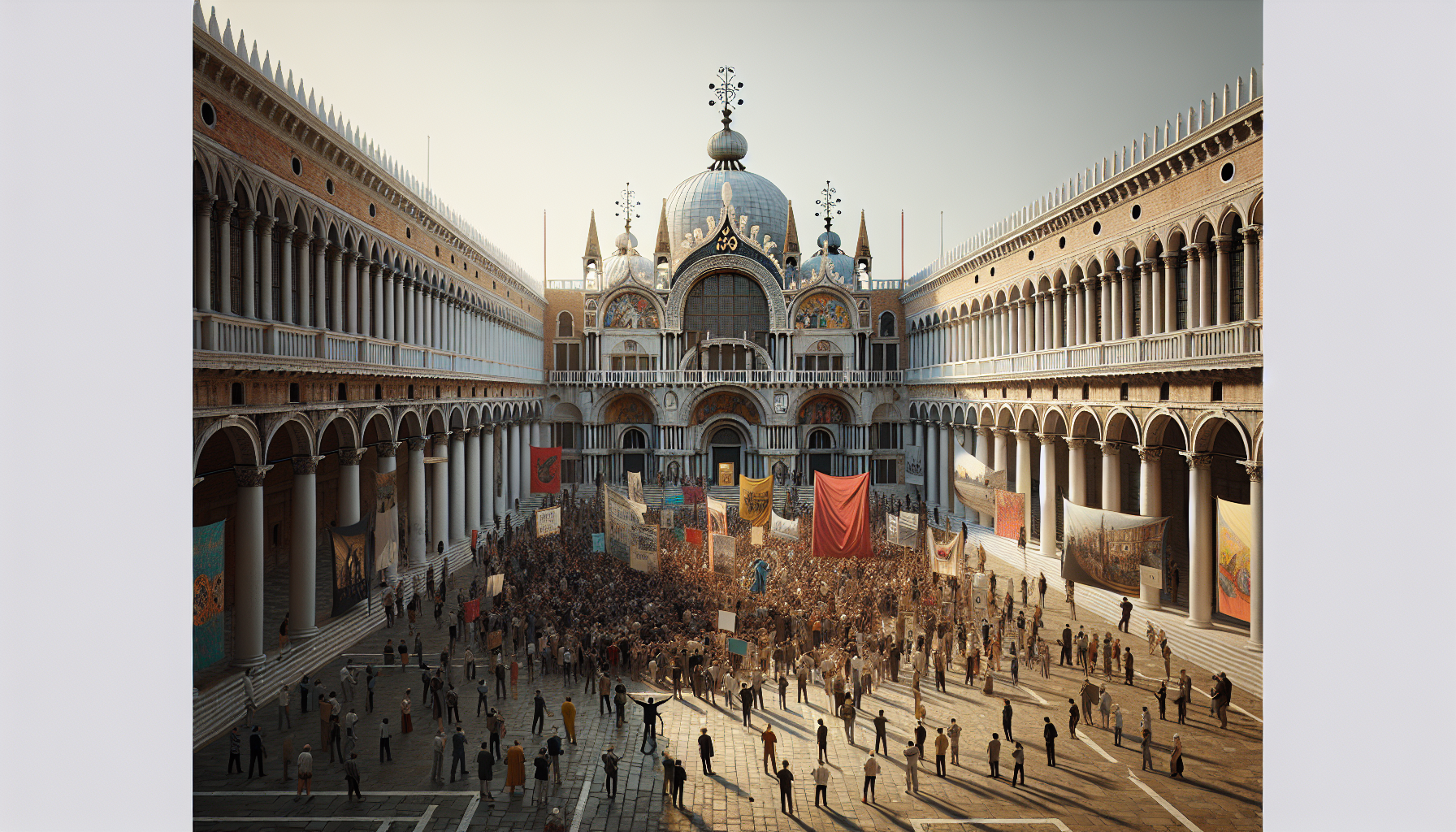
The Venice Biennale, one of the world’s most renowned contemporary art exhibitions, has ignited controversy by featuring Russia for the first time since its full-scale invasion of Ukraine. This decision has provoked protests from activists and visitors who argue that including Russia undermines the ongoing conflict’s gravity and the suffering caused by the war. The Biennale, held every two years in Italy, is a major platform for international artists and nations to showcase cultural expressions, making Russia’s participation highly symbolic.
Notably, the inclusion of Russia has sparked a broader debate about the role of art in political conflicts and whether cultural events should remain neutral or take a stand. Supporters of Russia’s presence emphasize the importance of separating art from politics, urging audiences to “enjoy the show” and focus on artistic merit rather than geopolitical tensions. Meanwhile, critics contend that allowing Russia to participate without addressing the invasion sends a problematic message of normalization and tacit acceptance.
In a significant development, the protests at the Venice Biennale highlight the increasing intersection of global politics and cultural diplomacy. The backlash reflects wider international tensions and the challenges faced by cultural institutions in navigating ethical responsibilities during conflicts. As the war in Ukraine continues, the Biennale’s stance and the reactions it provokes may influence how future global art events engage with contentious political issues.
