

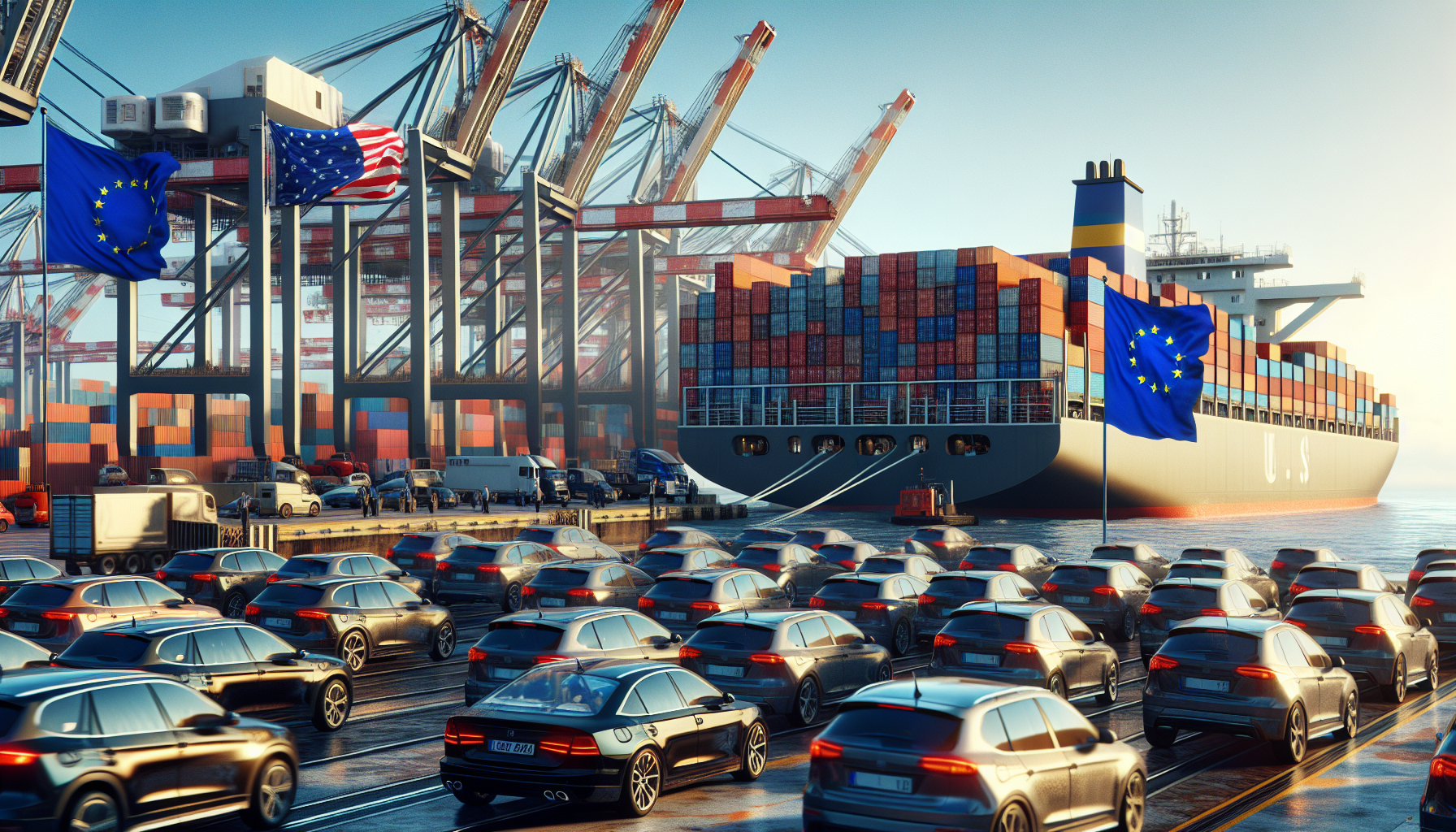
President Donald Trump has announced a significant increase in tariffs on cars and trucks imported from the European Union, accusing Brussels of failing to uphold a previously agreed trade deal. The President declared on Truth Social that the tariffs would rise to 25 percent starting next week, reversing an earlier agreement that had reduced auto tariffs for the EU to 15 percent.
US officials have expressed frustration over what they describe as the European Union’s slow implementation of the accord’s terms. This move signals a sharp shift in US trade policy toward the EU automotive sector.
In a notable legal development, these new tariffs are being imposed under Section 232 of the Trade Act of 1964, a national security provision that remains unaffected by a recent US Supreme Court decision limiting the President’s authority to impose emergency tariffs. This legal framework enables the administration to circumvent restrictions that had previously limited the use of broad trade barriers.
The tariff hike has raised concerns across Europe, as it threatens to impose heavier costs on European car manufacturers exporting to the US market. These companies now face steeper trade barriers compared to their counterparts in Japan, South Korea, and Mexico, potentially impacting their competitiveness.
Responding to the announcement, Olof Gill, a European Commission spokesperson, defended the EU’s progress, emphasizing that the bloc is fulfilling its commitments standard legislative procedures. He also cautioned that if the United States breaches the existing agreement, the EU would consider all available measures to safeguard its interests.
