

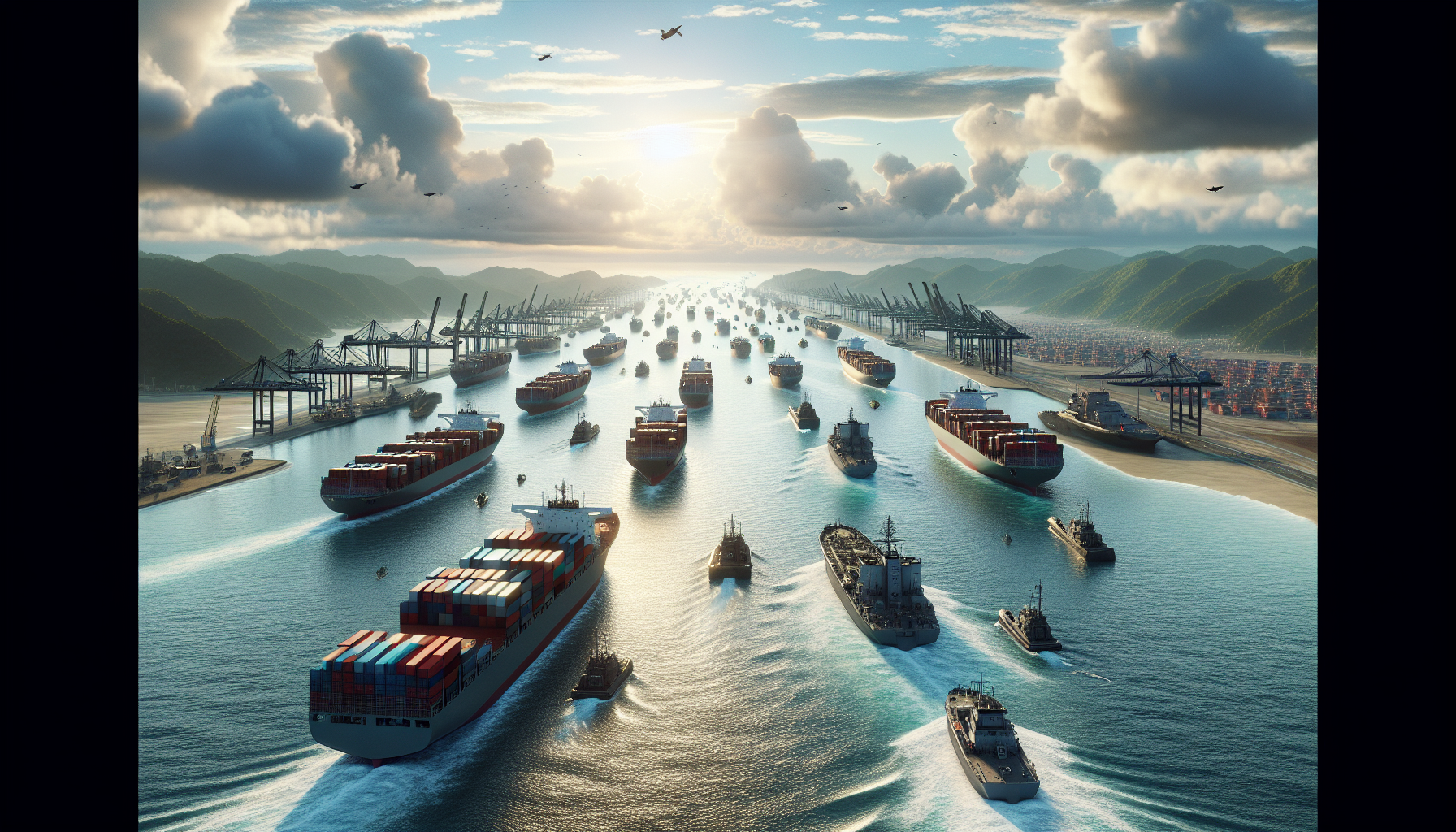
Global shipping lanes are increasingly becoming arenas of geopolitical conflict, with strategic waterways such as the Strait of Hormuz, the Panama Canal, the South China Sea, and the Black Sea witnessing escalating tensions. These vital maritime corridors, essential for international trade and energy supplies, are now subject to complex political rivalries that threaten the stability of global commerce. The convergence of military posturing, territorial disputes, and economic sanctions has introduced unprecedented risks to the smooth flow of goods across these regions.
In a significant development, the traditional rules governing maritime navigation and commerce are being challenged by competing national interests and security concerns. The Strait of Hormuz, a critical chokepoint for oil exports, has seen increased naval activity amid regional hostilities. Meanwhile, the South China Sea remains a hotspot due to overlapping territorial claims and militarization, affecting freedom of navigation. The Panama Canal and the Black Sea also face disruptions linked to broader geopolitical struggles, impacting global supply chains and shipping costs.
These evolving dynamics underscore the strategic importance of maritime routes in international relations and economic security. The rising volatility in these waters not only complicates shipping logistics but also heightens the risk of conflict escalation, with potential global repercussions. Stakeholders in global trade, including governments and shipping companies, must navigate this turbulent environment carefully to mitigate risks and ensure the resilience of international maritime commerce.
