

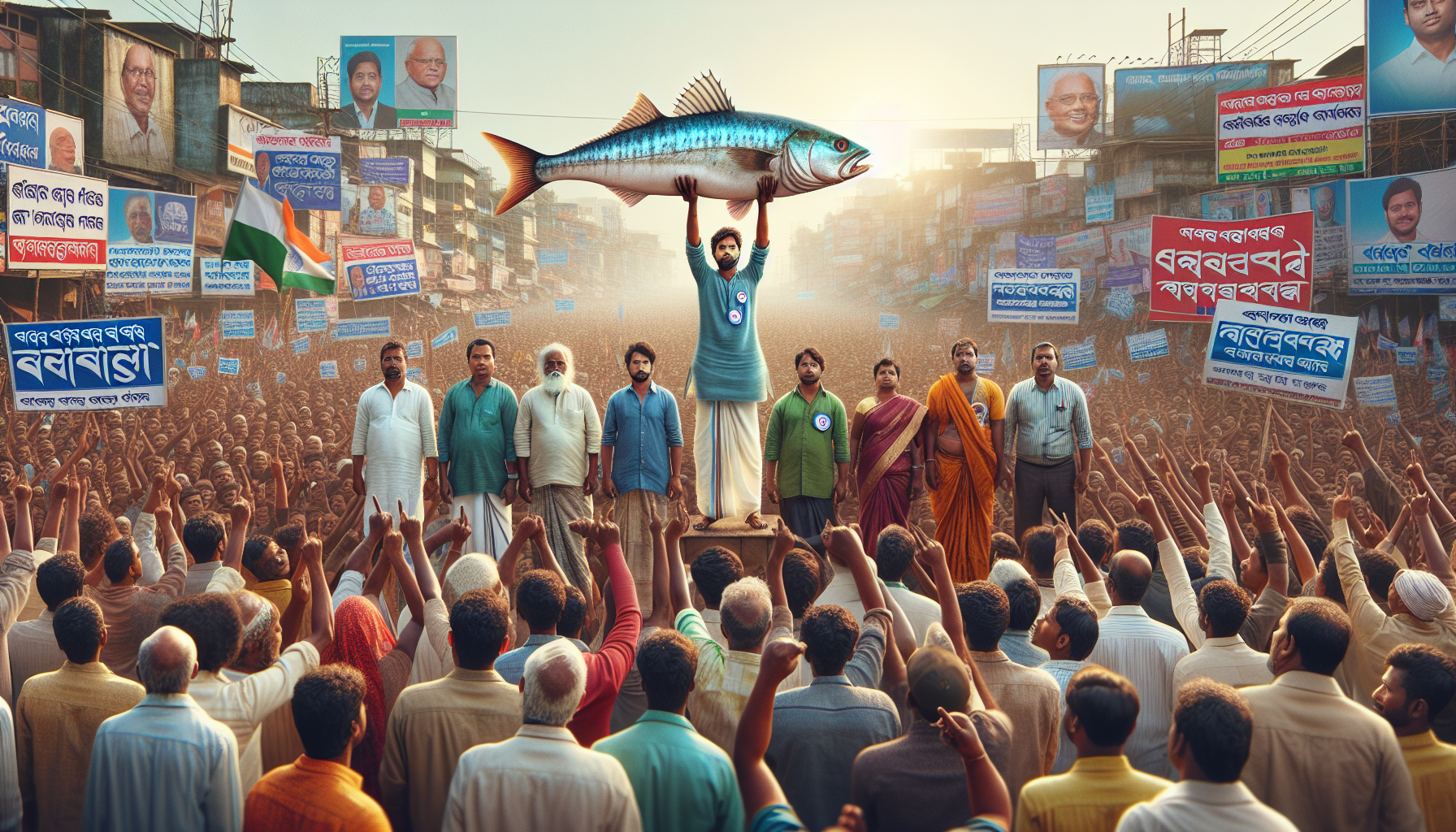
In the highly contested West Bengal elections, Prime Minister Narendra Modi’s campaign team adopted a unique strategy by holding fish during their rallies. This approach aimed to establish a cultural connection with the electorate, as fish is a significant symbol in the region’s identity and economy. The use of such local symbols reflects the campaign’s effort to appeal directly to voters’ sentiments and everyday lives. This tactic highlights the importance of regional cultural elements in India’s diverse political landscape.
West Bengal has long been a politically vibrant state with fierce competition among parties, making every election a critical battleground. The fish, being the state’s official emblem and a staple in local cuisine, carries deep cultural resonance that political parties often leverage to gain favor. Modi’s team’s choice to visibly associate with this symbol indicates a strategic move to counter opposition narratives and strengthen grassroots support. This method underscores how symbolism and cultural affinity remain powerful tools in Indian electoral politics.
In a significant development, the campaign’s use of fish imagery could influence voter perceptions by reinforcing a sense of shared identity and community. Such symbolic gestures are crucial in a state where political allegiance is closely tied to cultural pride and local traditions. Meanwhile, this strategy also reflects broader trends in Indian politics, where leaders increasingly use culturally relevant symbols to mobilize support. The impact of this approach will be closely watched as the election results unfold, potentially shaping future campaign tactics nationwide.
