



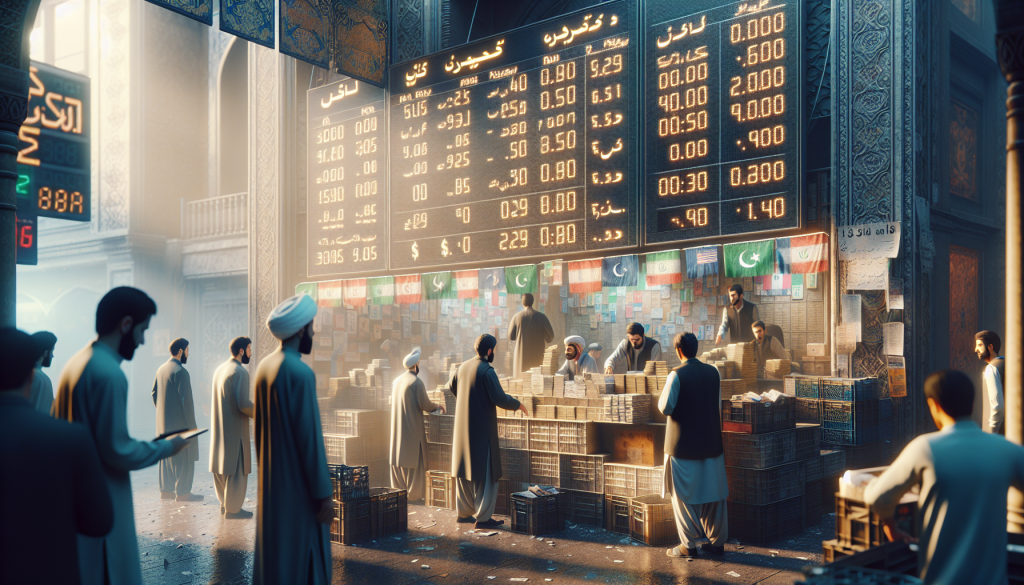
On April 18, 2026, the exchange rate of the Iranian rial against the Pakistani rupee was actively traded in the open market, highlighting the financial interactions between Iran and Pakistan. Currency exchange rates between these neighboring countries are influenced by various factors including trade relations, economic policies, and geopolitical developments. The rial’s valuation against the rupee serves as a barometer for bilateral trade competitiveness and cross-border economic activities.
In a significant development, fluctuations in the rial’s exchange rate can impact import-export dynamics, affecting businesses and consumers in both nations. Traders and investors closely monitor these rates to make informed decisions regarding currency conversions and financial planning. Moreover, the open market rate often reflects real-time supply and demand conditions, providing a transparent view of currency strength relative to official rates.
Meanwhile, the exchange rate trends between the Iranian rial and Pakistani rupee also carry broader implications for regional economic stability and cooperation. As both countries seek to enhance trade ties and economic integration, understanding currency movements becomes crucial for policymakers and market participants. The April 18, 2026 data point adds to the ongoing narrative of economic interdependence in South Asia and the Middle East.

Leave an opinion