

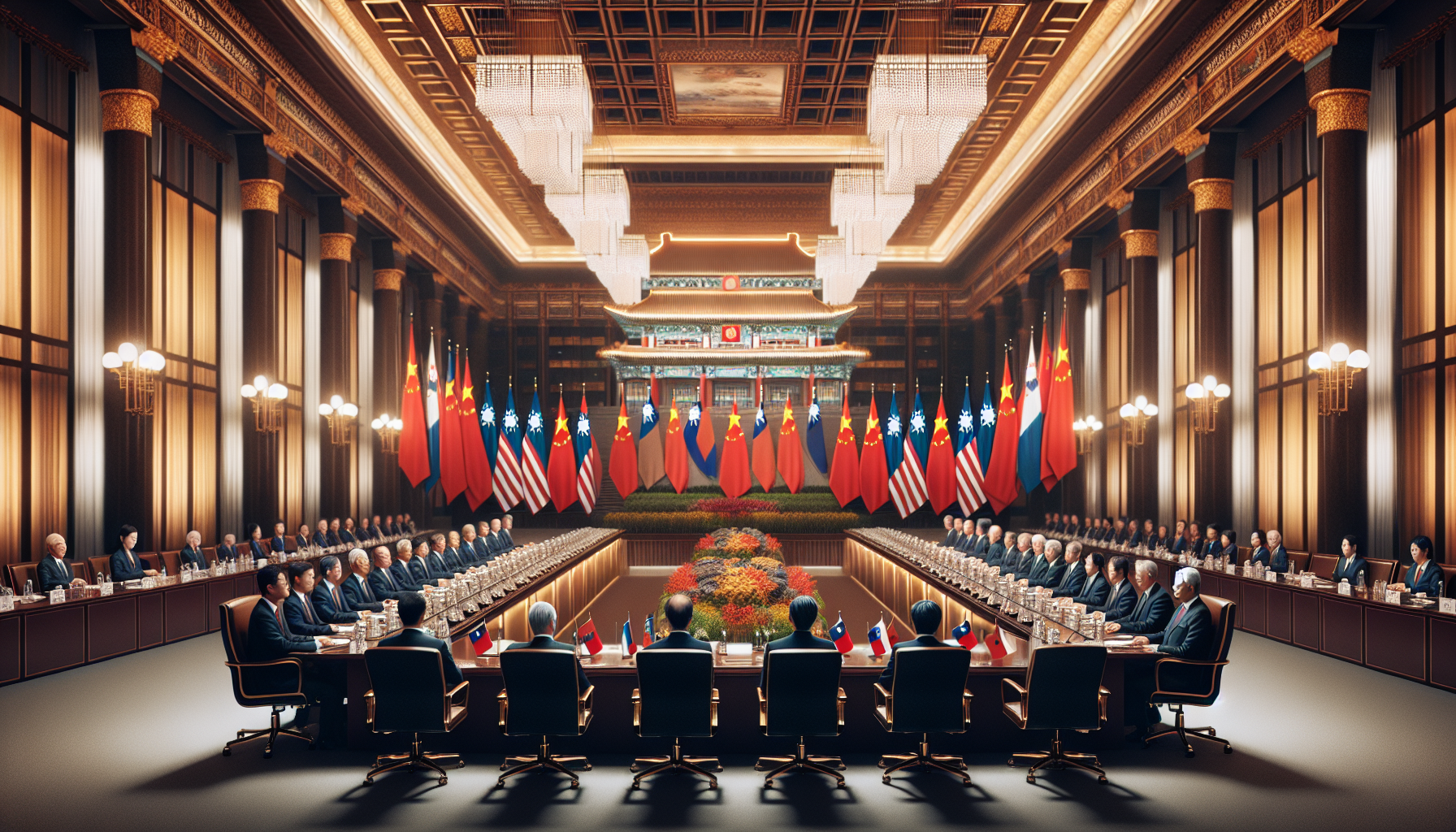
China declared plans to introduce a series of initiatives aimed at strengthening exchanges with Taiwan, coinciding with the conclusion of a rare visit by an opposition party delegation from the self-governed island. Kuomintang (KMT) chairwoman Cheng Li-wun marked the first leader of her party to visit China in ten years, despite facing criticism at home for perceived pro-Beijing leanings.
Since the Democratic Progressive Party’s (DPP) presidential victory in 2016, Beijing has severed high-level communications with Taiwan. The DPP, which remains in power, firmly rejects Beijing’s assertion that Taiwan is part of its territory.
In a significant development, Beijing’s Taiwan Affairs Office (TAO) unveiled a list of ten measures designed to “promote the peaceful development of cross-strait relations and enhance the well-being of compatriots.” This announcement came just hours before Cheng was scheduled to return to Taipei on Sunday afternoon.
Among the new policies is the promotion of resuming a pilot program allowing individual travel to Taiwan’s main island for residents of Shanghai and Fujian province. Additionally, the TAO aims to facilitate the full restoration of direct flights between Taiwan and several Chinese cities, including Urumqi, Xi’an, Harbin, Kunming, and Lanzhou.
China will also permit the import of Taiwanese dramas, documentaries, and animations, provided they meet criteria of being “correctly oriented, wholesome, and high-quality.”
KMT Vice Chairman Chang Jung-kung welcomed the measures, stating they align closely with the expectations of various sectors in Taiwan and represent a meaningful step toward peaceful cross-strait relations.
The announcement followed Cheng’s high-profile meeting with President Xi Jinping in Beijing two days earlier. During their discussion, Xi emphasized that “the general trend of compatriots on both sides of the Strait getting closer, edging nearer and becoming united will not change.” Cheng echoed this sentiment at a subsequent press conference, urging younger generations to “avoid war” by opposing Taiwan independence.
Meanwhile, Beijing has intensified military pressure around Taiwan in recent years, conducting near-daily fighter jet and warship deployments alongside frequent large-scale military exercises.
