

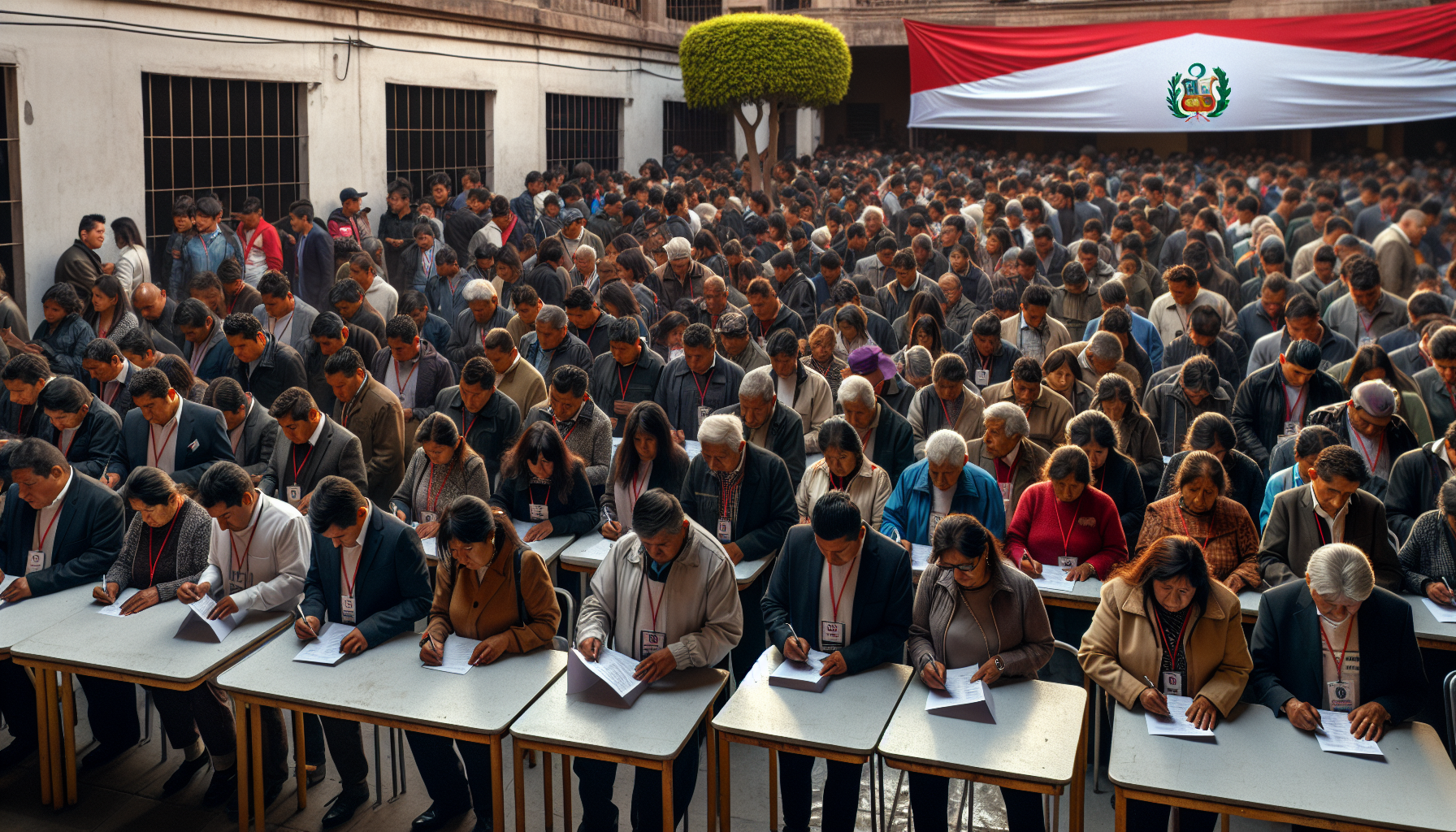
On Sunday, Peruvians will cast their ballots to elect a new president alongside members of the national congress. This election comes at a critical time as the country faces political instability and widespread calls for reform. The presidential race features a diverse group of candidates representing various political ideologies and social backgrounds, reflecting the nation’s complex political landscape.
Notably, the outcome of this election will significantly influence Peru’s future governance and policy direction, especially in areas such as economic recovery, social justice, and anti-corruption efforts. The new congress will also play a crucial role in shaping legislation and overseeing the executive branch, making these elections pivotal for the country’s democratic stability. Voter turnout and engagement are expected to be high given the stakes involved.
Meanwhile, international observers and local analysts are closely monitoring the electoral process to ensure transparency and fairness. The results will have implications beyond Peru’s borders, affecting regional political dynamics in Latin America. As Peru navigates this transition, the elected leaders will be tasked with addressing pressing issues such as inequality, indigenous rights, and economic development.
