



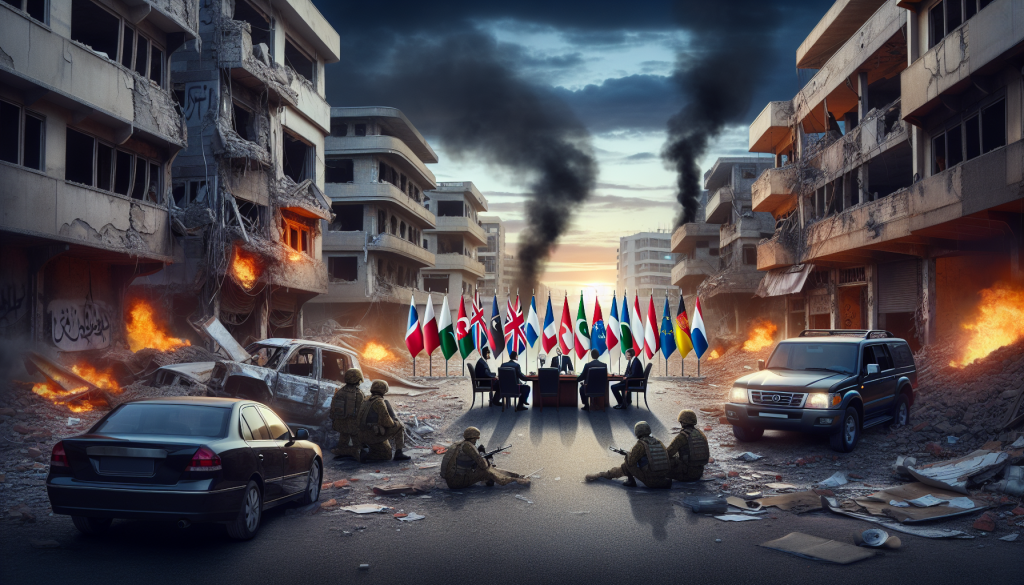
Pakistan, alongside the United Kingdom, France, Spain, and other nations, strongly condemned Israeli airstrikes on Lebanon on Thursday, as diplomatic efforts intensified to broaden a fragile ceasefire in the region to include Lebanese territory and avert further conflict escalation.
Pakistan’s Foreign Office issued a statement condemning the ongoing Israeli military actions, highlighting the resulting civilian casualties and extensive damage to infrastructure. The statement emphasized that these attacks undermine international attempts to stabilize the Middle East and constitute a breach of international law. It called on the global community to take immediate and decisive measures to halt the violence. Pakistan reaffirmed its steadfast solidarity with Lebanon, underscoring its support for Lebanon’s sovereignty and territorial integrity.
European countries also voiced their concerns over Israel’s recent military operations. British Foreign Secretary Yvette Cooper described Israel’s bombardment of Lebanon as profoundly harmful, warning it could destabilize the ceasefire agreement brokered between the United States and Iran. Cooper stressed the importance of including Lebanon in the ceasefire to prevent a wider regional crisis. Speaking to Times Radio, she stated, “That escalation that we saw from Israel yesterday was deeply damaging, and we want to see an end to hostilities.”
France echoed these concerns, with Foreign Minister Jean-Noel Barrot condemning the “massive” Israeli strikes and insisting Lebanon must be encompassed within the ceasefire framework negotiated between Washington and Tehran. Barrot expressed expectations that Iran would make significant concessions in forthcoming talks in Pakistan, including abandoning nuclear weapons development, limiting missile and drone capabilities, and reducing support for militant groups such as Hezbollah, Hamas, and the Houthis.
In addition, Barrot called for the reopening of the Strait of Hormuz, a critical global shipping route, highlighting broader international worries about regional security and energy supply disruptions.
Meanwhile, Cooper noted that Britain is collaborating with other countries to help stabilize the region and facilitate the reopening of the Strait of Hormuz. She also acknowledged tensions with the United States regarding its approach to the conflict, criticizing some of U.S. President Donald Trump’s rhetoric, including threats directed at Iran, as “dangerous” and potentially escalating the situation further.
The recent Israeli strikes on Lebanon have heightened fears of a broader regional war, even as efforts continue to maintain the ceasefire between the United States and Iran, brokered with Pakistan’s involvement. Diplomats emphasize that extending the ceasefire to cover Lebanon is now crucial to preventing the violence from spilling over further, as tensions across the Middle East remain elevated.

Leave an opinion