

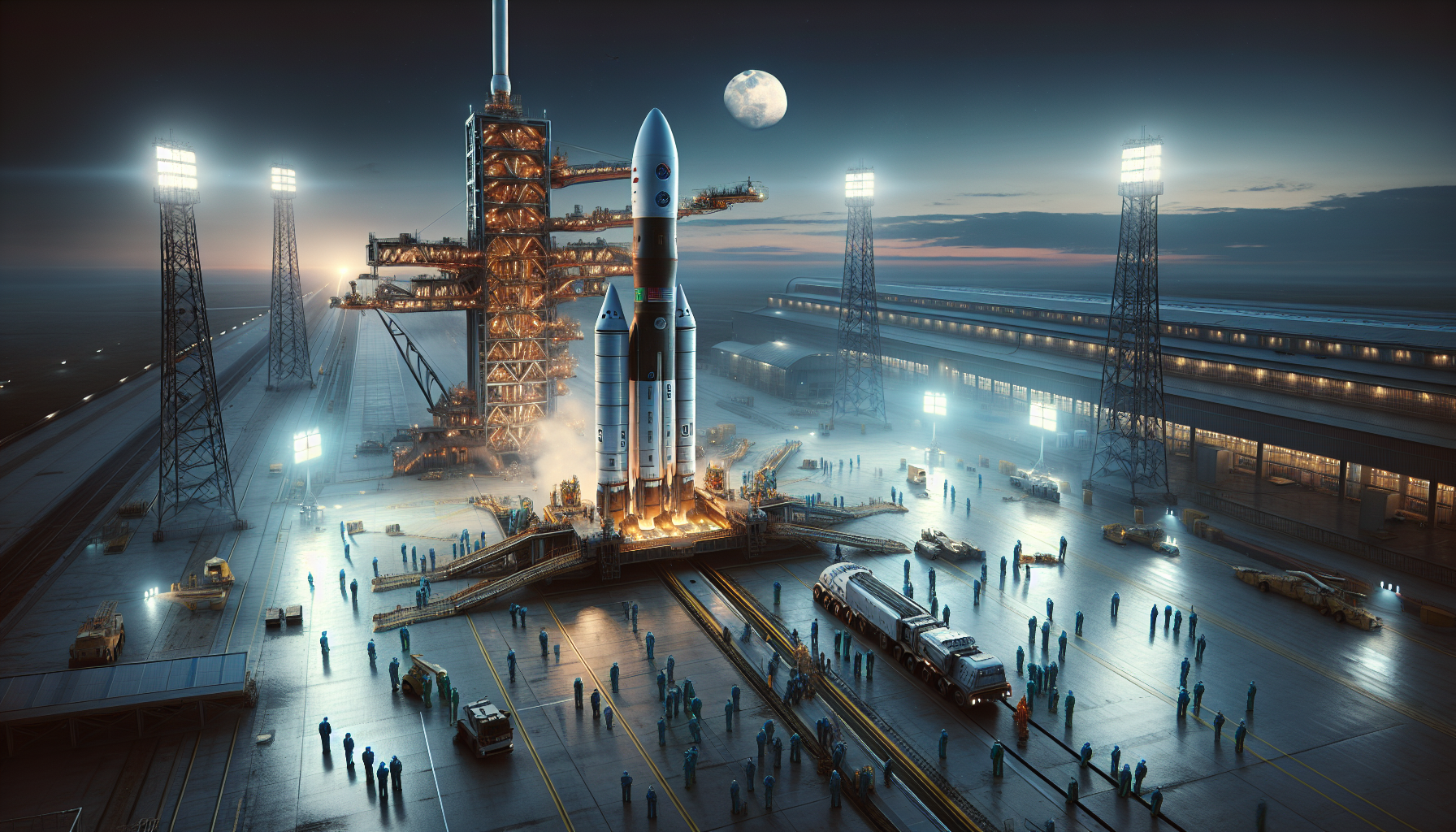
Russia has announced delays in the launch schedules of three lunar missions, marking a significant setback for its ambitious moon exploration plans. The launches of the Luna-28, Luna-29, and Luna-30 spacecraft have been deferred to the period between 2032 and 2036. This development comes as the United States celebrates a historic crewed flight around the moon.
Sergei Chernyshev, Vice President of the Russian Academy of Sciences, confirmed the postponements but did not specify the original launch dates. These delays follow a series of setbacks for Russia’s space program, including the crash of its unmanned Luna-25 lander on the lunar surface in 2023 and previous postponements of other lunar and space missions last year.
In a notable statement after the 2023 mission failure, the head of Roskosmos emphasized the strategic importance of lunar exploration for Russia, highlighting the competition to harness the moon’s natural resources. Historically, the Soviet Union was a pioneer in space exploration, launching the first satellite and sending the first human into orbit during the 1960s. However, Russia’s space program has diminished in influence since the Soviet era, lagging behind the United States and increasingly China in space achievements.
Meanwhile, NASA has achieved a milestone with its Artemis II mission, which successfully sent four astronauts on a crewed flight around the moon. This mission marks the first time in over five decades that humans have traveled beyond low Earth orbit, venturing further into space than ever before.
