

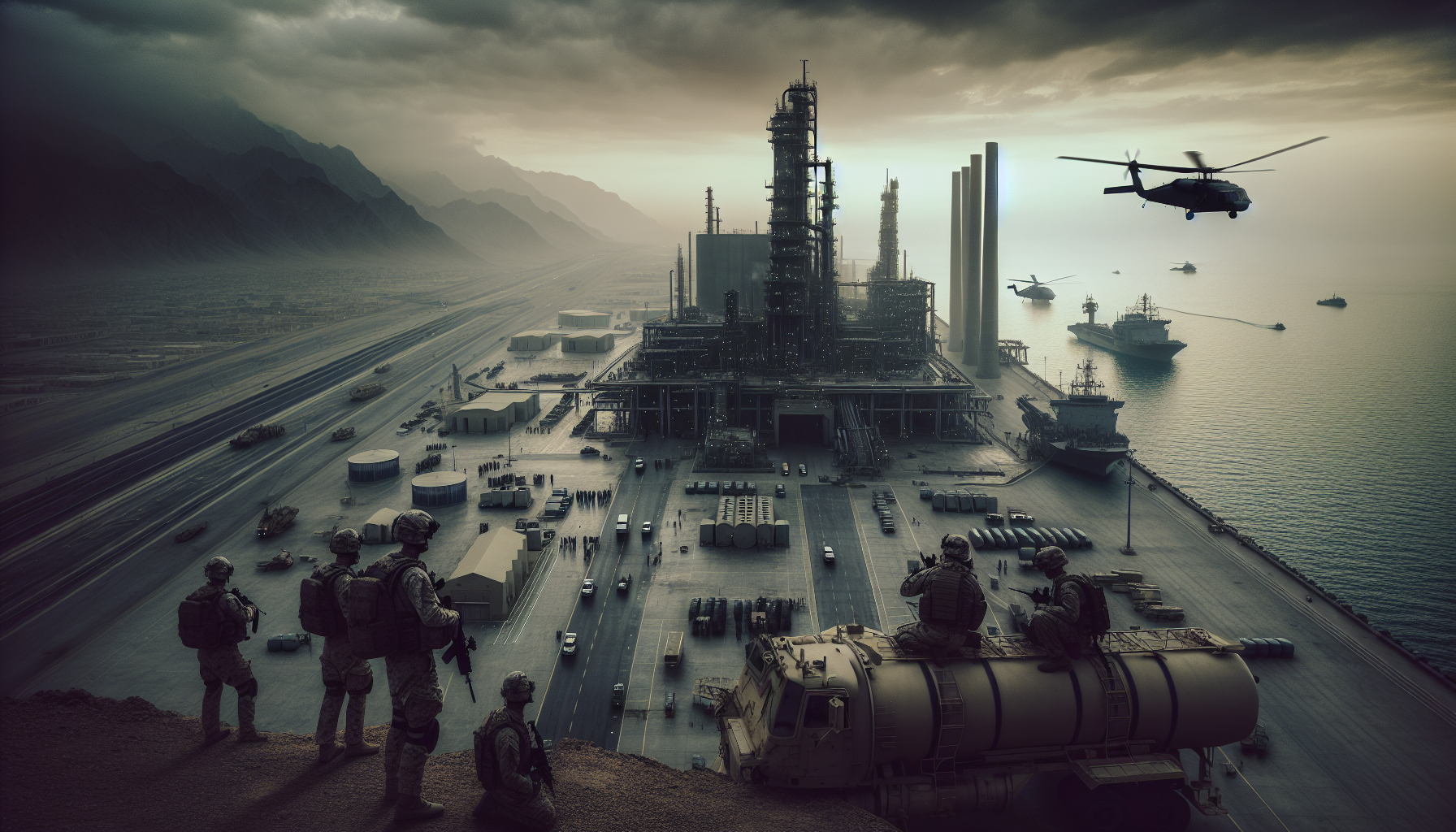
President Donald Trump has been contemplating the deployment of ground forces to capture Kharg Island, a critical Iranian oil hub. Analysts suggest that while such an operation could be executed swiftly, it would expose US troops to significant dangers and potentially extend the conflict rather than bring it to a swift conclusion.
Kharg Island is located 16 miles (26 km) off Iran’s northern Gulf coast, approximately 300 miles (483 km) northwest of the Strait of Hormuz. Its deep surrounding waters allow large oil tankers to dock, which cannot approach the shallow coastal areas of mainland Iran. The island is responsible for handling 90% of Iran’s oil exports, making it a strategic target that, if seized, could severely disrupt Tehran’s energy trade and exert substantial economic pressure on the country. Iran ranks as the third-largest producer within the Organization of Petroleum Exporting Countries (OPEC).
In mid-March, US forces conducted strikes against Kharg Island, with President Trump claiming that all military targets there were “totally obliterated.” He also indicated that oil infrastructure could be targeted next. The administration is reportedly considering sending ground troops to the island. Two Marine contingents are expected to arrive in the region by the end of the month, alongside plans to deploy thousands of airborne troops, providing the president with more options for a potential ground assault.
Although US forces might capture the island relatively quickly, experts caution that this would not guarantee a decisive end to the conflict. The operation’s unpopularity domestically, especially with the November midterm elections approaching, adds to the complexity. Ryan Brobst and Cameron McMillan from the Foundation for Defense of Democracies argue that occupying Kharg Island is more likely to escalate and prolong the war than to secure a clear victory. They highlight the vulnerability of US troops to missile and drone attacks, including the use of small, camera-equipped “first-person view drones” similar to those extensively deployed in Ukraine.
Any successful Iranian strikes could be exploited for propaganda by releasing graphic footage of American casualties, potentially undermining US public support. Trump may also aim to pressure Iran into reopening the Strait of Hormuz and gain leverage in future negotiations. However, Tehran could respond by deploying additional naval mines, including floating mines launched from the coast, further endangering maritime traffic in a region already disrupted by ongoing hostilities.
Joseph Votel, a former commander of the US Central Command, commented that while only 800 to 1,000 troops might be required to hold Kharg Island, they would need substantial logistical support, which itself would require protection. Votel emphasized the troops’ vulnerability and questioned the tactical value of seizing the island, describing the move as “kind of an odd thing to do” but acknowledging that it could be accomplished if necessary.
