

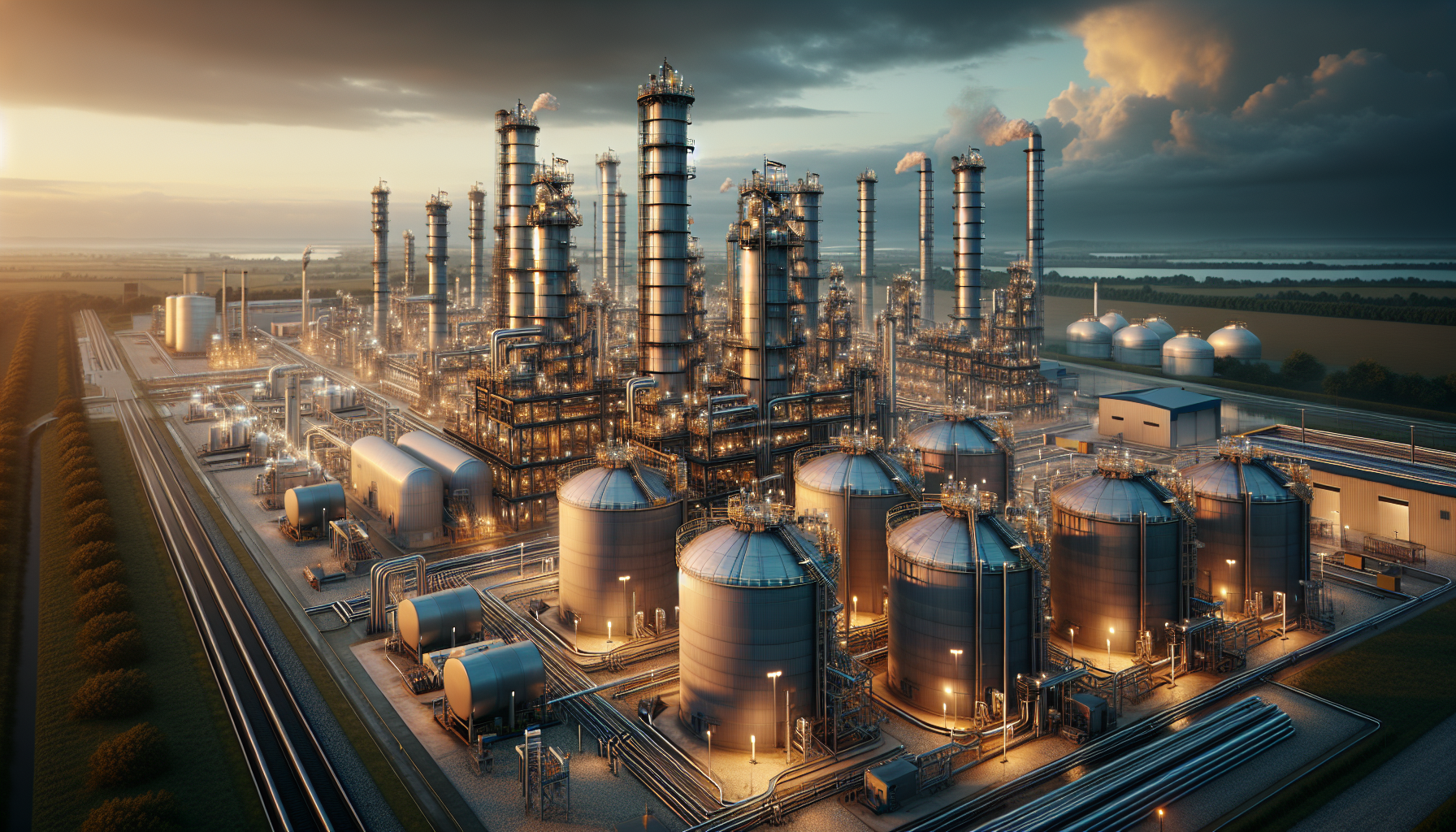
On Thursday, the UK government announced a £100 million ($133.5 million) investment to restart production of biogenic carbon dioxide at a previously closed plant on Teesside for a three-month period. This move aims to prevent potential shortages triggered by the ongoing conflict involving Iran.
The CO2 was originally produced by Ensus as a byproduct of bioethanol at the Wilton International site until September. The plant ceased operations after it could no longer compete with cheaper U.S. bioethanol imports following tariff reductions agreed with then U.S. President Donald Trump. Carbon dioxide plays a crucial role in various sectors, including food and beverage manufacturing, hospital operating theatres, and nuclear reactor cooling systems.
The government highlighted that disruptions in European fertilizer production have significantly undermined the reliability of CO2 imports. Additionally, escalating gas prices linked to the Iran conflict, coupled with unplanned maintenance at multiple European CO2 facilities, have placed the UK’s supply at considerable risk.
Business Secretary Peter Kyle emphasized the government’s proactive approach to shielding British industries from the adverse effects of global instability. He stated, “By restarting this plant, we have acted swiftly to enhance the resilience of our supply chains and safeguard vital UK sectors such as food production, water, and healthcare, along with the jobs and communities that rely on these industries.”
Grant Pearson, Chairman of Ensus UK, noted that the agreement bolsters the UK’s security in biogenic CO2 supplies and expressed optimism about returning the plant to full operation soon. Ensus, operating in northeast England’s Teesside since 2010, is owned by CropEnergies, a subsidiary of the Sudzucker Group.
The plant converts over one million tonnes of wheat annually into 400 million litres of bioethanol through distillation and fermentation. This bioethanol contributes to making petrol more sustainable. The production process also generates two byproducts: high-protein animal feed and carbon dioxide, with an annual CO2 production capacity of 250,000 tonnes.
($1 = 0.7490 pounds)
