

China is rapidly advancing its space ambitions, aiming to land astronauts on the Moon by 2030, establish a lunar base by 2035, and potentially target Mars in the decades to come. After three decades of developing its space capabilities, China is positioning itself as a formidable competitor to the United States in space exploration.
China’s crewed space program, known as Project 921, was initiated on September 21, 1992, with the goal of developing independent spaceflight expertise and constructing its own space station. Since the first Chinese astronaut, Yang Liwei, flew in 2003, the program has completed around 15 crewed missions. Following the US ban on Chinese participation in the International Space Station (ISS) in 2011, China developed its own orbital facility, the Tiangong or “Heavenly Palace” space station, which welcomed its first crew in 2021. Currently, three Chinese astronauts, or “taikonauts,” are aboard Tiangong, gaining valuable experience in spacewalks, docking, maintenance, and studying the effects of space on the human body.
Remarkably, none of China’s crewed missions have resulted in fatalities. The program follows a long-term, integrated roadmap supported by strong political commitment, stable funding, and a unified industrial base. This approach contrasts with the US model, which can shift priorities with political cycles, offering China greater predictability and risk management in its space endeavors.
Looking ahead, the China National Space Administration (CNSA) plans to send astronauts to the Moon by 2030. While China has already conducted robotic lunar missions and returned samples, crewed lunar flights require new technology currently under development. A test flight of the new Mengzhou (“Dream Ship”) spacecraft, designed to replace the aging Shenzhou and carry astronauts into lunar orbit, is scheduled for 2026. Additionally, engineers are working on the Long March-10 rocket, approximately 90 meters tall, which is critical for lunar missions and completed its first low-altitude test flight on February 11. The Lanyue (“Seize the Moon”) lander, intended to transport astronauts from lunar orbit to the surface, may debut between 2028 and 2029.
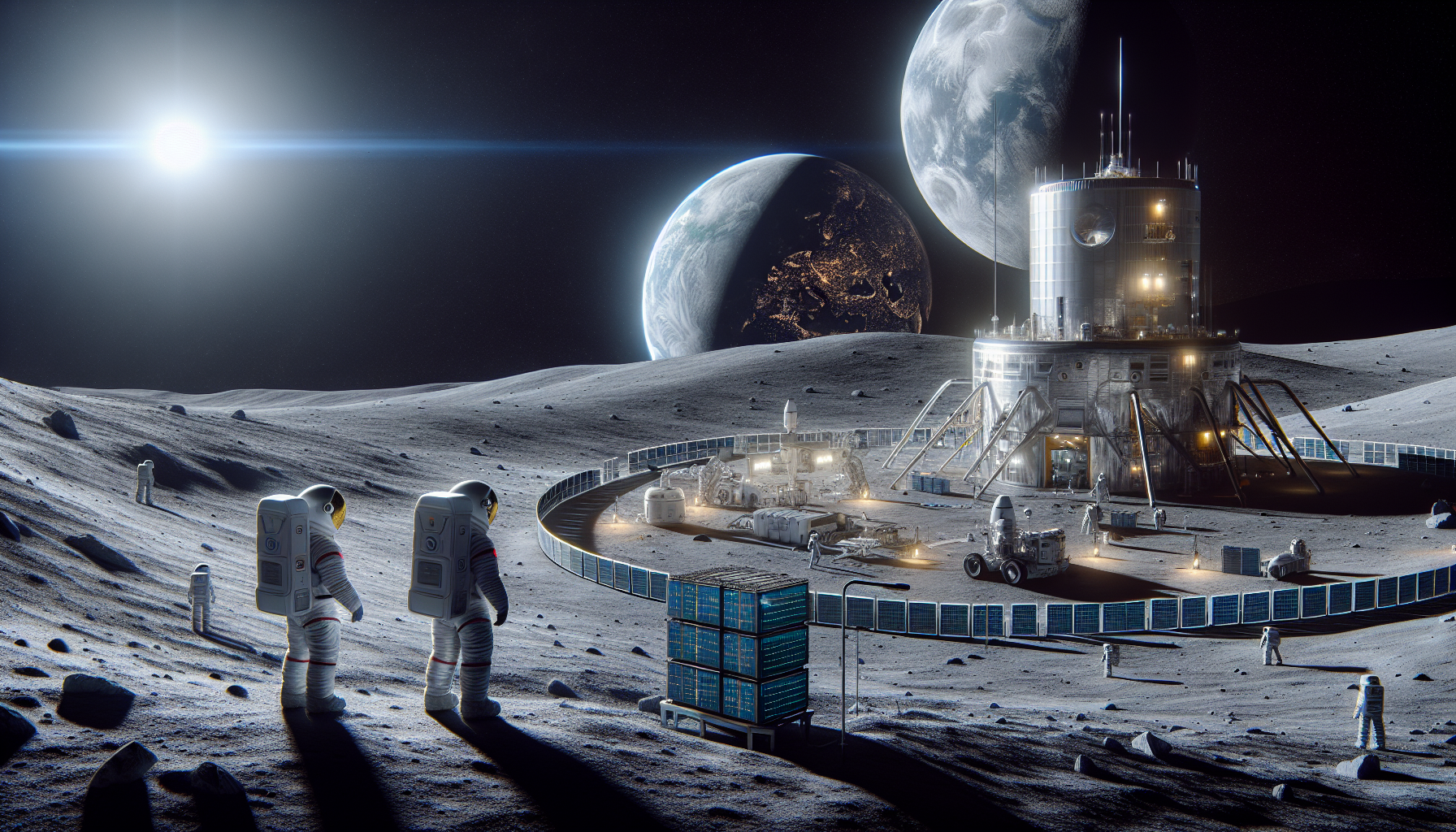
In a significant development, China aims to construct the International Lunar Research Station (ILRS) near the Moon’s south pole by 2035. This site is chosen for its potential water ice deposits. China is collaborating with Russia on the project, which will utilize 3D printing technology to build the base from lunar soil bricks. This technique, tested on Earth and aboard Tiangong, will be trialed on the Moon during the uncrewed Chang’e-8 mission around 2028. The CNSA’s objectives include conducting archaeological research on the Moon’s origin, advancing strategic technologies, and exploiting lunar resources. Plans call for an expanded base around 2040, supported by a network of relay satellites to maintain communication between the Moon’s far side and Earth.
While China does not frame its efforts as a “Moon race” against the United States, the establishment of a Chinese lunar base would present a significant challenge to US ambitions, especially given the limited suitable areas near the lunar south pole. Currently, China trails the US in crewed spaceflight capabilities, with NASA’s Dragon and Orion spacecraft considered more advanced than China’s Shenzhou. However, experts anticipate that China will close this gap once it achieves a manned lunar landing by 2030 using its new spacecraft and lander.
Beyond the Moon, China envisions using its lunar base after 2040 to test technologies and capabilities for a crewed mission to Mars. Although Chinese space scientists and manufacturers have identified Mars as a future destination, serious plans for a manned Mars mission are unlikely before completing the lunar landing and establishing the initial lunar base.
