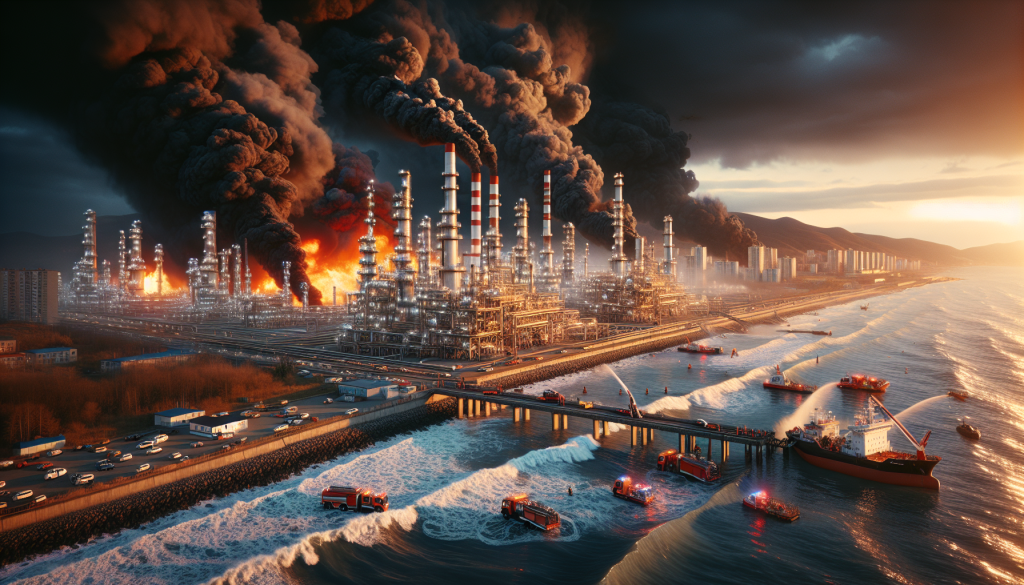
The Russian city of Tuapse is currently facing an environmental emergency following a drone strike on a local oil refinery. This attack, attributed to Ukrainian forces, has ignited a significant fire, raising concerns about air and water pollution in the region. Residents are alarmed about the potential long-term effects on their health and the local ecosystem due to the release of hazardous substances. Emergency services are actively working to contain the blaze and mitigate environmental damage.
Tuapse, located on the Black Sea coast, is a key hub for Russia’s oil processing industry, making the refinery a critical infrastructure asset. The incident highlights the growing use of drones in modern conflicts, targeting industrial facilities to disrupt economic and energy supplies. Such attacks not only pose immediate safety risks but also threaten broader environmental stability, complicating recovery efforts. The refinery fire underscores the vulnerability of energy infrastructure amid ongoing geopolitical tensions between Russia and Ukraine.
In a significant development, the environmental fallout from this attack could have far-reaching consequences for the region’s biodiversity and public health. Airborne pollutants and potential oil spills may affect marine life and local communities dependent on natural resources. This event serves as a stark reminder of the environmental costs of armed conflict and the urgent need for protective measures around critical industrial sites. Authorities are expected to monitor the situation closely and implement strategies to prevent similar incidents in the future.