

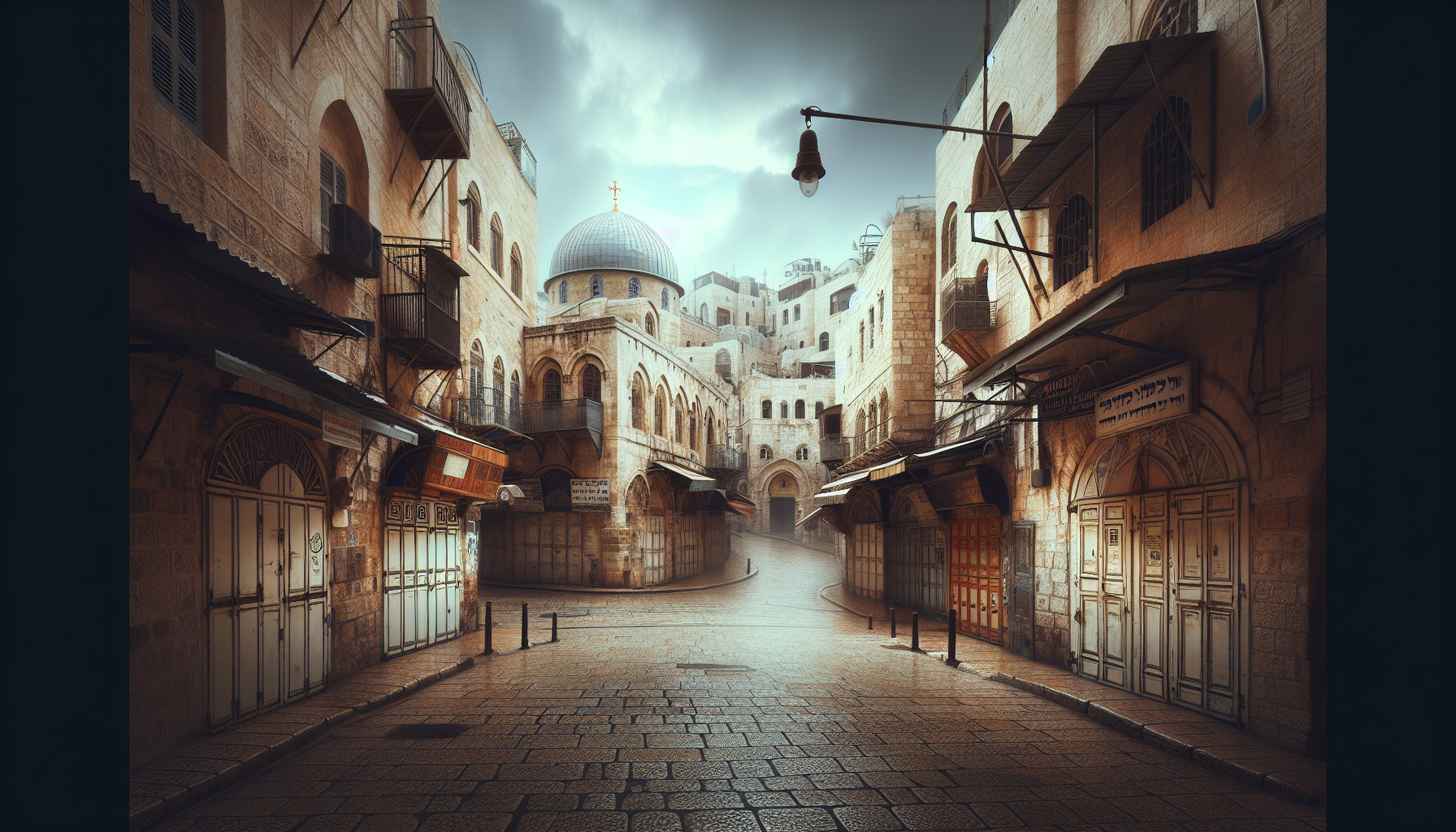
During this year’s Holy Week, Jerusalem’s Christian Quarter experienced an unusually subdued atmosphere as Israeli restrictions significantly limited movement and gatherings. Traditionally bustling with pilgrims and worshippers, the area saw deserted streets and shuttered businesses, marking a stark contrast to the usual vibrant celebrations. Holy Week, which commemorates the final days of Jesus Christ’s life, is a critical period for Christian communities worldwide, especially in Jerusalem, a city sacred to multiple faiths.
The restrictions imposed by Israeli authorities have disrupted not only religious ceremonies but also the local economy, heavily reliant on tourism and pilgrimage during this period. Many Christian families and business owners expressed concern over the impact on their livelihoods and the spiritual experience of the faithful. The Christian Quarter, known for its historic churches and cultural significance, typically draws thousands of visitors during Holy Week, making this year’s quietness particularly notable.
In a significant development, these limitations highlight ongoing tensions in the region and the challenges faced by minority communities in maintaining their traditions under political constraints. Meanwhile, religious leaders called for peaceful observance despite the difficulties, emphasizing the resilience of faith amid adversity. The situation underscores the broader complexities of Jerusalem’s status and the delicate balance between security measures and religious freedoms in this contested city.
