

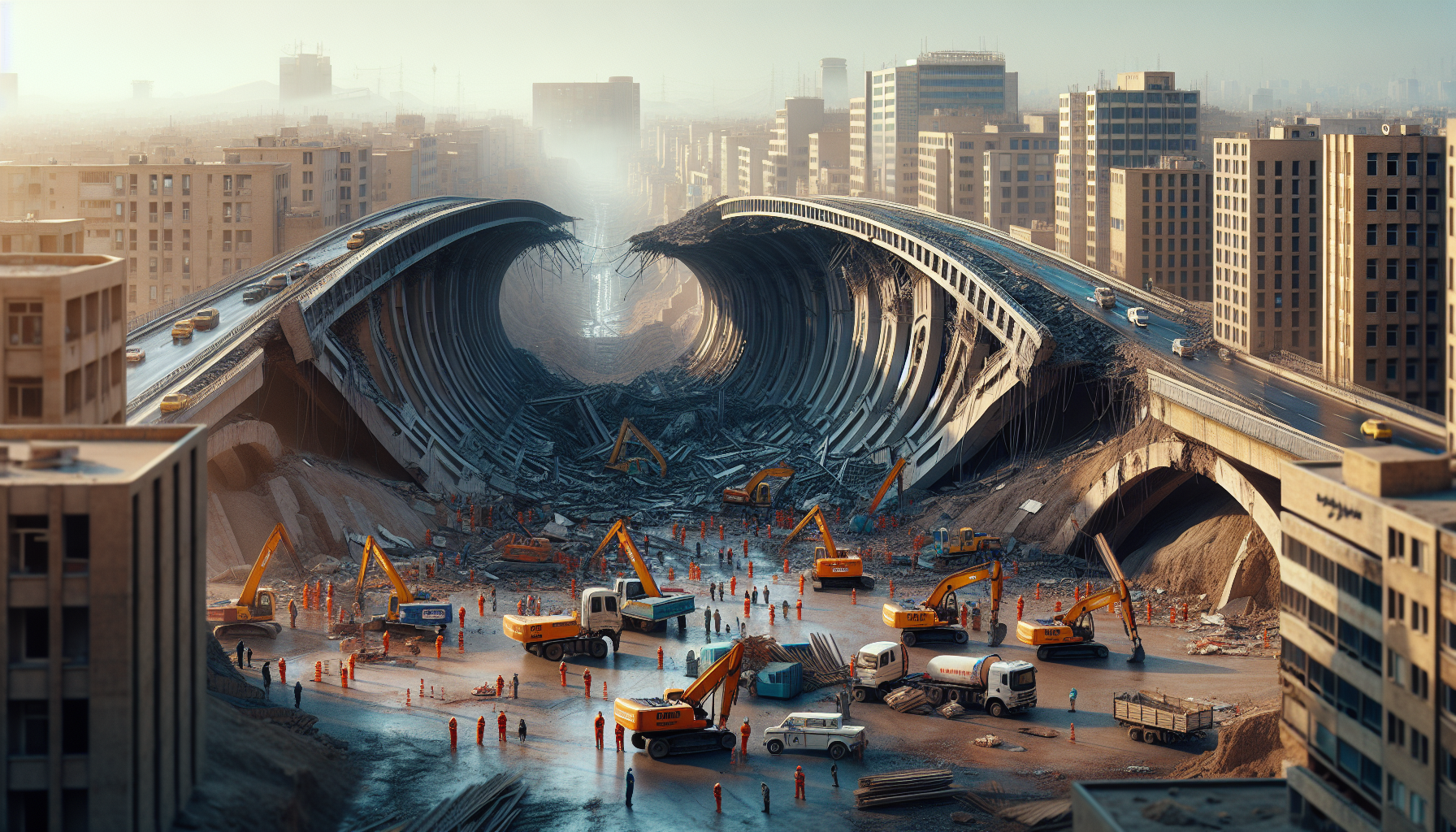
In a significant development, Iranian authorities have pledged to reconstruct the country’s largest bridge in Karaj after it was severely damaged by a recent US military strike. The attack resulted in casualties and considerable infrastructure destruction, escalating tensions between Tehran and Washington. Officials emphasized that the reconstruction will not only restore the bridge but also strengthen it beyond its previous state. This response signals Iran’s determination to recover swiftly and assert resilience in the face of foreign aggression.
Meanwhile, Iranian leaders have issued a stern warning that the United States’ global standing will be adversely affected by this action. They argue that such strikes undermine America’s credibility and provoke further hostility in the region. The incident adds to the ongoing cycle of retaliatory threats and military posturing between the two nations, raising concerns about potential escalation. Analysts view this as part of a broader pattern of conflict that could destabilize regional security.
Notably, the damaged bridge in Karaj holds strategic importance for Iran’s transportation and commerce, making its swift restoration critical for economic and social stability. The promise to rebuild it stronger reflects Tehran’s intent to demonstrate resilience and deter future attacks. This episode underscores the fragile state of US-Iran relations and highlights the challenges in achieving lasting peace amid ongoing geopolitical rivalries. The international community remains watchful of further developments following this confrontation.
