

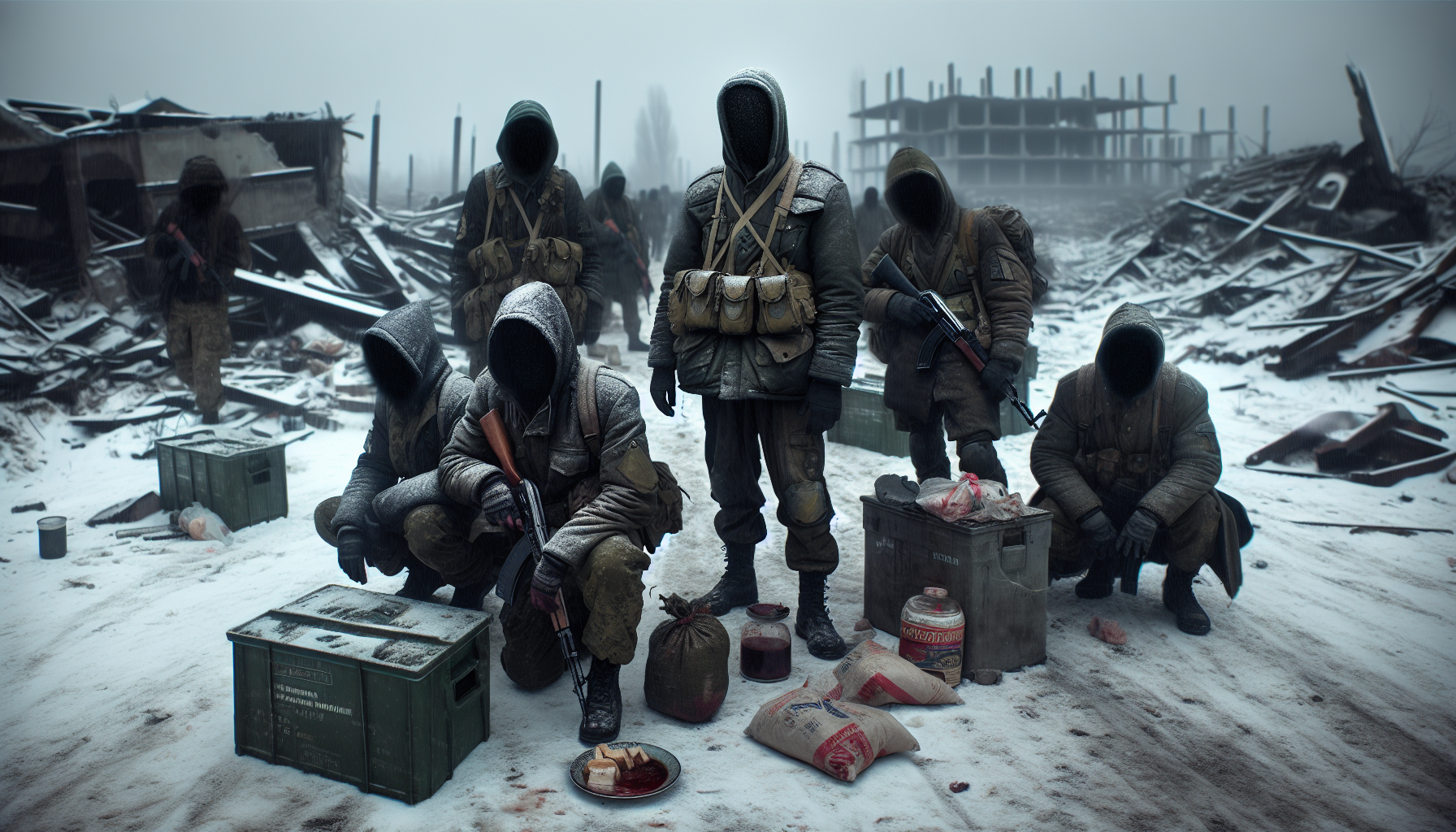
As the conflict between Ukraine and Russia continues, reports and images have emerged showing the dire nutritional conditions faced by soldiers on both sides. Ukrainian fighters are depicted in a state of severe malnourishment, reflecting the extreme hardships endured in frontline combat zones. Meanwhile, Russian troops are also struggling with limited food supplies, indicating widespread logistical challenges in sustaining military personnel during prolonged engagements.
These food shortages underscore the broader humanitarian crisis triggered by the war, where access to basic necessities has become increasingly scarce. The scarcity of adequate rations not only affects soldiers’ physical health but also their combat effectiveness and morale. In a significant development, the situation highlights the critical need for improved supply chains and humanitarian aid to mitigate the suffering of those directly involved in the conflict.
The impact of these conditions extends beyond immediate military concerns, as prolonged malnutrition can lead to long-term health complications for soldiers and civilians alike. This crisis also draws international attention to the human cost of the ongoing war, emphasizing the importance of diplomatic efforts to resolve the conflict and restore stability. Ultimately, the food supply challenges faced by both Ukrainian and Russian forces reveal the complex interplay between warfare logistics and humanitarian issues in modern conflicts.
