

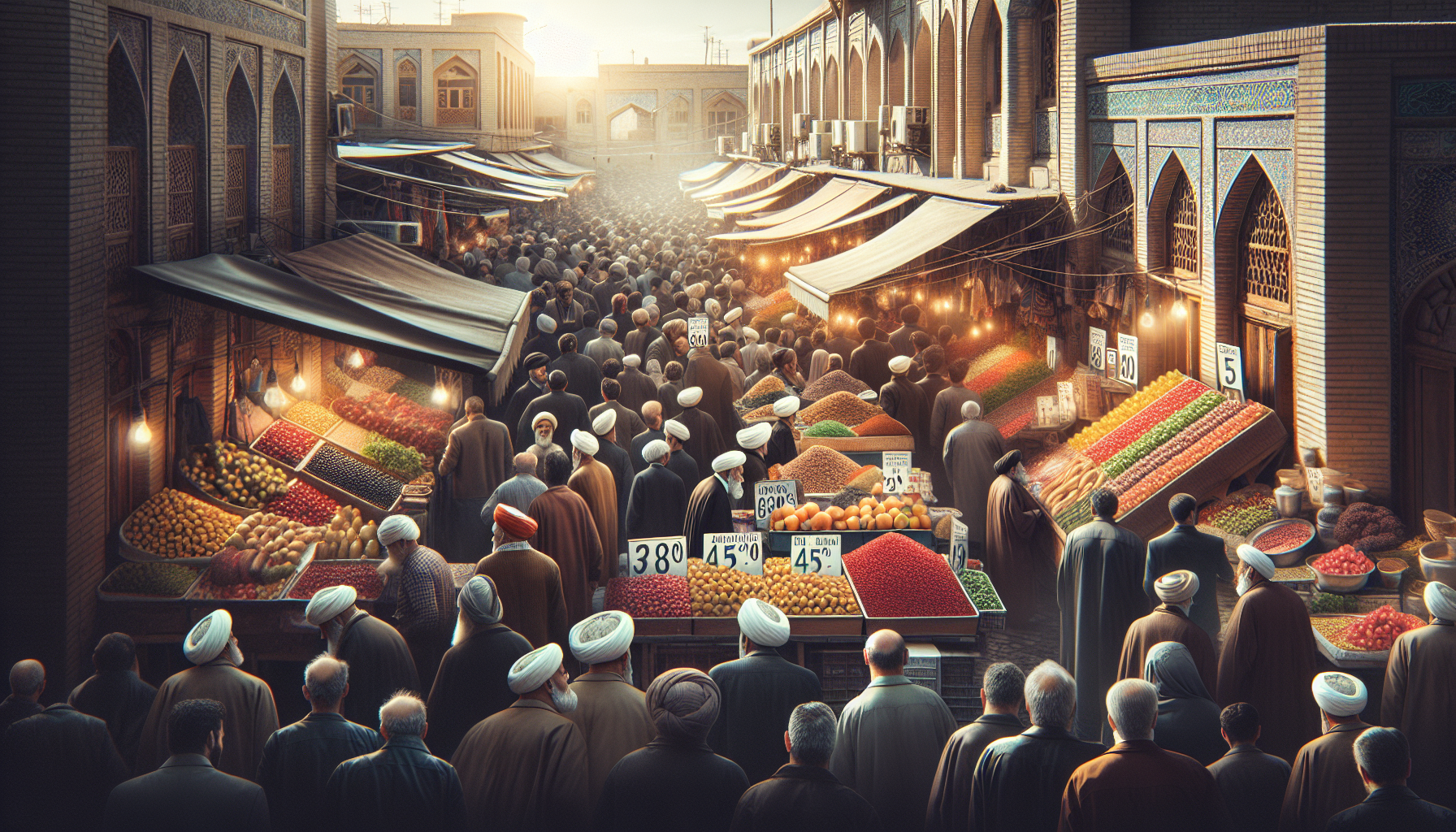
Iranian households are grappling with a severe surge in food prices as inflation accelerates amid a deteriorating economic environment. The country’s currency has plummeted, exacerbating the cost of essential goods and pushing many families into financial distress. This inflationary pressure is largely attributed to a US-enforced naval blockade that has restricted Iran’s trade routes and access to international markets. The blockade has significantly disrupted supply chains, leading to shortages and higher costs for basic food items.
In a significant development, the blockade has not only affected Iran’s economy but also heightened tensions in the region, impacting the daily lives of ordinary citizens. The rising cost of living has sparked concerns about food security and the ability of vulnerable populations to meet their nutritional needs. Meanwhile, the Iranian government faces mounting challenges in stabilizing the economy and mitigating the social fallout from these economic constraints. The situation underscores the broader geopolitical struggle and its direct consequences on civilian welfare.
Notably, the inflation surge in Iran reflects the complex interplay between international sanctions, currency instability, and domestic economic policies. As food prices continue to climb, the pressure on households intensifies, potentially leading to increased social unrest and calls for policy reforms. The ongoing blockade and its economic repercussions highlight the critical need for diplomatic solutions to alleviate the humanitarian impact on Iran’s population. This crisis serves as a stark reminder of how geopolitical conflicts can translate into everyday hardships for millions.
