

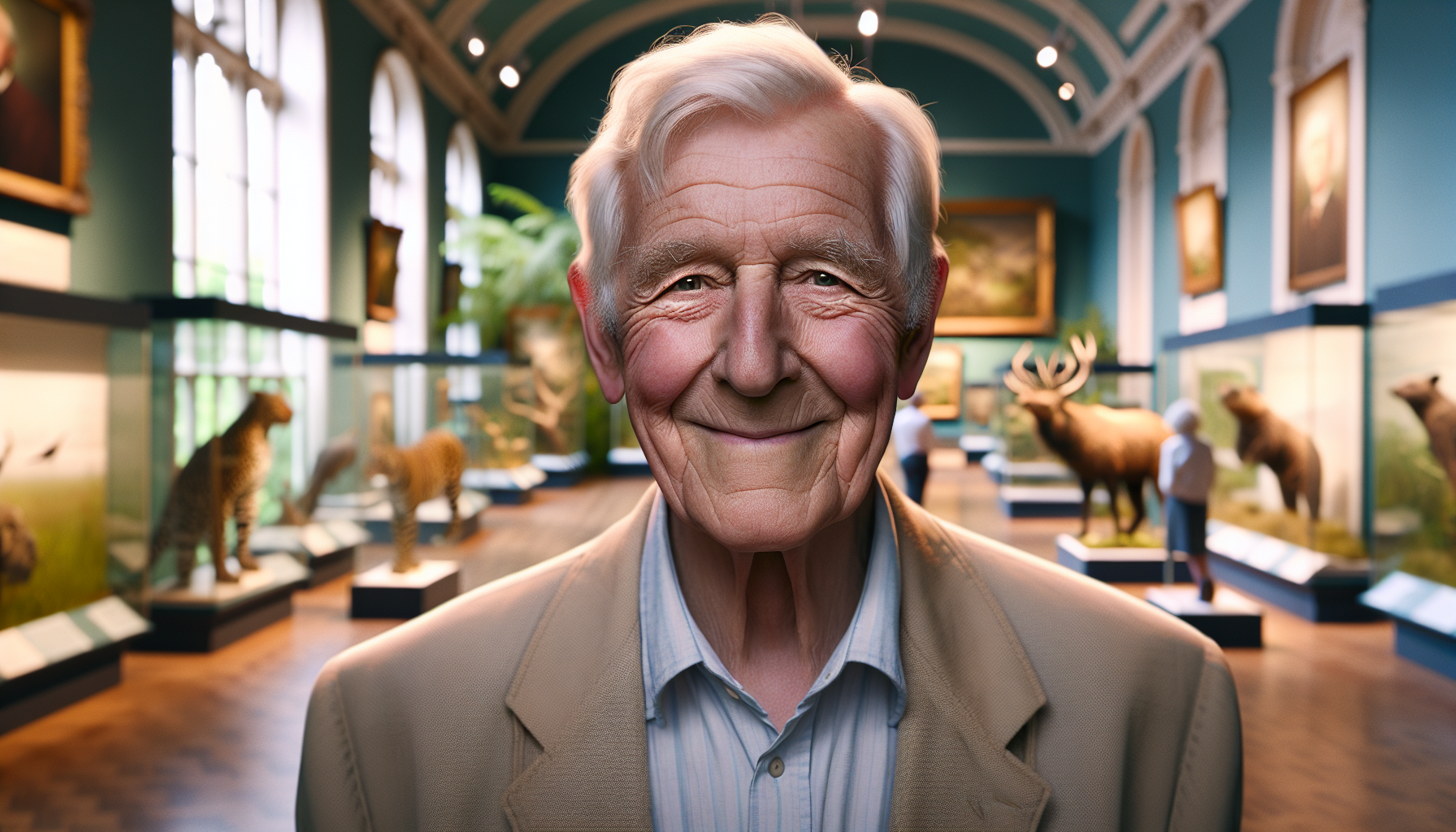
Sir David Attenborough, the renowned British broadcaster and natural historian, celebrated his 100th birthday on Friday, expressing that he was “completely overwhelmed” by the flood of congratulatory messages he received from across the globe. His career, spanning more than seven decades, has made him one of the most recognizable voices in broadcasting, credited with bringing the marvels of the natural world into the homes of multiple generations through iconic documentaries.
In an audio message shared by the , Attenborough revealed that he had initially planned to mark the milestone quietly. However, he acknowledged the enthusiasm of those who organized celebrations, saying, “I had rather thought that I would celebrate my 100th birthday quietly, but it seems that many of you have had other ideas. I’ve been completely overwhelmed by birthday greetings from preschool groups to care home residents and countless individuals and families of all ages.” He extended his gratitude to well-wishers and wished everyone involved in the festivities a joyful day.
In Britain, the centenary has been commemorated with a week of special programming by the , a concert at London’s Royal Albert Hall, museum exhibitions, nature walks, and tree-planting events. Attenborough counts among his admirers members of the British royal family, former US President Barack Obama, and singer Billie Eilish. His distinctive narration and storytelling style have elevated him to the status of a cultural icon well beyond the UK.
Notably, the late Queen Elizabeth praised him in 2019 for his unparalleled ability to convey the beauty and fragility of the natural environment. Friends and colleagues often describe Attenborough as someone who sees himself less as a celebrity and more as a public servant of science and nature. Television producer Mike Gunton remarked that Attenborough considers himself “a public servant” who had the unique opportunity to be “the voice for nature.” Meanwhile, UN climate chief Simon Stiell hailed him as “a colossus of science and storytelling in defence of the natural world.”
Attenborough’s extensive filmography includes some of the most influential nature documentaries ever produced, such as Life on Earth, Blue Planet, Frozen Planet, and Dynasties. His 2017 series Blue Planet II notably ignited widespread public discourse on plastic pollution by showing marine animals ingesting ocean waste, which led to policy changes in Britain and helped shape global environmental conversations. Stiell emphasized Attenborough’s critical role, stating, “Sir David Attenborough is a colossus… which humanity depends on for its own survival and prosperity.”
Born on May 8, 1926, Attenborough’s fascination with fossils and wildlife began early in life. He joined the in 1954 as presenter of Zoo Quest, a program that involved filming animals in remote locations. He later advanced to senior executive roles before returning to programme-making, leading to his breakthrough series Life on Earth in 1979. This 13-part series traced the evolution of life on Earth and set the standard for modern natural history broadcasting.
Even in his later years, Attenborough has continued to produce major documentaries and champion environmental causes amid growing climate concerns. Doug Gurr, director of the Natural History Museum in London, remarked, “I think every single person who’s seen anything that Sir David has done has been inspired to care about nature.” Attenborough himself has described his work as a moral obligation, once stating, “How could I look my grandchildren in the eye and say I knew what was happening to the world and did nothing?”
