

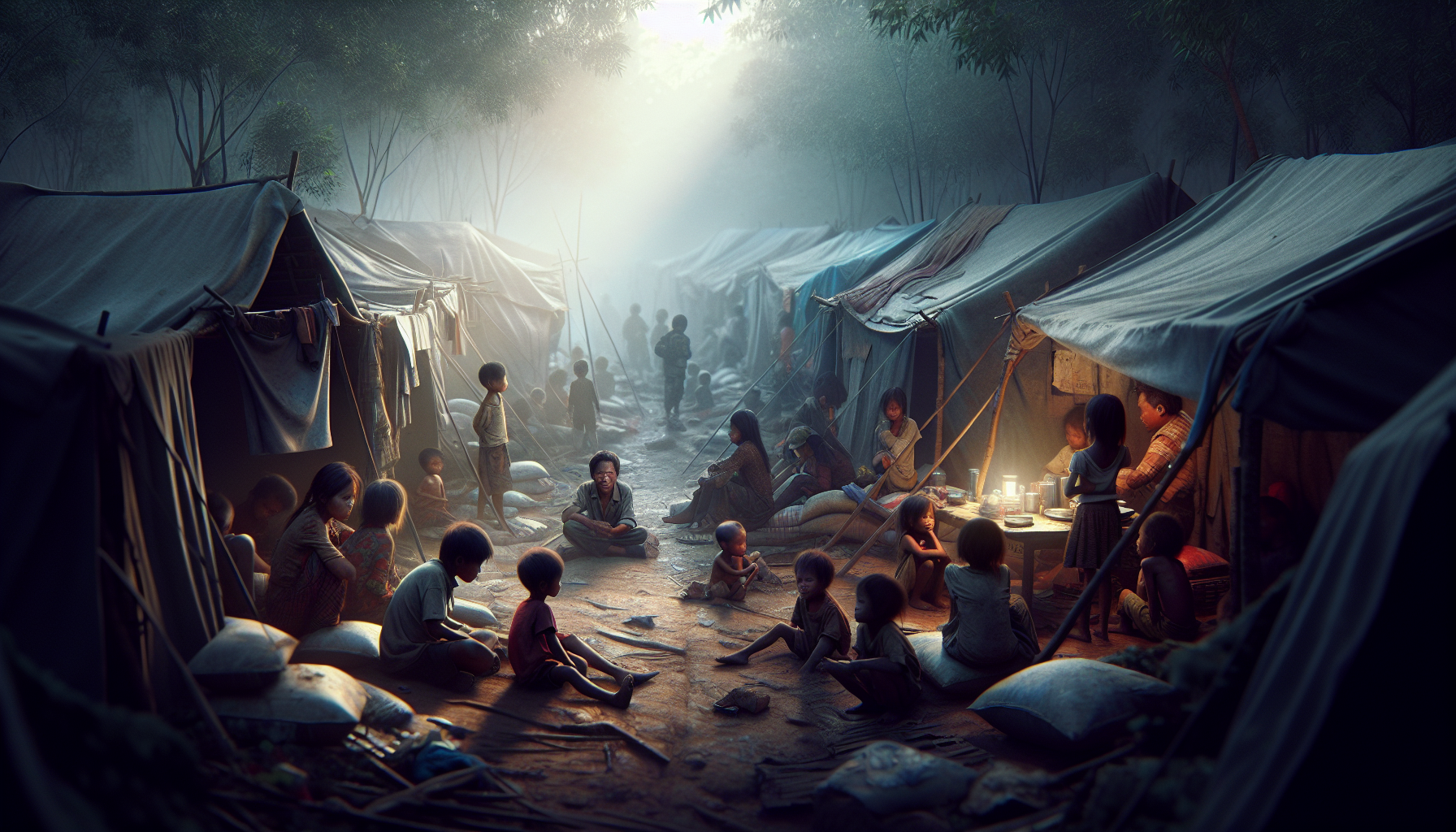
Thousands of Cambodian families remain displaced due to ongoing tensions along the border with Thailand, where a fragile ceasefire has yet to bring lasting peace. The conflict has uprooted communities, forcing many to live in temporary shelters with limited access to basic services. Education has been particularly disrupted, with schools in affected areas struggling to operate amid insecurity and displacement. The uncertainty surrounding the ceasefire raises fears of renewed clashes that could worsen the humanitarian situation.
In a significant development, the border dispute between Cambodia and Thailand has persisted for years, rooted in territorial claims and historical grievances. The recent ceasefire, while a hopeful step, has not fully halted sporadic violence, leaving civilians caught in the crossfire. The impact on education highlights the broader consequences of the conflict, as children face interrupted schooling and communities grapple with instability. Humanitarian agencies continue to call for sustained peace efforts to protect vulnerable populations.
Meanwhile, the displacement crisis underscores the urgent need for comprehensive support to affected families, including access to shelter, healthcare, and education. The ongoing tensions strain resources and hinder development in border regions, complicating efforts to rebuild livelihoods. International observers stress that durable peace between Cambodia and Thailand is essential to prevent further displacement and to promote stability in Southeast Asia. The situation remains precarious as both nations navigate diplomatic and security challenges.
