

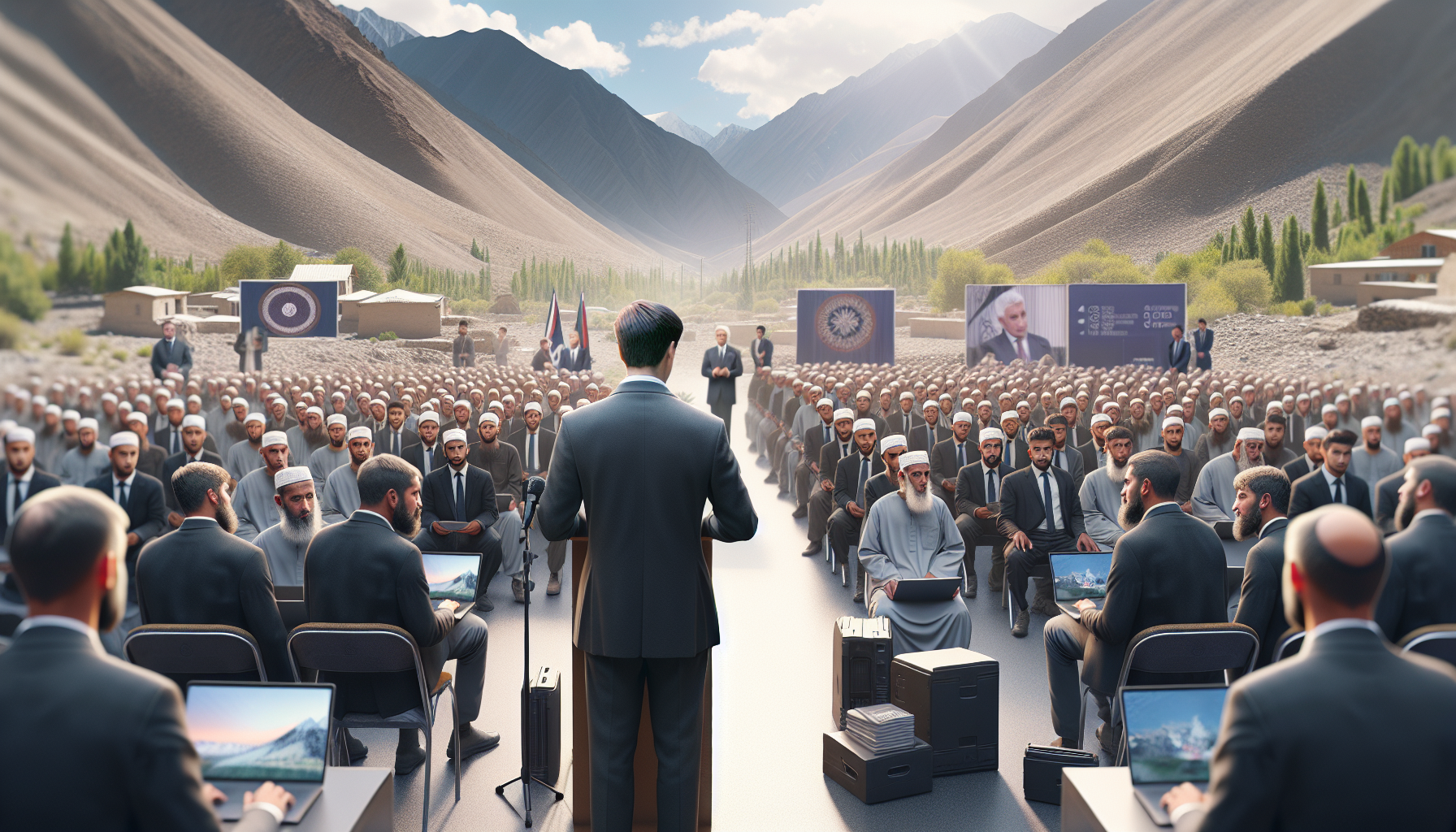
Prime Minister Shehbaz Sharif announced on Thursday that Pakistan plans to extend its Daanish school model nationwide to offer educational opportunities to talented students from economically disadvantaged backgrounds. Speaking at a ceremony in Gilgit where laptops were awarded to students under a merit-based initiative, Sharif emphasized the government’s commitment to providing quality education and modern resources to deserving youth.
He described the Daanish school network, originally launched during his tenure as Punjab’s chief minister, as a successful initiative that will now be expanded across the country. Sharif acknowledged that the program initially faced criticism but highlighted its proven results in Punjab, underscoring the importance of equipping these schools with up-to-date educational facilities.
Addressing the students, the prime minister clarified that the laptops were not gifts but rewards earned through academic excellence and dedication. He stressed that the devices were distributed strictly on merit, particularly benefiting students from low-income families. Sharif also praised the role of parents and teachers in supporting the students’ achievements.
During his visit to Gilgit-Baltistan, Sharif described the region as one of Pakistan’s most scenic areas and expressed his intent to engage with its “talented, hardworking and capable” students. He reiterated his long-standing commitment to merit-based governance, affirming that he has never compromised on merit throughout his political career.
In a significant development, Sharif referred to a so-called “solar panel scandal,” mentioning that the Federal Board of Revenue (FBR) Chairman had proposed a transparent auction of confiscated solar panels to benefit the national treasury. However, Sharif directed that these solar panels be sent to Gilgit-Baltistan to directly assist local communities.
On the foreign affairs front, the prime minister claimed that Pakistan played a crucial diplomatic role in preventing conflict between Iran and the United States. He noted that both Pakistan’s political and military leadership maintained continuous engagement with Washington and Tehran, working tirelessly to avert war, though he did not provide further specifics.
Pakistan has recently sought to establish itself as a regional diplomatic mediator amid rising tensions involving Iran and broader instability in the Middle East. Sharif’s remarks underscore the country’s ongoing efforts to contribute to regional peace and stability.
