

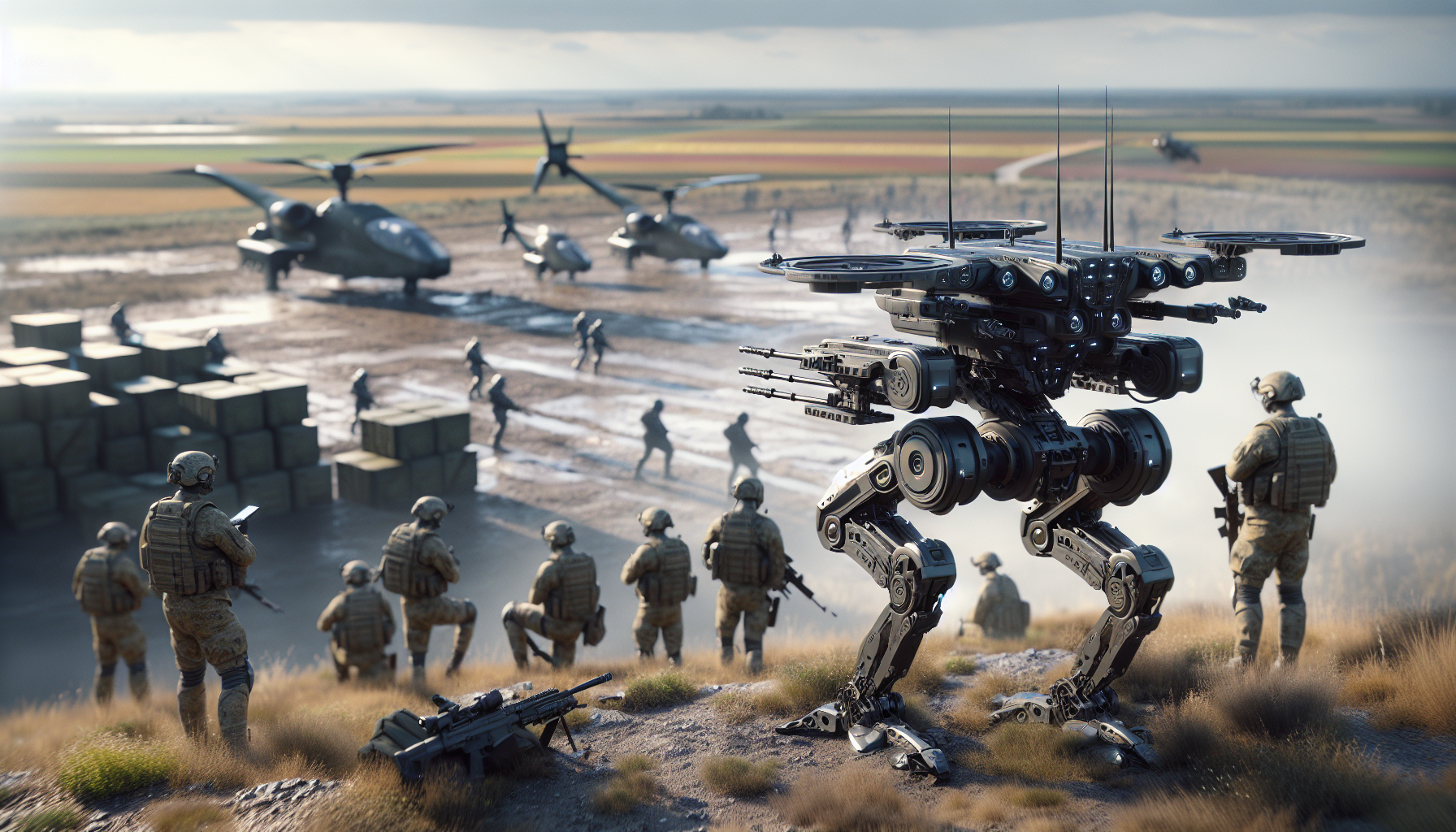
Ukraine’s recent military operation, as highlighted by President Zelensky, involved the capture of territory using solely robots and drones. This development underscores a significant shift in modern warfare, where unmanned systems are increasingly taking center stage on the battlefield. The use of robotic technology not only reduces human casualties but also enhances operational efficiency and precision in combat scenarios. Such advancements reflect broader global trends toward integrating artificial intelligence and automation in military strategies.
Meanwhile, the deployment of these unmanned systems in Ukraine demonstrates the practical application of cutting-edge technology in active conflict zones. It signals a future where traditional combat roles may be supplemented or replaced by autonomous machines capable of reconnaissance, attack, and territorial control. This evolution challenges conventional military doctrines and necessitates new approaches to defense planning and international security frameworks. The success of these robotic operations could inspire other nations to accelerate their own unmanned warfare programs.
In a significant development, the battlefield of the near future is likely to be dominated by a combination of drones, robots, and AI-driven systems. These technologies promise to transform warfare by minimizing human risk and maximizing strategic advantages. However, they also raise ethical and legal questions regarding autonomous weapons and their decision-making capabilities. As Ukraine’s experience illustrates, the integration of unmanned systems in combat is no longer theoretical but an emerging reality reshaping global military dynamics.
