

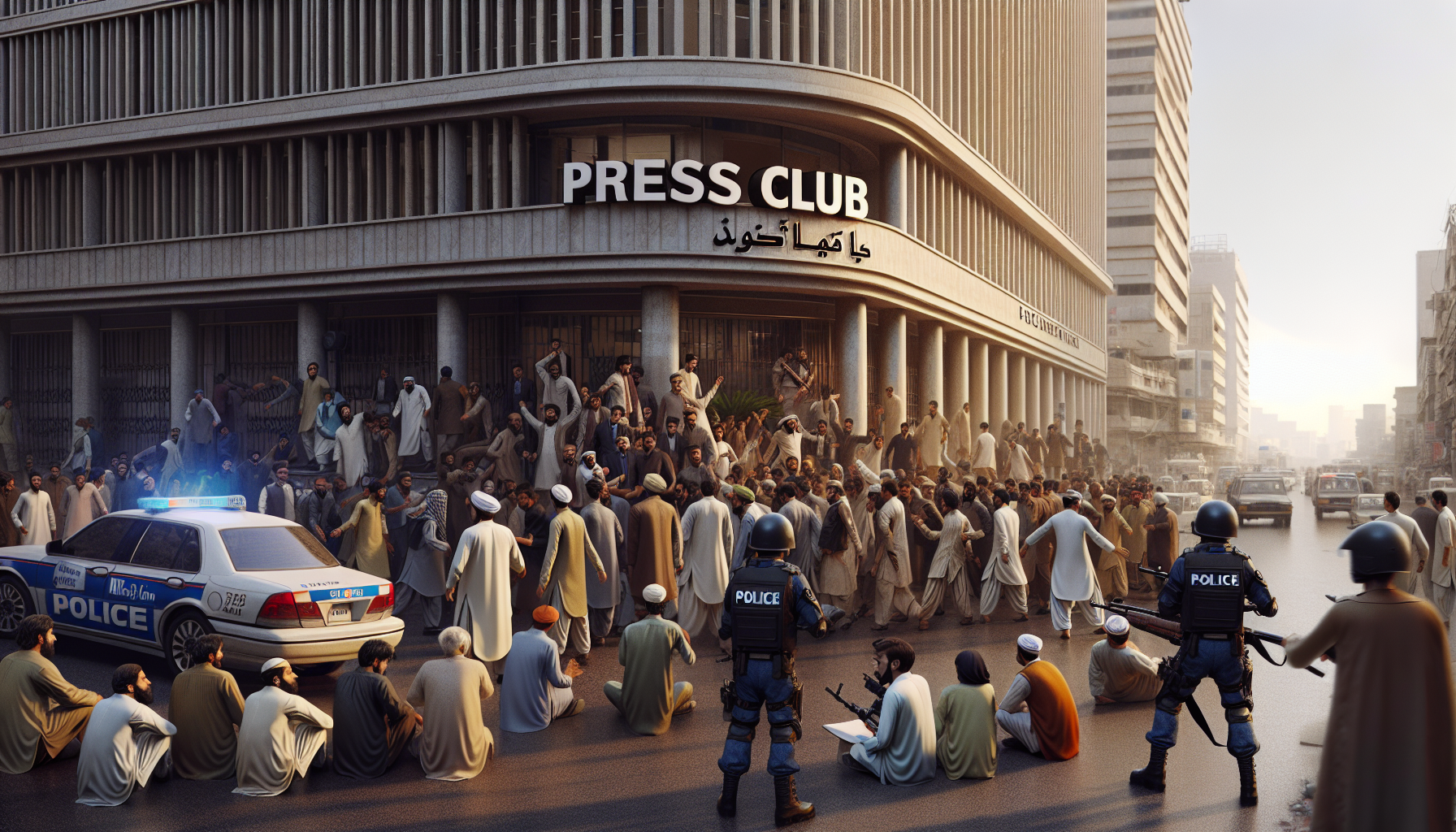
On Tuesday, seven activists from Aurat March, including artist Sheema Kirmani, were briefly detained by Karachi police near the Karachi Press Club (KPC) just before a scheduled press conference. The gathering was intended to demand a no-objection certificate (NOC) for their upcoming annual march in Karachi.
However, the activists were taken into custody prior to the 4pm event. In a significant development, Sindh Home Minister Ziaul Hasan Lanjar ordered the South Zone police to release the detained individuals, which they did shortly thereafter.
Following their release, Aurat March Karachi posted on social media platform X that they would not retreat from their political stance and would persist in demanding the NOC. They described the detentions as “scare tactics” and called for a public explanation from the Sindh government regarding both the arrests and the delay in issuing the NOC.
Earlier, the group reported that several organisers were apprehended before the press conference could commence and that access to the press club had been obstructed. They later confirmed that seven organisers and volunteers had been detained.
The activists accused the state of employing all available means to suppress a women’s movement addressing cross-class issues such as gender, violence, and labour rights. They also argued that holding a press conference inside the press club was legally permissible even under the enforcement of Section 144, questioning the justification for their detention.
The Human Rights Commission of Pakistan (HRCP) and other rights advocates condemned the incident, viewing it as part of a wider pattern of curtailing civic space. HRCP stated that the detentions exemplify “the systematic denial of public space to citizens seeking to articulate their rights” and cautioned that such measures could increase self-censorship and restrict public debate.
HRCP further emphasized that preventing citizens, especially women and marginalized groups, from convening a press conference reflects a growing repressive governance style where dissent is perceived as a threat rather than a democratic necessity.
Digital rights activist Nighat Dad attributed responsibility to the provincial government, while lawyer and activist Jibran Nasir challenged the legal grounds for restricting access to the press club under Section 144. Nasir questioned the legal basis for barring press conferences or limiting entry to the Karachi Press Club.
