

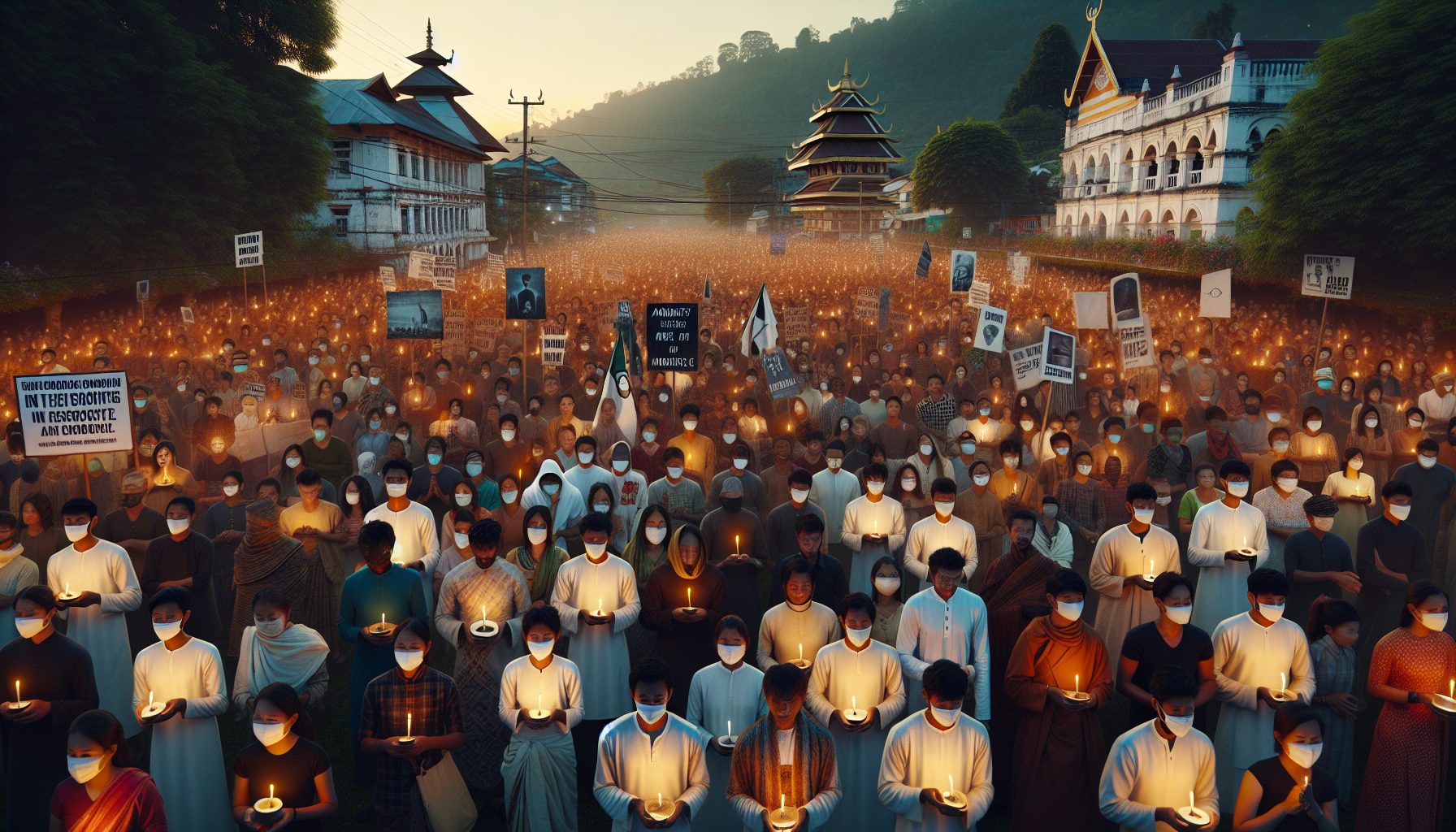
In Manipur, a northeastern state of India, thousands of people assembled to observe the third anniversary of the outbreak of ethnic violence that has deeply affected the region. The clashes, which began three years ago, have resulted in significant loss of life, displacement, and disruption to daily life, underscoring the fragile communal relations in the area. The gathering served as a somber reminder of the unresolved grievances and the urgent need for reconciliation among the diverse ethnic groups residing in Manipur.
Manipur has long been a hotspot for ethnic tensions due to its complex demographic composition, involving various indigenous communities with competing claims over land and political representation. The violence that erupted three years ago intensified these disputes, drawing national attention to the challenges of maintaining peace in the region. Meanwhile, local leaders and civil society groups have been advocating for dialogue and government intervention to address the root causes of the conflict and prevent further escalation.
In a significant development, the anniversary events have reignited calls for sustained peacebuilding efforts and greater support for victims of the violence. The commemoration highlights the broader implications of ethnic strife in northeastern India, where similar conflicts have periodically disrupted social harmony. As Manipur continues to grapple with its complex ethnic landscape, the hope remains that such gatherings will foster understanding and pave the way for lasting peace.
