

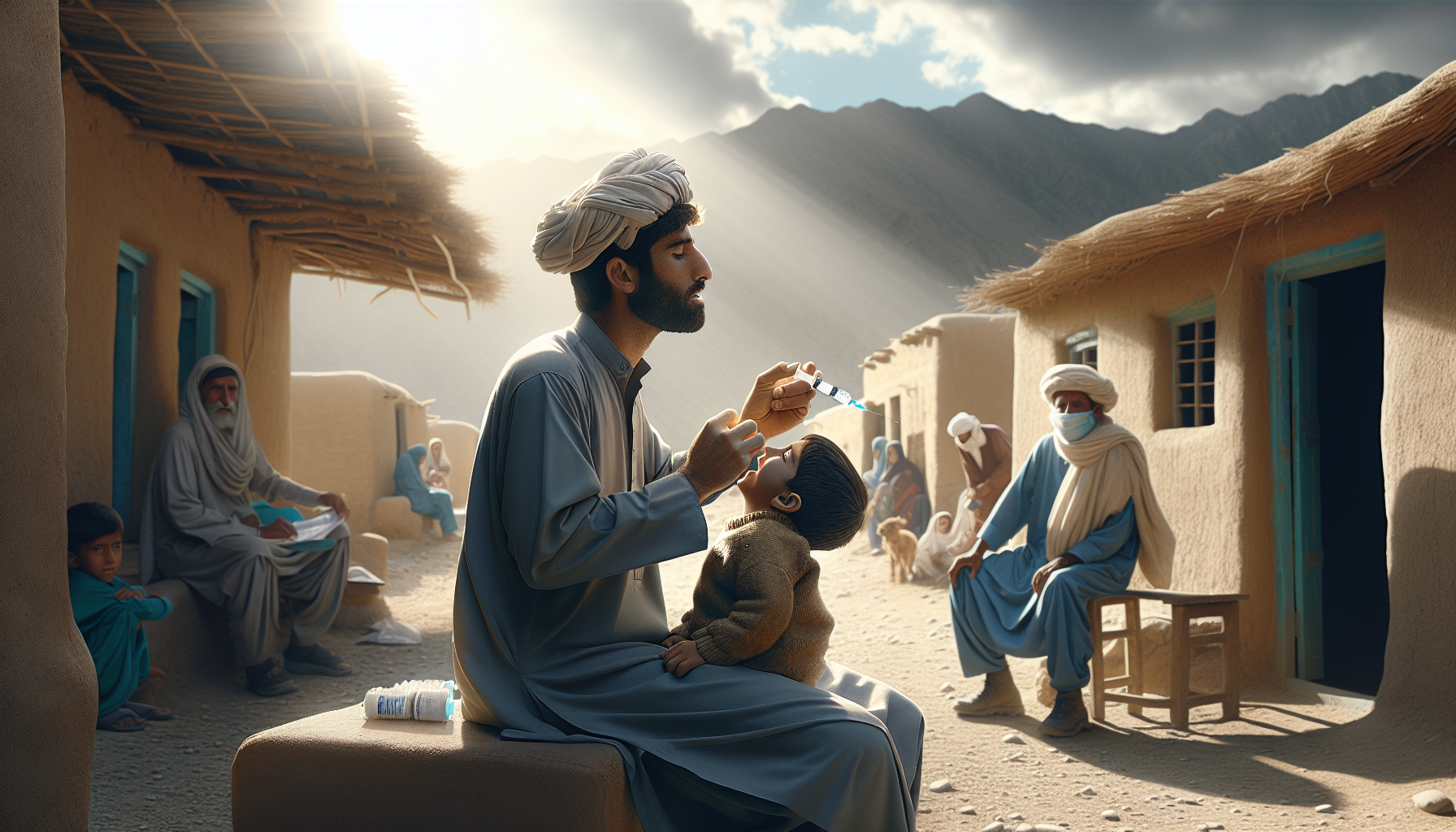
Pakistan has identified two new wild poliovirus infections in the southern region of Khyber Pakhtunkhwa, heightening concerns about ongoing virus transmission in remote areas despite notable progress in eradication efforts.
The National Emergency Operations Center (NEOC) confirmed these cases emerged from the Bannu and North Waziristan districts. The affected children reside in Jani Khel union council of Bannu and Garyom union council of North Waziristan. Detection occurred through the national surveillance system, with subsequent confirmation by the National Institute of Health in Islamabad.
These recent cases bring the total number of polio infections in Pakistan for 2026 to three. Although the country has achieved a 99.8 percent reduction in polio cases since the 1990s, health officials caution that the virus continues to circulate in parts of southern Khyber Pakhtunkhwa, primarily due to difficulties accessing certain areas and gaps in immunization coverage.
Notably, annual polio cases have decreased from 74 in 2024 to 31 in 2025, demonstrating the effectiveness of vaccination campaigns. However, the appearance of new infections highlights the necessity for persistent and focused efforts to halt transmission and ensure comprehensive protection for all children.
In a significant development, the Polio Eradication Initiative is intensifying interventions in high-risk zones by conducting community-based vaccination campaigns alongside integrated health services, including routine immunizations, maternal and child healthcare, nutrition programs, and improvements in water and sanitation.
Polio remains a highly contagious and incurable disease capable of causing permanent paralysis. Medical experts emphasize that vaccination is the sole effective defense and has been safely administered worldwide.
So far in 2026, two nationwide vaccination drives have reached approximately 45 million children, with a third campaign scheduled for May targeting nearly 19 million more. Authorities are calling on parents, community leaders, and media outlets to actively support immunization initiatives and combat misinformation, stressing that eradication is achievable only when every child receives the vaccine.
