

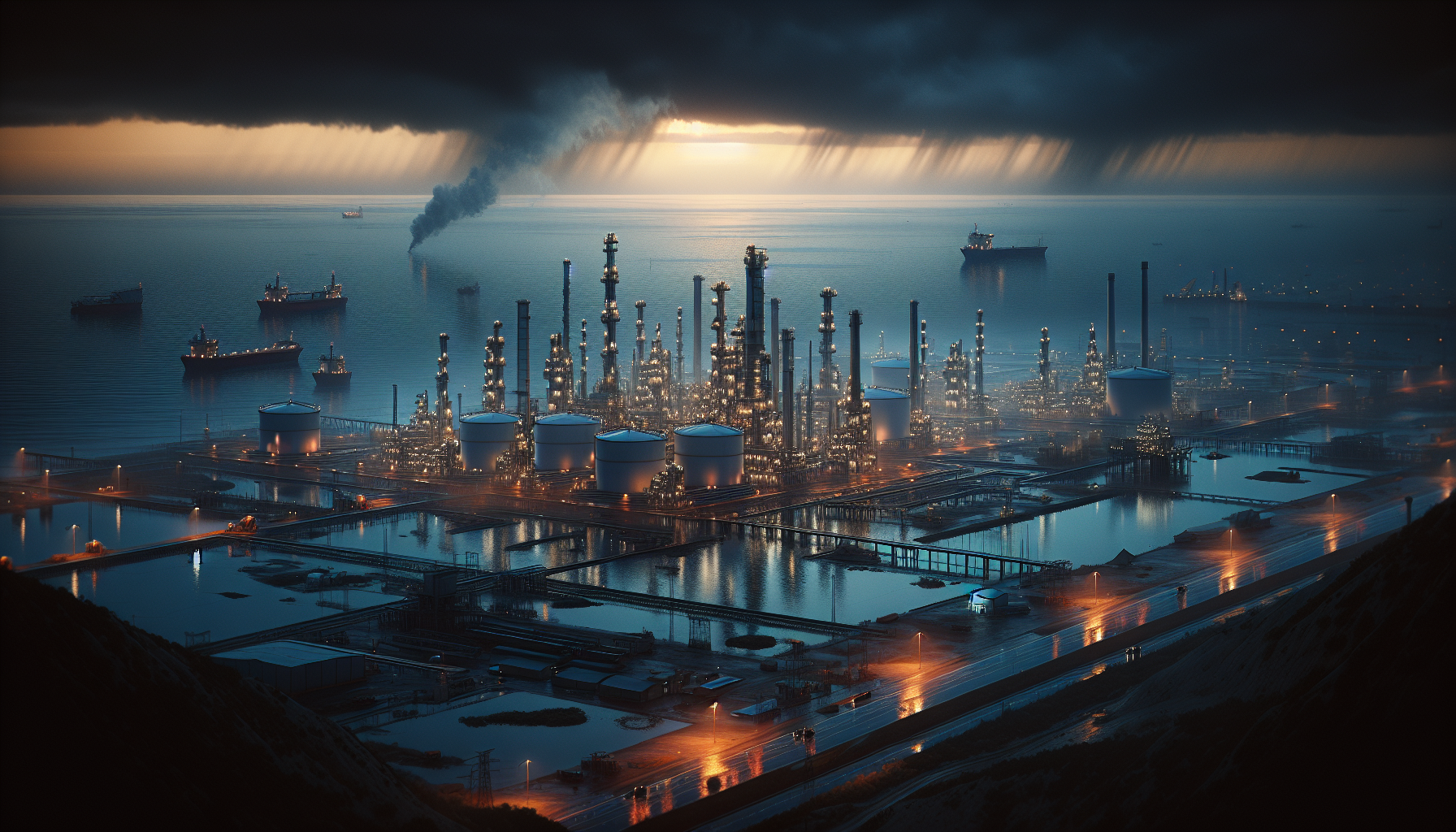
In a significant development amid ongoing conflict, Ukrainian forces launched a targeted strike on one of Russia’s largest oil refining facilities located in Tuapse. This assault has resulted in extensive damage to the refinery infrastructure, triggering widespread oil spills that threaten the surrounding environment. The incident has also caused black rain, a phenomenon linked to the release of toxic pollutants into the atmosphere, heightening fears of a severe ecological crisis in the region.
Tuapse, situated on the Black Sea coast, is a critical hub for Russia’s oil processing and export operations. The refinery’s disruption not only impacts Russia’s energy sector but also poses serious risks to local ecosystems and communities dependent on the area’s natural resources. Environmental experts warn that such spills can contaminate water supplies, harm marine life, and cause long-term soil degradation, complicating recovery efforts.
Meanwhile, this attack underscores the strategic importance of energy infrastructure in the ongoing conflict between Ukraine and Russia. Targeting oil refineries aims to weaken Russia’s economic capabilities while drawing international attention to the environmental consequences of warfare. The incident may prompt increased global scrutiny and calls for measures to protect critical energy assets from becoming collateral damage in military confrontations.
