

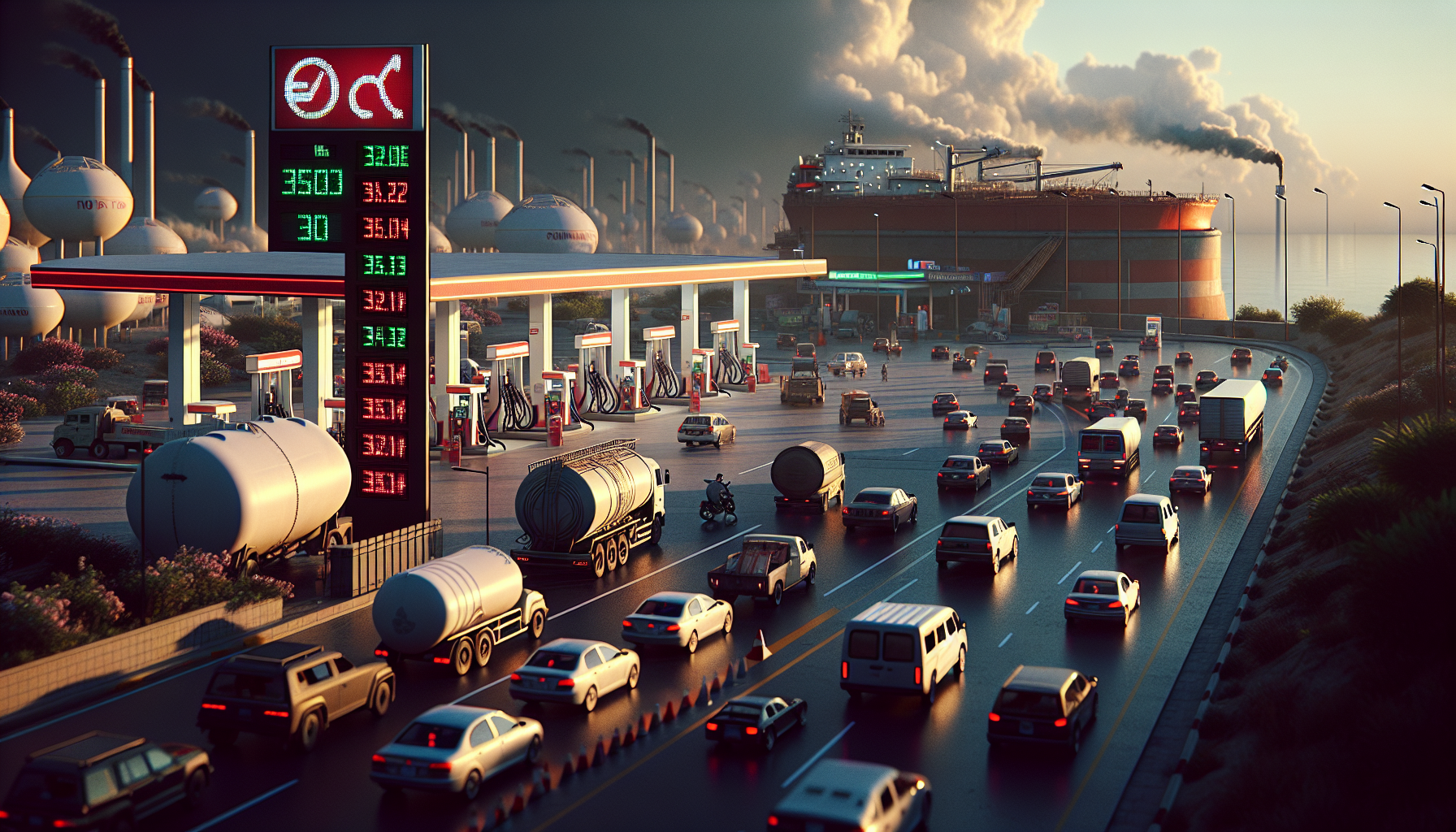
Pakistan is preparing for another increase in petrol and diesel prices as global crude oil markets continue to surge, driven by escalating tensions in the Middle East. This development raises concerns for low-income households already struggling with record inflation and rising living expenses.
On Thursday, Brent crude prices climbed above $119 per barrel due to ongoing US-Iran conflicts disrupting supply routes in the Middle East, heightening fears of sustained pressure on the global energy market. This surge is expected to directly impact domestic fuel prices, further burdening Pakistani consumers, where transportation, food, and utility costs are closely linked to petroleum rates.
During a federal cabinet meeting on Wednesday, Prime Minister Shehbaz Sharif acknowledged the sharp rise in global oil prices and confirmed that the government would reassess domestic fuel prices on Friday. He emphasized that regional conflicts have hindered Pakistan’s economic growth and exacerbated inflationary pressures, especially in petroleum products.
“Oil prices are extremely high, and significant challenges lie ahead, but we are determined to overcome these difficult times,” Sharif stated. He also highlighted that Pakistan had repaid $3.5 billion in external debt to the United Arab Emirates with support from Saudi Arabia and reaffirmed the continuation of austerity measures.
For ordinary citizens, however, repeated fuel price hikes have become increasingly burdensome. The latest increase of nearly Rs27 per litre has pushed petrol prices beyond Rs393 per litre. Previously, petrol and high-speed diesel prices were raised by Rs26.77 per litre each, reaching Rs393.35 and Rs380.19 respectively.
Since March, fuel prices have experienced significant volatility. Following disruptions in global markets linked to Middle East tensions, petrol and diesel prices were initially increased by Rs55 per litre on March 6. On April 2, the government further raised prices by 43 percent and 55 percent respectively.
Public outcry led to temporary relief measures, including reductions in the petroleum levy and subsequent fuel price cuts announced in mid-April. However, these reductions were largely reversed in later adjustments.
At petrol stations, many consumers are struggling to manage the repeated price hikes. A motorcyclist in Islamabad expressed frustration, saying, “With continuous increases in fuel prices, it feels like the government is crushing the poor, who are already battling severe inflation. The government must recognize this and develop a plan to support vulnerable populations during these times.”
Trade union leaders have also warned of worsening economic pressures on households. Khurshid Ahmed, General Secretary of the All-Pakistan Federation of Trade Unions, noted that rising costs are making it increasingly difficult for families to afford education, healthcare, and basic necessities. He pointed out that school closures, escalating fees, expensive textbooks, and unemployment are heightening youth frustration, while soaring medicine prices are placing healthcare beyond the reach of many low-income families.
Market analysts highlight that oil supply routes remain constrained due to geopolitical tensions disrupting shipping lanes. Uncertainty continues over the Strait of Hormuz, a critical global energy chokepoint. Furthermore, OPEC+ is anticipated to consider only limited production changes, even as internal shifts within the alliance may reduce its influence on global pricing trends.
