

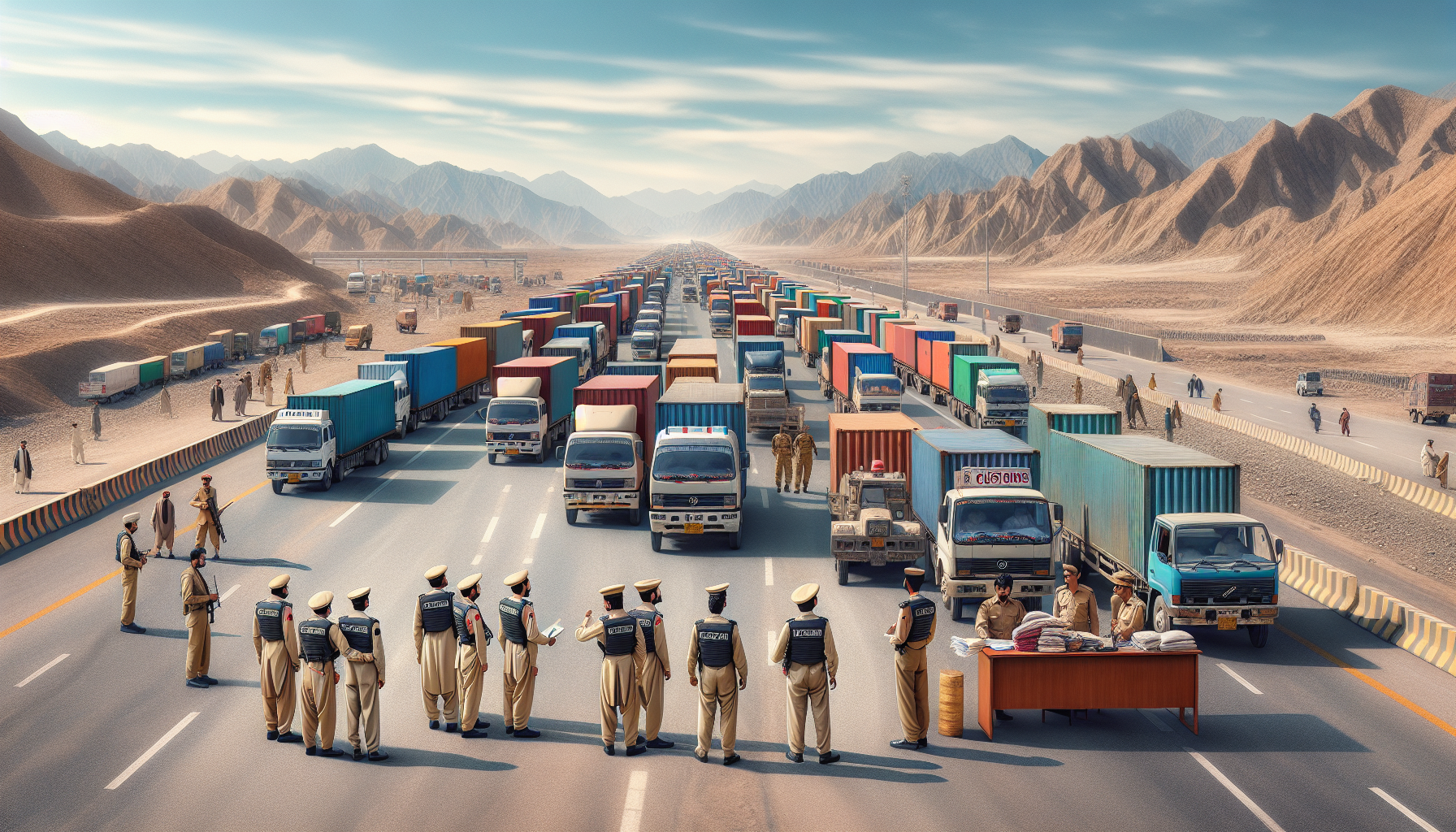
In response to ongoing disruptions in maritime shipping caused by escalating tensions between the United States and Iran, Pakistan has initiated overland trade routes to facilitate cargo movement into Iran. This strategic move aims to circumvent the blockade affecting the Strait of Hormuz, a critical chokepoint for global oil and goods transportation. By activating these land corridors, Islamabad seeks to maintain trade flow and reduce economic losses for businesses reliant on Iranian imports and exports.
The Strait of Hormuz has long been a vital passage for international shipping, with a significant portion of the world’s oil supply transiting through this narrow waterway. Recent geopolitical frictions have heightened the risk of blockades, prompting neighboring countries like Pakistan to explore alternative logistics solutions. The overland corridor not only offers a practical workaround but also strengthens bilateral trade ties between Pakistan and Iran, fostering regional economic cooperation amid global uncertainties.
Notably, this development underscores Pakistan’s adaptability in managing supply chain challenges amid complex international relations. The activation of road trade routes could serve as a model for other nations facing similar maritime disruptions. Meanwhile, the move may also influence broader regional trade dynamics, potentially encouraging further infrastructure investments to enhance connectivity between South Asia and the Middle East.
