

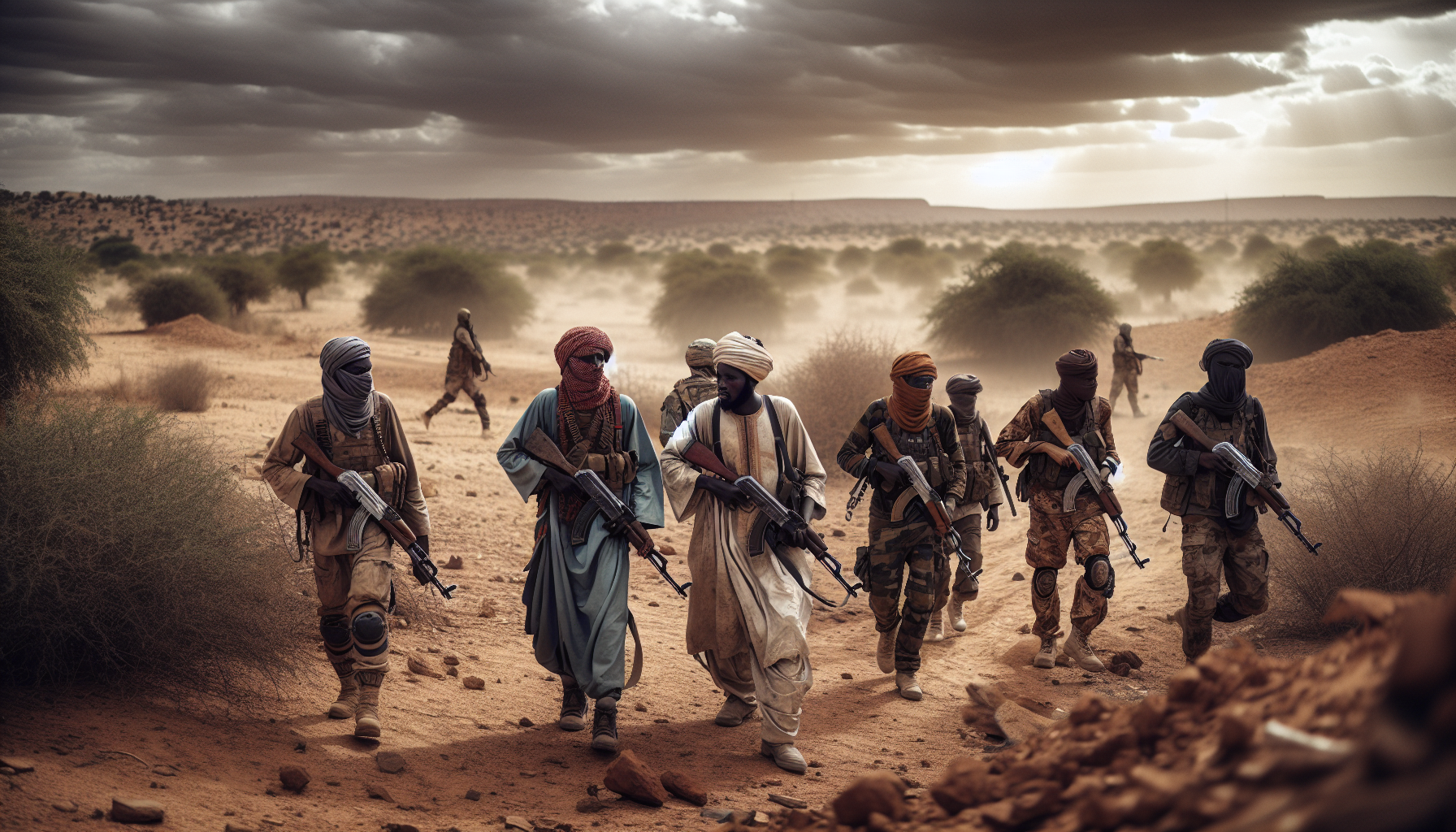
In a significant development, various armed groups in Mali, despite their differing ideological backgrounds, have come together to carry out coordinated attacks across the country. This unprecedented alliance marks a shift in the dynamics of the ongoing conflict, which has long been characterized by fragmented insurgencies. The collaboration among these factions signals a potential escalation in violence and poses a serious challenge to the Malian government’s efforts to restore order and security.
Historically, Mali has faced persistent instability due to multiple armed groups operating independently, often driven by ethnic, religious, or political motives. The recent unification of these groups could amplify their operational capabilities, making it harder for state forces and international peacekeepers to contain the unrest. Meanwhile, this alliance may also be fragile, given the ideological differences that initially separated these factions, raising questions about the sustainability of their cooperation.
The impact of this alliance extends beyond immediate security concerns, as it threatens to undermine peace processes and regional stability in the Sahel. International actors involved in Mali’s stabilization efforts may need to reassess their strategies in light of this new development. Ultimately, the future of Mali’s statehood hinges on whether these armed groups can maintain their unity or if internal divisions will resurface, potentially altering the trajectory of the conflict once again.
