

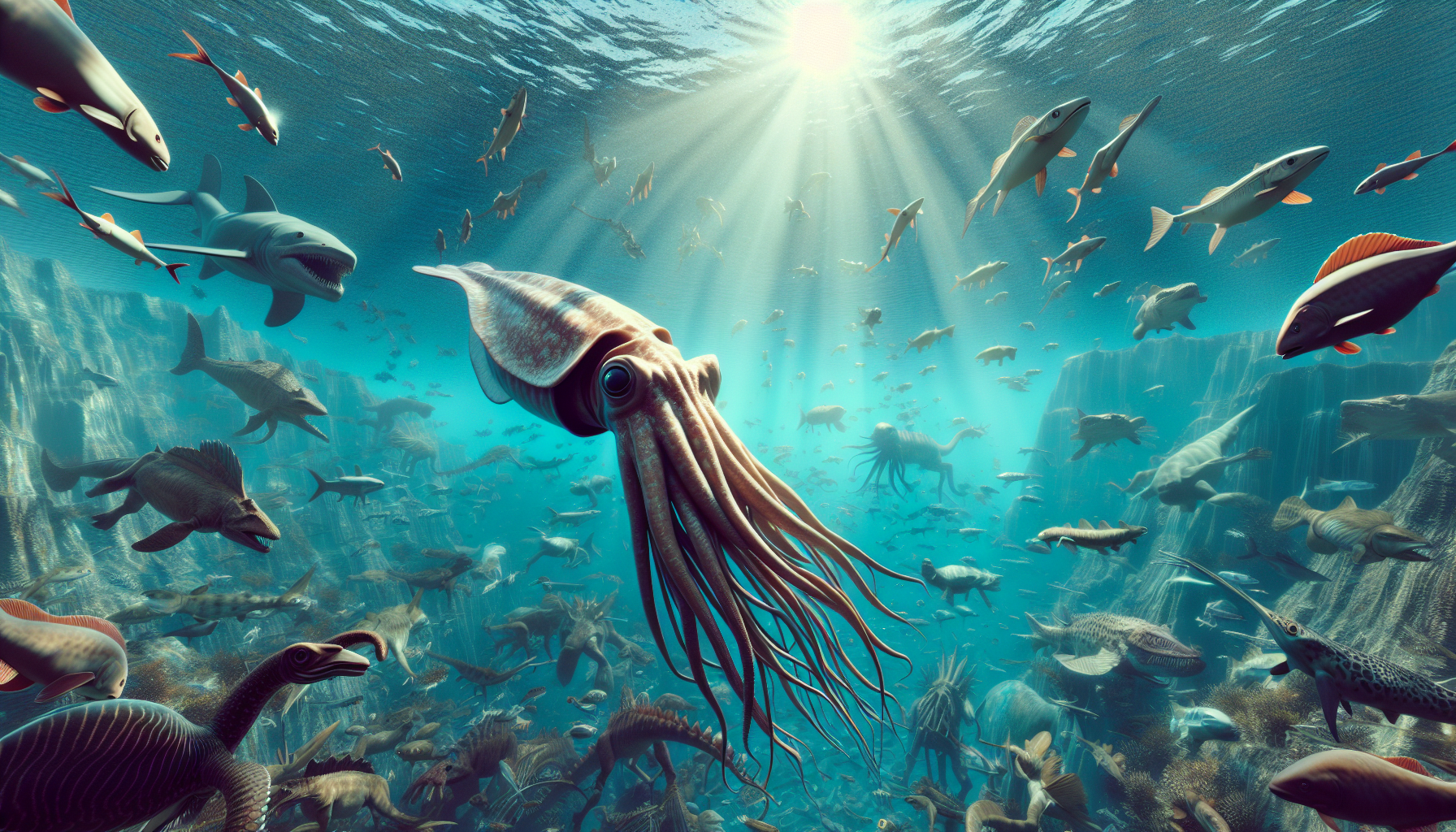
During the age of dinosaurs, the seas were home to a formidable predator known as the ‘Cretaceous Kraken.’ This giant cephalopod, resembling modern squids and octopuses but much larger, thrived in marine environments approximately 100 million years ago. Its existence highlights the diversity and complexity of prehistoric ocean ecosystems, which were as dynamic and competitive as terrestrial habitats. Fossil evidence of this creature provides valuable information about the evolutionary history of marine predators.
Notably, the ‘Cretaceous Kraken’ challenges previous assumptions about the dominance of marine reptiles during that period. While creatures like mosasaurs and plesiosaurs are well-known, this giant cephalopod occupied a significant ecological niche, preying on large fish and possibly other marine reptiles. Its presence underscores the intricate food webs that existed beneath the waves, contributing to a more nuanced understanding of Cretaceous marine biodiversity.
In a significant development for paleontology, studying the ‘Cretaceous Kraken’ offers clues about the adaptation and survival strategies of ancient cephalopods. This discovery also enriches our knowledge of how prehistoric marine life responded to environmental changes during the Cretaceous period. As research continues, the ‘Cretaceous Kraken’ stands as a symbol of the mysterious and often overlooked giants that once ruled the prehistoric oceans alongside the dinosaurs.
