

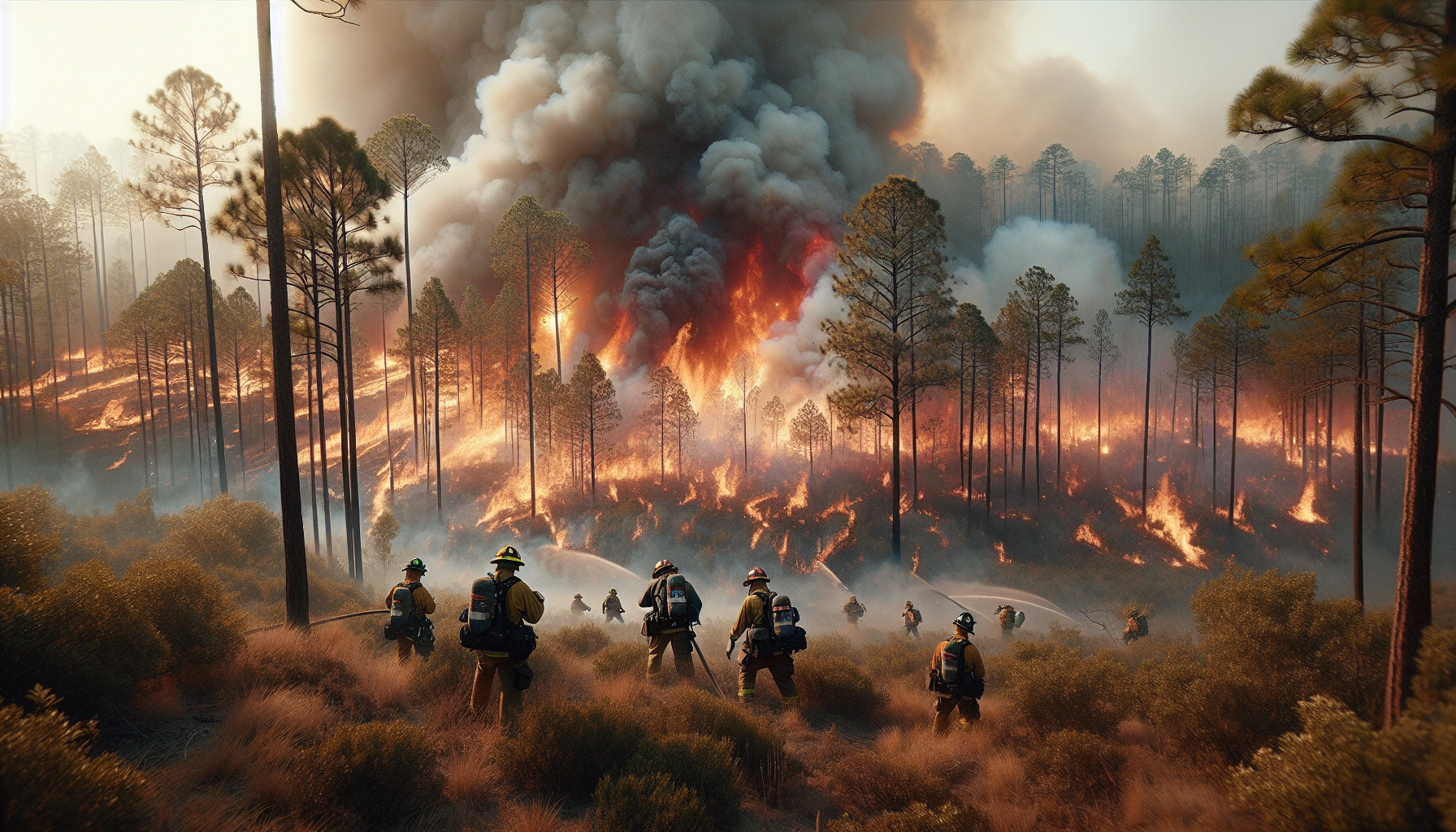
Hundreds of wildfires are currently burning across Florida and Georgia, creating a severe environmental and safety crisis. The fires have rapidly spread due to a combination of dry conditions, persistent drought, and strong winds, which have made containment efforts extremely difficult. Firefighters in both states are working around the clock to control the blazes, but the challenging weather conditions continue to hamper progress. The scale of the wildfires has led to evacuations and heightened alert levels in affected communities.
These wildfires come amid one of the driest periods in recent memory for the southeastern United States, exacerbating the risk of large-scale fires. The drought has left vegetation parched and highly flammable, providing ample fuel for the flames. Meanwhile, the high winds have accelerated the spread of the fires, making it harder for crews to establish firebreaks and protect homes and infrastructure. This situation highlights the increasing vulnerability of the region to climate-related disasters.
In a significant development, authorities are urging residents to remain vigilant and adhere to evacuation orders where issued. The wildfires not only threaten lives and property but also have long-term ecological impacts, including damage to wildlife habitats and air quality deterioration. Emergency management agencies are coordinating resources and support to mitigate the crisis, underscoring the importance of preparedness in the face of worsening wildfire seasons across the United States.
