

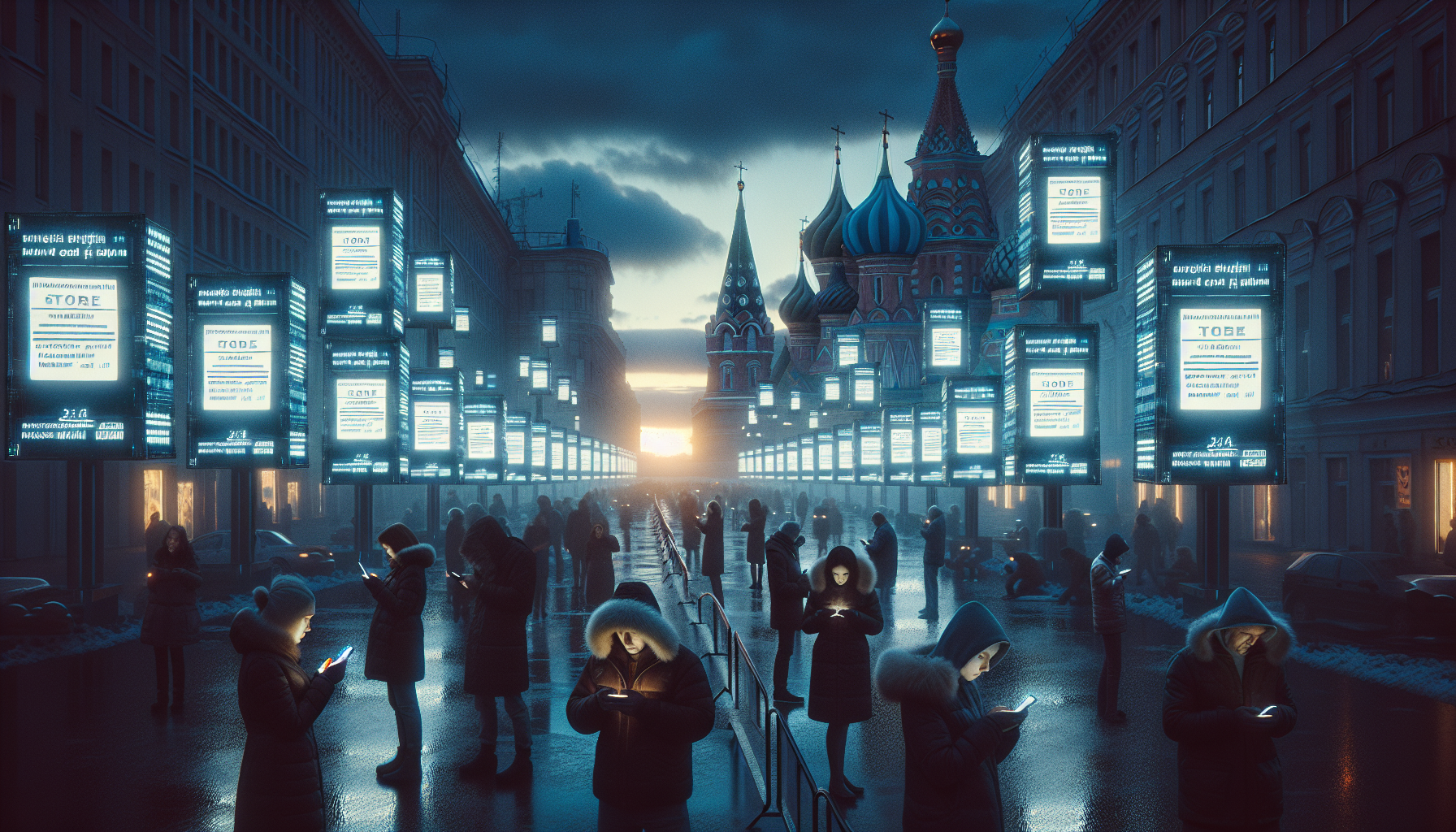
Across Russia, the government has intensified controls over internet access, significantly limiting online freedoms. These restrictions have led to widespread comparisons with the censorship experienced during the Soviet era, highlighting a growing concern over digital repression. The tightening grip on the internet is seen as part of a broader effort by the Kremlin to control information and suppress dissent. This move has disrupted everyday communication and access to independent news sources for millions of Russians.
Notably, the digital blackouts and internet slowdowns have fueled public frustration and discontent, as citizens find themselves increasingly cut off from global information networks. The restrictions affect not only social media platforms but also messaging services and news websites, creating a fragmented digital environment. This environment undermines the ability of people to organize, share opinions, and access unbiased information, which are essential components of a free society. The situation reflects a significant regression in digital rights within the country.
In a significant development, these internet limitations have drawn international attention, raising concerns about Russia’s commitment to freedom of expression and human rights. The parallels drawn between current internet censorship and Soviet-era controls underscore the historical weight of these measures. As the Kremlin continues to enforce these restrictions, the impact on civil society and political discourse is profound, potentially stifling opposition voices and limiting public debate. The ongoing digital clampdown marks a critical moment in Russia’s information landscape.
