

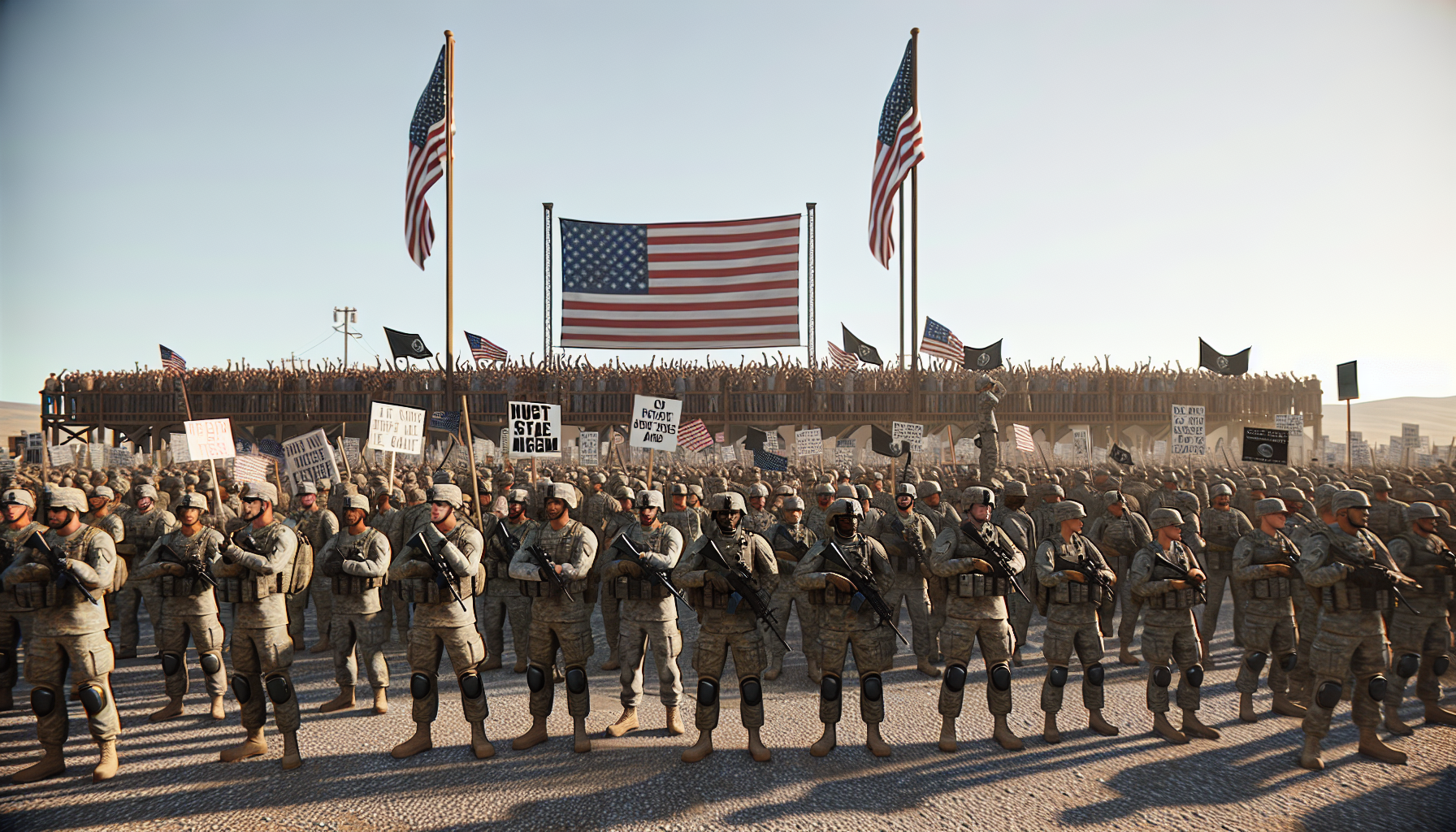
In a significant development, dissent is escalating within the United States military concerning the ongoing US-Israel conflict with Iran. Service members are increasingly expressing their opposition through both public protests and more discreet forms of resistance. This internal unrest highlights the challenges faced by military leadership in maintaining cohesion during contentious foreign engagements. The situation reflects broader debates about the strategic and ethical implications of the US’s role in Middle Eastern conflicts.
Historically, military dissent during wartime has influenced policy and public opinion, as seen in previous conflicts such as Vietnam. The current wave of resistance underscores the complexity of the US-Israel alliance and its impact on service members who may question the justification and consequences of the war on Iran. Meanwhile, the protests and quiet defiance signal a potential shift in military morale and discipline, which could affect operational effectiveness and future military planning.
Notably, this internal military dissent could have wider implications for US foreign policy and defense strategy. As opposition grows, policymakers may face increased pressure to reassess their approach to the Iran conflict. The rising resistance within the ranks also serves as a barometer of the broader public sentiment and the ethical considerations surrounding prolonged military engagements. Ultimately, the situation calls for a careful balance between strategic objectives and the welfare of those serving on the front lines.
