

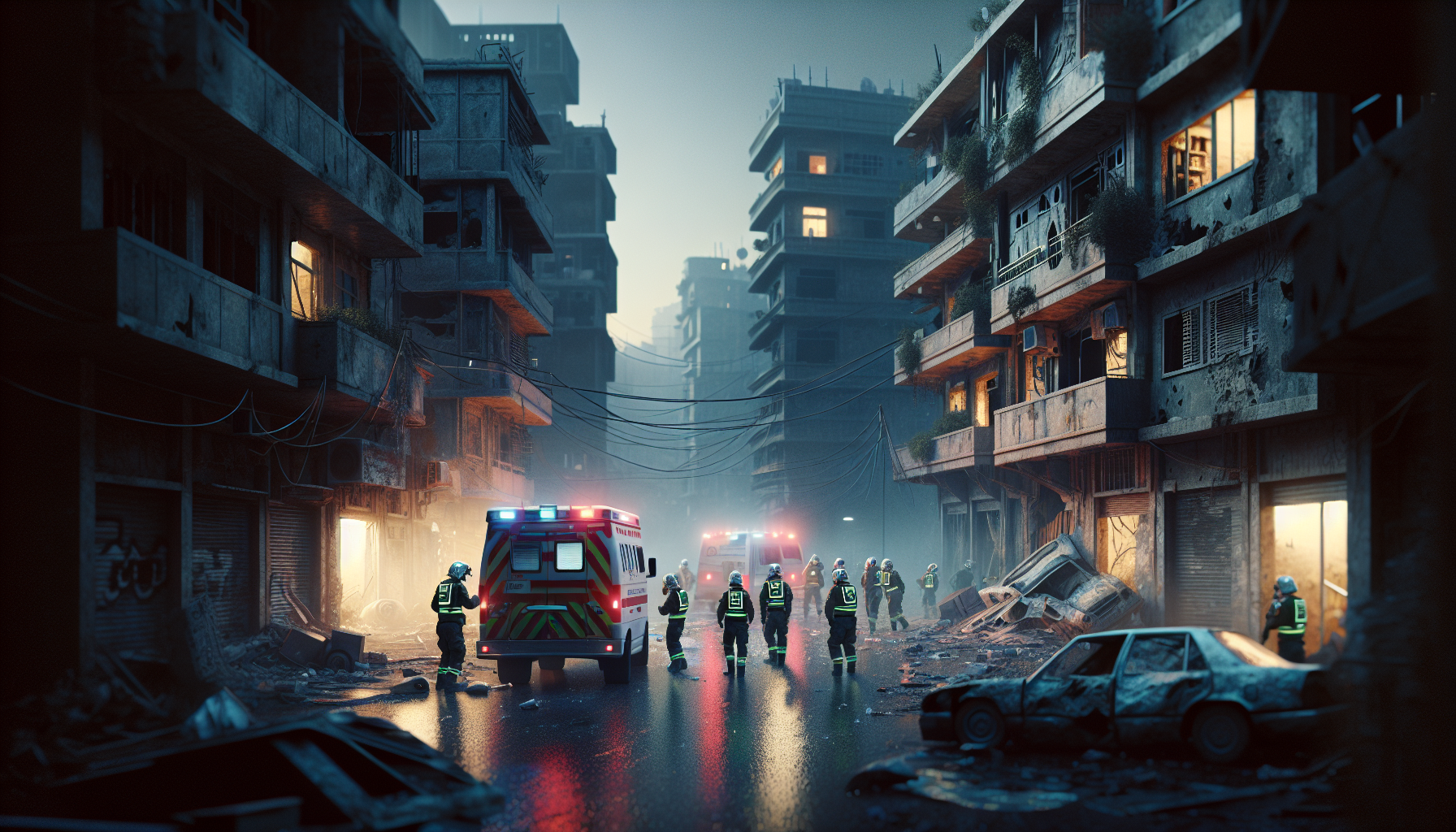
A tenuous ceasefire in Lebanon remains in place despite recent Israeli airstrikes that resulted in the death of a journalist. These attacks also deliberately targeted emergency personnel responding to the crisis, raising serious concerns about the protection of civilians and press freedom in conflict zones. The journalist’s death highlights the increasing dangers faced by media workers covering volatile areas in the Middle East. Meanwhile, the targeting of first responders threatens humanitarian efforts and complicates rescue operations in affected communities.
In a significant development, these strikes have intensified fears of renewed hostilities between Israel and Lebanese factions, potentially destabilizing the already fragile security situation in the region. The deliberate assault on emergency teams undermines international norms that safeguard humanitarian workers during armed conflicts. This escalation comes amid ongoing diplomatic efforts aimed at maintaining peace and preventing further civilian casualties. Notably, the international community has expressed alarm over the attacks and called for restraint from all parties involved.
The impact of these events extends beyond immediate casualties, as they contribute to an atmosphere of fear and uncertainty among civilians living near conflict zones. Journalists play a crucial role in documenting such crises, and their targeting threatens the flow of unbiased information to the global audience. Furthermore, the attacks on first responders hinder timely medical assistance, potentially increasing the death toll from subsequent incidents. As the ceasefire holds precariously, the situation underscores the urgent need for renewed dialogue and adherence to international humanitarian law to protect lives and maintain regional stability.
