

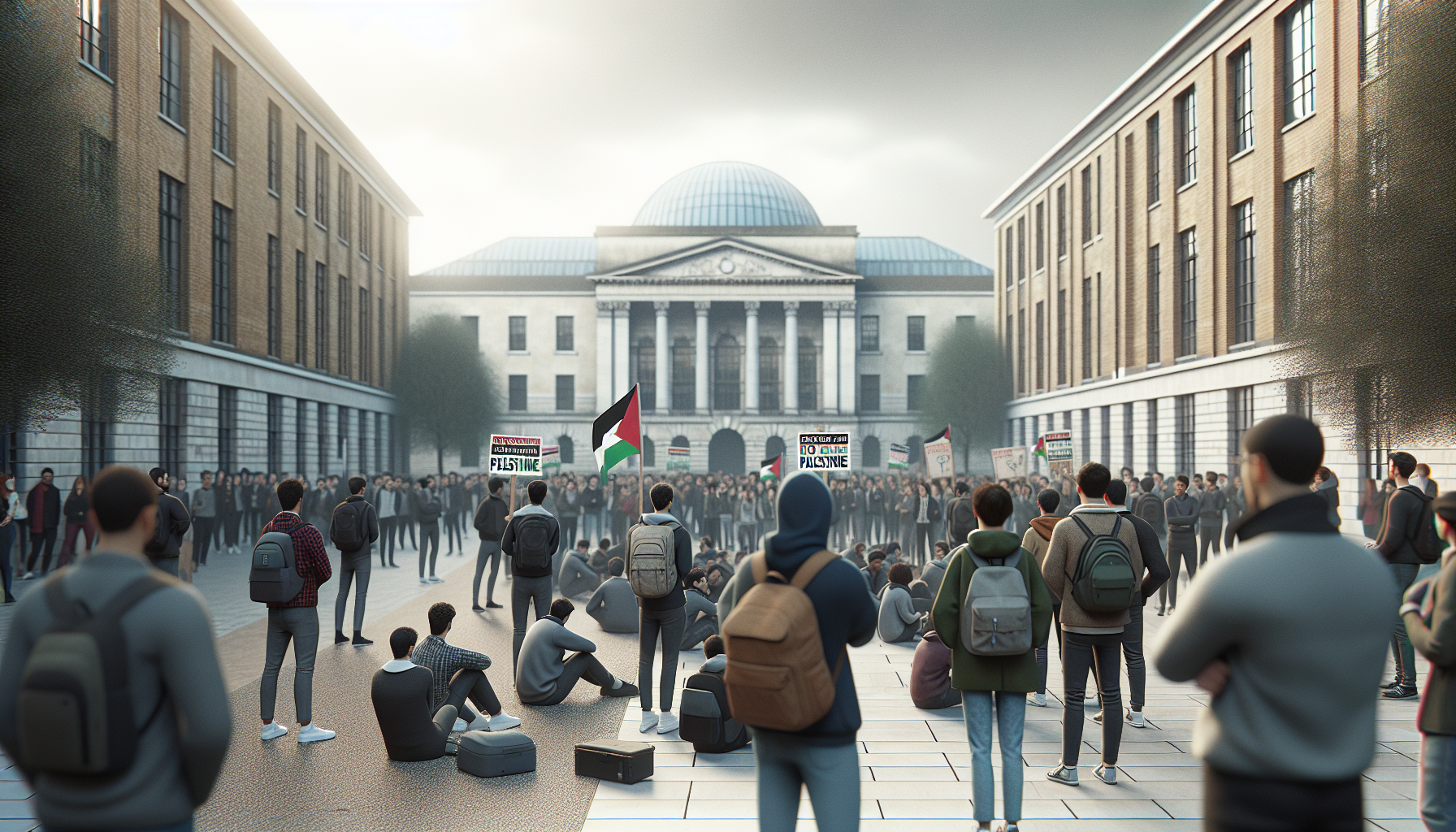
In a significant development, multiple universities across the United Kingdom are alleged to have contracted a security firm with connections to military intelligence to keep tabs on students supporting the pro-Palestine movement. This revelation has sparked concerns over privacy and freedom of expression on campuses, highlighting the tension between national security interests and student activism. The surveillance reportedly targeted individuals involved in organizing protests and events advocating for Palestinian rights.
Historically, universities have been spaces for open debate and political engagement, but this incident raises questions about the extent to which institutions may monitor student activities under the guise of security. The involvement of a firm linked to military intelligence adds a layer of complexity, suggesting a blurring of lines between academic environments and state surveillance mechanisms. Critics argue that such measures could stifle legitimate political discourse and create an atmosphere of fear among students.
Meanwhile, the broader implications of this controversy touch on civil liberties and the role of higher education institutions in safeguarding democratic values. The situation has prompted calls for greater transparency and accountability regarding surveillance practices within universities. As the debate unfolds, it underscores the delicate balance between protecting campus safety and respecting students’ rights to organize and express their views freely.
