

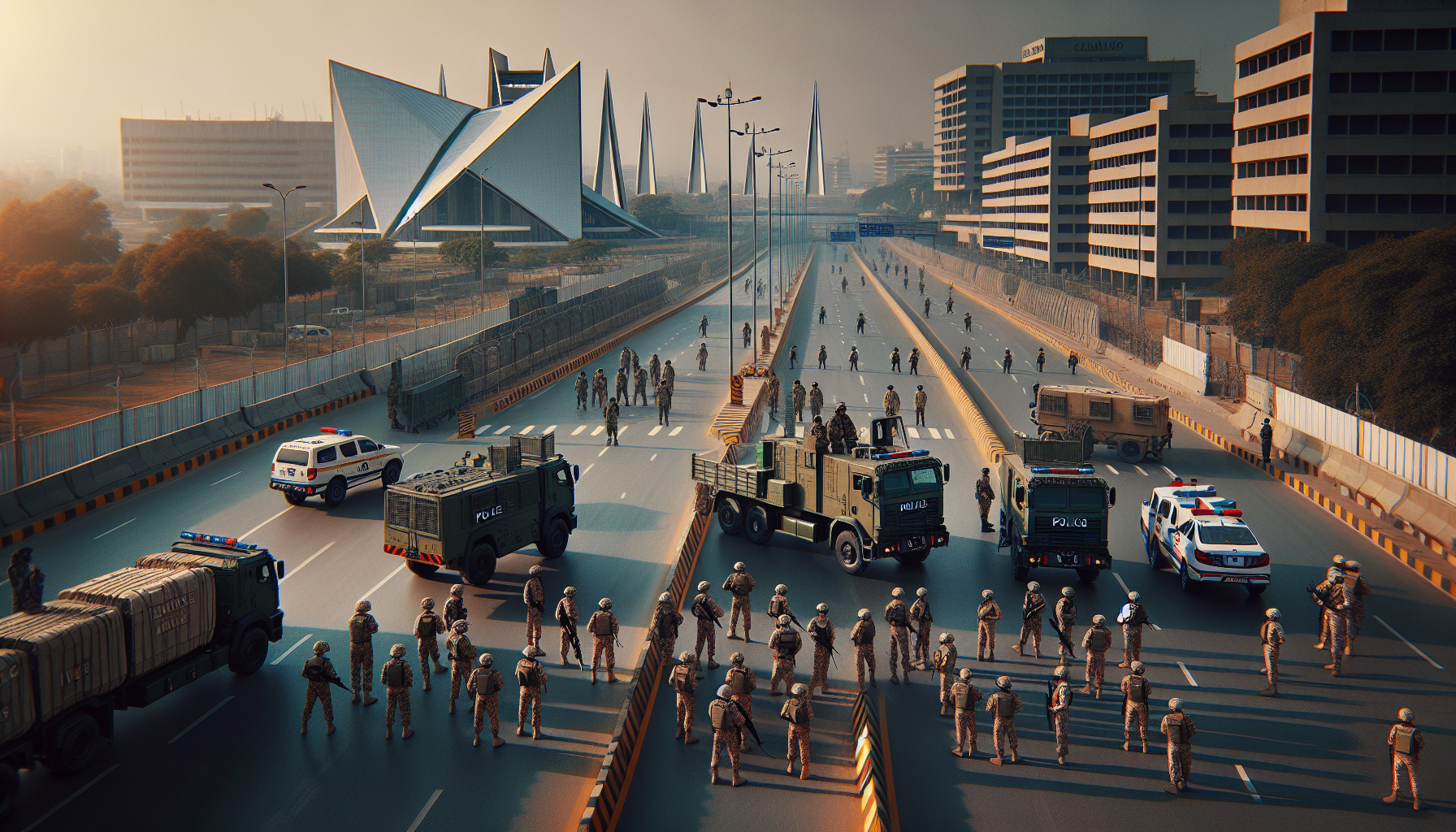
Islamabad remained on high alert Tuesday as authorities enforced stringent security measures ahead of anticipated diplomatic engagement between Iran and the United States. The Red Zone, which houses critical government offices, diplomatic missions, and the parliament, stayed sealed for the third day in a row, with joint police and paramilitary forces manning checkpoints at all access points. Army units were also deployed, conducting coordinated patrols alongside civilian law enforcement agencies.
Transport services faced significant disruptions, with Metro Bus operations suspended and major bus terminals in Islamabad and Rawalpindi closed as precautionary steps. Nevertheless, partial reopening of the Chungi No. 26 terminal allowed limited commuter movement. Several main roads leading to the capital’s diplomatic and administrative sectors remain restricted, although some peripheral routes have been reopened to alleviate pressure on residents.
These enhanced security protocols coincide with preparations for possible diplomatic activities involving foreign delegations. However, confirmation of high-level meetings is still pending, and scheduled arrivals have reportedly been delayed. A high-level government meeting chaired by Prime Minister Shehbaz Sharif has been convened to evaluate the regional situation and Pakistan’s diplomatic initiatives.
The meeting aims to review Islamabad’s role in facilitating dialogue between Tehran and Washington, alongside developments following the recent extension of a regional ceasefire. Pakistan is expected to continue its diplomatic outreach by maintaining contact with Iranian leadership, while also acknowledging positive signals of restraint from Washington after the ceasefire announcement.
Despite the restrictions, daily life in Islamabad and Rawalpindi continues in a limited capacity. Markets remain partially open, and food supplies are largely unaffected. However, transport disruptions have significantly impacted commuting, with some bus terminals still closed and goods transport between the twin cities intermittently halted. Government employees in several departments have been advised to work remotely, and schools within the Red Zone have shifted to online classes due to restricted access.
Residents expressed mixed feelings about the situation, appreciating Pakistan’s elevated diplomatic role but frustrated by ongoing mobility restrictions and economic disruptions. One Islamabad resident remarked on the challenges, highlighting road closures, school access issues, and increased transport costs as sources of public fatigue. Small businesses and daily wage workers have been particularly affected, facing reduced customer flow and supply chain interruptions that have intensified financial pressures.
The security lockdown occurs amid continued uncertainty surrounding the planned Iran-US discussions, which have been postponed multiple times amid fluctuating diplomatic dynamics and regional tensions. Pakistan has positioned itself as a mediator, hosting preparatory meetings recently, though key delegations have yet to arrive. Previous rounds of talks concluded without major breakthroughs, but diplomatic channels remain active to uphold the fragile ceasefire and prevent escalation.
Officials have indicated that Islamabad’s heightened security posture will persist until there is clarity on the timing and scope of any forthcoming high-level diplomatic engagements in the capital.
